
Building & Pest Inspections in Wembley
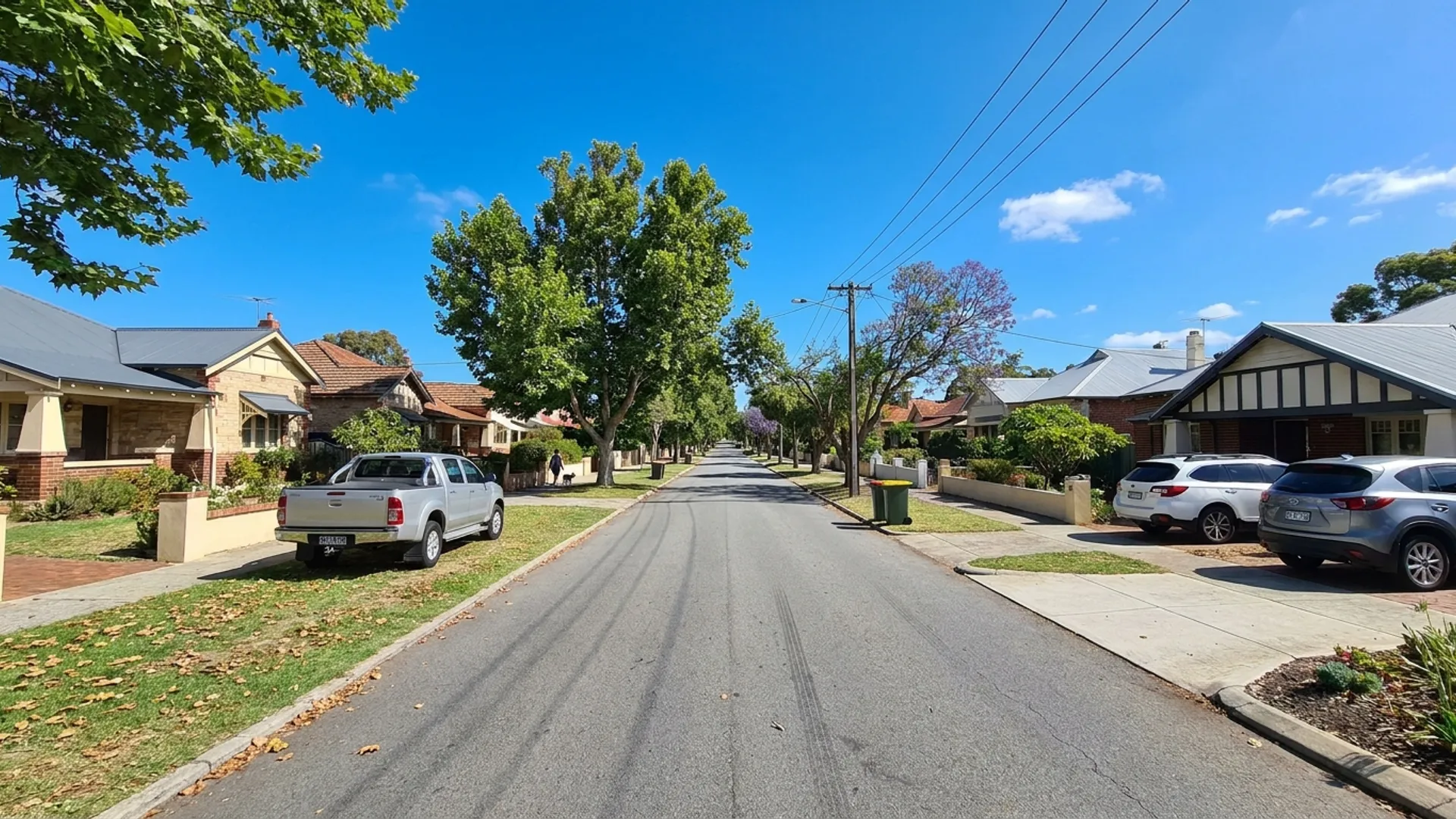
Wembley is one of Perth's most character-rich suburbs — a grid of 1920s-1950s Californian Bungalows, Inter-War brick homes, and early post-war cottages under the City of Cambridge's strict streetscape protection policies. The suburb's architectural consistency is its primary appeal, but it also means that buyers are overwhelmingly purchasing 70-100-year-old homes with construction methods, materials, and service infrastructure that have long exceeded their designed lifespan. Suspended Jarrah timber floors, galvanised plumbing, corrugated iron roofing on original wire ties, bituminous DPCs, and terracotta drainage — all standard in Wembley's character stock — are components that require specialist assessment.
What makes Wembley's inspection environment unique is the triple-source termite pressure. Lake Monger sits on the eastern boundary, Bold Park's 437 hectares of native bushland flanks the western edge, and Wembley Golf Course's irrigated fairways and mature trees occupy the northern boundary. Very few Perth suburbs are surrounded by this level of permanent termite habitat on three sides. The Karrakatta Sand that underlies Wembley transmits termite foraging tunnels efficiently, meaning no property in the suburb is beyond the foraging range of the colonies established in these surrounding habitats. Combined building and pest inspections in Wembley start from $497 for houses.
What We Look For in Wembley Properties
Suspended Jarrah Timber Floor Degradation
Wembley's 1920s-1940s character homes were built with suspended timber floors — Jarrah floorboards on Jarrah bearers and joists, supported by brick or timber stumps with a sub-floor crawl space beneath. After 80-100 years, these floor systems show predictable deterioration: stumps settle unevenly (causing the floor to slope toward the affected area), bearers develop splits at stump bearing points where point loads concentrate, and joists deflect between bearers creating a "bouncy" feel underfoot. The sub-floor crawl space is the critical inspection zone — adequate ventilation, dry soil conditions, and absence of termite activity are all essential for the continued structural performance of the floor system. In Wembley, the high water table near Lake Monger on the eastern side of the suburb can saturate sub-floor soils during winter, accelerating timber deterioration. Our inspections include sub-floor crawl access where possible, with moisture readings on timber members, stump condition assessment, and ventilation adequacy evaluation.
"Retain and Build" Subdivision Impacts
The City of Cambridge's streetscape policies encourage "retain and build" subdivisions in Wembley — retaining the original character home at the front of the lot while constructing a new dwelling (or dwellings) at the rear. This preserves the street's heritage character but creates specific inspection issues for both the retained home and the new build. The retained front home loses a significant portion of its rear garden (reducing permeable area for stormwater drainage), gains a shared driveway running alongside it (with associated vibration and drainage changes), and may have its services (water, sewer, power) modified to accommodate the new rear dwelling. The rear dwelling sits on a constrained lot with limited northern light, shared stormwater systems, and proximity to the retained home's aging services. Our inspections assess both the impact of the subdivision on the retained home's structural and drainage performance, and the construction quality of new rear dwellings built on tight sites.
Layered Asbestos in Modified Character Homes
Wembley's asbestos profile reflects the suburb's layered renovation history. The original 1920s-1940s homes were built before the peak asbestos era — their original materials are predominantly timber, brick, and corrugated iron. However, the modifications applied during the 1940s-1960s introduced asbestos-containing materials extensively: enclosed verandahs (sleepouts) lined with flat fibro sheeting, bathroom and laundry additions using Hardiflex wet-area panels, garage linings and ceiling panels in fibro, replacement eaves in asbestos-cement sheet, and Super Six corrugated fencing on side and rear boundaries. A further layer of modification in the 1970s-1980s — kitchen renovations, carport additions, and patio enclosures — added more asbestos-containing products. The result is a single home that may contain asbestos in five or six different locations, each from a different renovation era. Our inspections identify suspected asbestos-containing materials by location, material type, and condition, providing buyers with a clear picture of the asbestos management required.
Mature Street Tree Root Damage
Wembley's streetscapes are defined by mature Jacaranda trees and Western Australian Peppermint trees (Agonis flexuosa) that are now 50-80 years old with extensive root systems. These roots exploit any moisture source — and the aging terracotta drainage pipes, leaking water supply connections, and soakwells of Wembley's character homes are constant moisture attractants. Root invasion of sewer pipes causes blockages and backflow. Root invasion of soakwells fills the chamber with root mass, reducing drainage capacity. Surface roots lift paving, damage retaining walls, and in severe cases, crack the concrete footpaths and house foundations they grow beneath. The City of Cambridge's tree protection policies limit property owners' ability to remove or significantly prune street trees, meaning root damage must be managed rather than eliminated. Our inspections note evidence of root damage to drainage, paving, and foundations, and identify which trees are likely contributing to the damage.
Precincts We Service
- Lake Monger precinct (east Wembley) — highest termite risk from lakeside habitat, 1920s-1930s Californian Bungalows with suspended timber floors, rising damp on lower-lying eastern streets, sub-floor moisture from elevated winter water table
- Bold Park border (west Wembley) — elevated termite pressure from 437 hectares of native bushland, BAL (Bushfire Attack Level) considerations on park-adjacent properties, premium character homes with complex renovation histories
- Wembley Golf Course precinct (north) — irrigated landscape sustaining year-round termite activity, mix of 1930s-1950s character stock, mature Jacaranda street trees with root damage to aging infrastructure
- Central Wembley (Cambridge Street corridor) — active "retain and build" subdivision zone, highest density of character homes, streetscape protection assessments, layered asbestos identification in modified homes
Pest Control in Wembley
Wembley faces extreme subterranean termite pressure — arguably the highest of any suburb in the Scarborough hub, driven by the triple-source habitat that surrounds it. Lake Monger to the east sustains Coptotermes acinaciformis colonies in mature paperbarks and flooded gums with permanent water access. Bold Park to the west — 437 hectares of native bushland — provides the largest single termite harbourage area in Perth's western suburbs, with Coptotermes colonies foraging eastward through the Karrakatta Sand into Wembley's residential streets. Wembley Golf Course to the north adds year-round irrigated soil moisture that supports continuous termite activity even through Perth's driest summer months. The mature Jacaranda and Peppermint street trees throughout the suburb extend these foraging corridors into every residential block, providing above-ground nesting opportunities and below-ground root channels that termites exploit for movement. Every property in Wembley — regardless of its position within the suburb — is within the foraging range of multiple established colony sources. Annual termite inspections are non-negotiable, and properties with suspended timber floors, aging chemical barriers, or garden beds against foundations should consider permanent monitoring station systems for year-round early detection.
Beyond termites, Wembley's established garden environments and mature tree canopy support persistent populations of Redback spiders (colonising sub-floor spaces, meter boxes, retaining walls, and garden sheds), Black House spiders (in eaves, window frames, and fence lines across the suburb's character housing stock), and roof rats (Rattus rattus) exploiting the abundant food from fruit trees, Jacaranda seed pods, and vegetable gardens common in Wembley's large character-home plots. Rodent entry into roof spaces peaks in autumn as temperatures drop — the generous roof cavities of 1920s-1950s homes provide warm nesting environments accessed through deteriorated eave timbers, missing vent covers, and gaps at the ridge line. Our pest control services cover general treatments from $189, with combo packages for Wembley properties dealing with the concurrent spider, rodent, and termite pressure that the suburb's triple-source pest environment generates.