
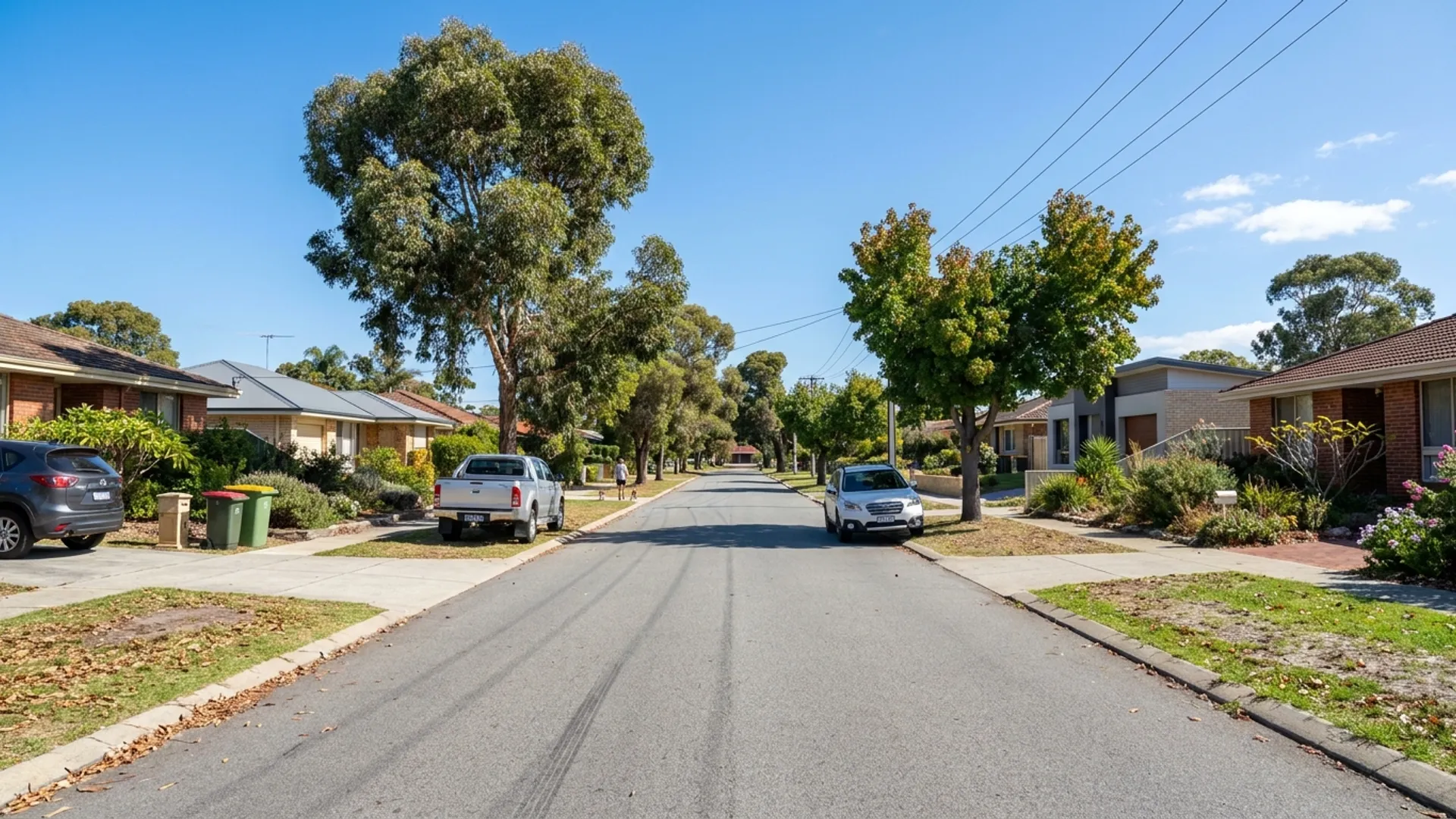
Building & Pest Inspections in Gwelup
Gwelup is one of the most moisture-affected suburbs in the Scarborough hub — and one of the most deceptive for buyers. The suburb wraps around Lake Gwelup and Careniup Swamp, two significant water bodies that create a localised environment fundamentally different from the surrounding Spearwood Dune suburbs. Properties close to the lake and swamp sit on soils with high organic content — remnant peat and waterlogged sand that behave very differently from the stable Karrakatta Sand found on higher ground. The water table in lakeside Gwelup can rise to within a metre of the surface during winter, saturating sub-floor areas, overwhelming drainage systems, and creating the most severe termite conditions in the Scarborough region.
On the higher ground away from the lake, Gwelup's housing stock is predominantly 1970s-2000s brick and tile — solid suburban homes that carry the standard Spearwood Dune inspection profile: moderate asbestos risk in pre-1985 stock, aging concrete roof tiles, and retaining walls on the suburb's undulating terrain. But it's the lakeside and swamp-adjacent properties that demand specialist attention. These homes can appear perfectly maintained on the surface while concealing rising damp, sub-floor timber rot, and active termite infestation driven by the constant moisture availability. Combined building and pest inspections in Gwelup start from $497 for houses.
What We Look For in Gwelup Properties
Rising Damp from High Winter Water Tables
Properties within 300 metres of Lake Gwelup or Careniup Swamp experience significant seasonal water table fluctuation. During winter, groundwater can rise high enough to saturate the soil around and beneath foundations. Even homes with functioning Damp Proof Courses (DPCs) can experience moisture ingress when the water table rises above the DPC level — a phenomenon called "overtopping" that bypasses the damp barrier entirely. The signs are classic: tide-mark staining on internal walls at skirting board height, bubbling paint, efflorescence (white salt crystals) on external brickwork, and musty odour in enclosed rooms. Homes built in the 1970s are most affected, as their DPCs have degraded after 50 years and can no longer handle even normal moisture levels, let alone the elevated water tables that lakeside Gwelup experiences. Our moisture meter readings systematically map the damp profile of every wall in the home to determine whether the issue is localised or perimeter-wide.
Failing Timber Sleeper Retaining Walls
Gwelup's terrain around the lake and swamp involves level changes that were commonly retained using treated timber sleeper walls during the 1980s and 1990s. These CCA-treated pine sleepers were given a 25-year service life — which means the majority of Gwelup's sleeper walls have now exceeded their design life. The constant moisture from the nearby water bodies accelerates deterioration: sleepers soften, lose structural integrity, and lean under the lateral earth pressure behind them. Collapsing sleeper walls also create termite highways — the rotting timber is a food source that draws termite colonies directly to the property boundary. Our inspections assess sleeper wall condition, lean angle, and any impact on structures or fences above the wall.
Sub-Floor Timber Rot on Lakeside Properties
Some of Gwelup's older homes — particularly those built in the late 1960s and 1970s closest to the lake — have suspended timber floors with sub-floor crawl spaces. In a suburb with normal drainage, these sub-floors ventilate adequately and the timber remains dry. In lakeside Gwelup, the winter water table can saturate the soil directly beneath the sub-floor, and poor ventilation (blocked vents, overgrown garden beds against the foundation) traps moisture inside the crawl space. The result is fungal decay of the timber bearers and joists — a progressive structural failure that makes the floors feel "bouncy" underfoot. By the time the floor noticeably deflects, the underlying timber may be severely compromised. Our inspections include sub-floor access where possible, with moisture readings on timber members and assessment of ventilation adequacy.
Careniup Swamp Drainage Interaction
Properties on the western and southern sides of Gwelup border Careniup Swamp — a conservation-grade wetland that sits in a natural depression below the surrounding residential lots. During heavy winter rain events, overland flow from residential properties drains toward the swamp, but when the swamp is full, backflow can reverse this pattern and push water uphill toward the lowest-lying homes. Properties in this transition zone experience chronic drainage problems: waterlogged gardens, saturated retaining wall backfill, and stormwater systems that cannot discharge because the receiving environment is already at capacity. Our inspections assess site drainage, soakwell function, and the relationship between the property's finished levels and the swamp's high-water mark.
Precincts We Service
- Lake Gwelup foreshore — highest-risk zone for rising damp, sub-floor rot, and termite activity; properties within 200m of the lake require moisture-focused inspections with sub-floor assessment
- Careniup Swamp border (west Gwelup) — drainage interaction issues, failing timber sleeper retaining walls, conservation wetland backflow risk during winter
- North Gwelup (Karrinyup Road precinct) — higher ground with standard Spearwood Dune profile, 1980s-1990s stock with moderate asbestos risk and aging roof tiles
- Central Gwelup (Huntriss Road corridor) — mix of original 1970s homes and 2000s luxury rebuilds, swimming pool proximity issues on sandy sites, rendered facade assessments
Pest Control in Gwelup
Gwelup faces the most severe termite conditions in the Scarborough hub — and it's not close. Lake Gwelup and Careniup Swamp provide permanent year-round moisture that sustains large, established Coptotermes acinaciformis colonies in the mature paperbarks, flooded gums, and dead timber around both water bodies. Unlike suburbs where termite pressure drops during Perth's dry summer months, Gwelup's lakeside environment maintains soil moisture levels that support continuous termite foraging through every season. The porous Karrakatta Sand transmits foraging tunnels efficiently, meaning properties 100-200 metres from the water's edge are still within high-risk range. Homes with failing timber sleeper retaining walls face compounded risk — the rotting timber acts as a "bait station" that draws colonies directly to the property boundary, from which they can enter the home through weep holes, slab penetrations, or sub-floor access points. Annual termite inspections are non-negotiable for all Gwelup properties, and lakeside homes should consider permanent monitoring station installations for early detection.
The wetland environment also drives elevated mosquito populations during spring and summer, with Careniup Swamp providing breeding habitat within metres of residential properties. Cockroaches — particularly the Australian cockroach (Periplaneta australasiae) — thrive in Gwelup's moist garden environments and aging drainage systems, migrating indoors during autumn. Rodents exploit the dense lakeside vegetation for harbourage and forage into homes through sub-floor openings and deteriorating eaves. Our pest control services cover general treatments from $189, with tailored programs for Gwelup's unique moisture-driven pest environment. Combo packages covering multiple pest types are available for lakeside properties dealing with concurrent pest pressures.