Building & Pest Inspections in Doubleview
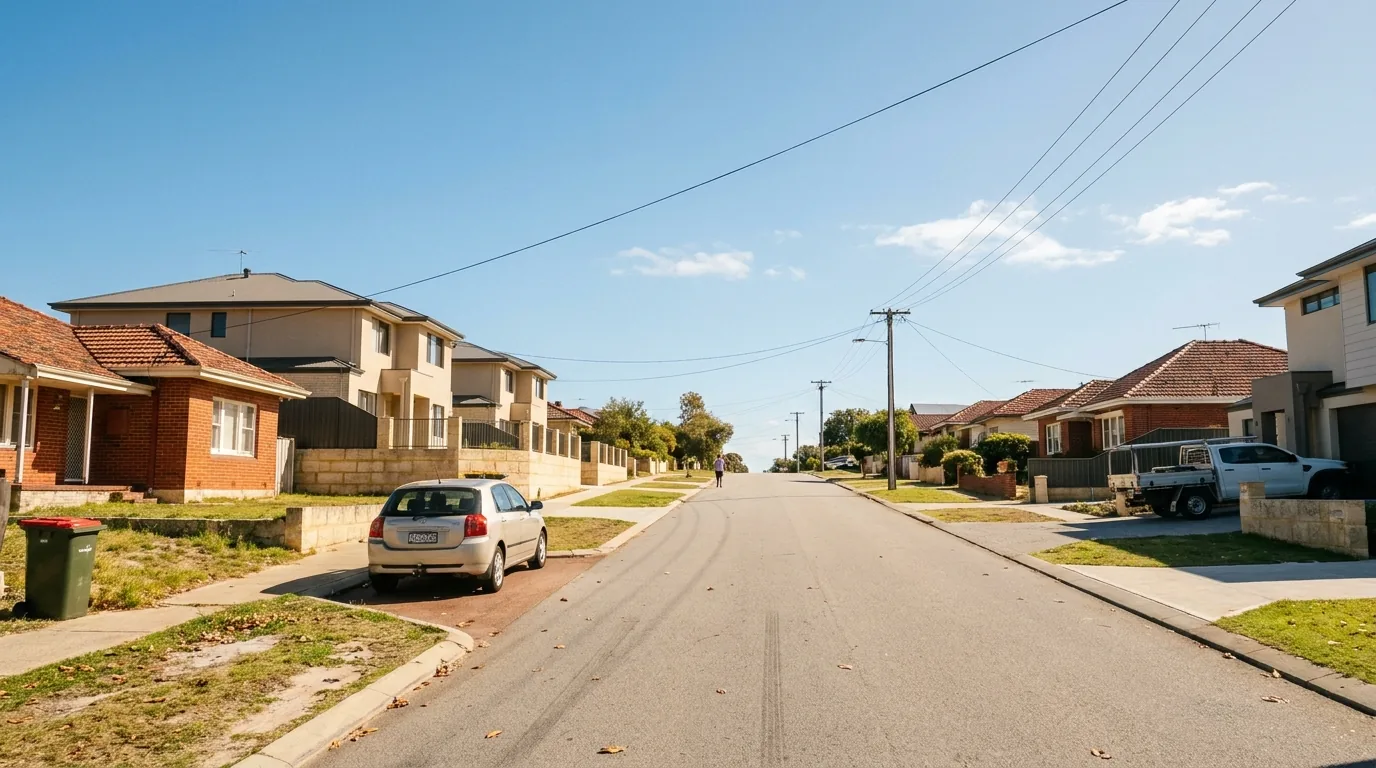
Doubleview sits on Spearwood Dunes — Karrakatta Sand over Tamala Limestone — creating the undulating terrain that gives the suburb its name (the "double view" of ocean and hills from the high points). This topography drives Doubleview's most serious building defects: retaining walls failing under lateral earth pressure, drainage concentrating against downhill foundations, and significant level changes between neighbouring properties that create complex structural relationships. The original 1950s-1970s post-war housing stock was predominantly fibro and weatherboard construction, making Doubleview one of Perth's highest asbestos-risk suburbs.
The R30/R40 zoning that now covers most of Doubleview has triggered an aggressive wave of triplex infill development. Original quarter-acre blocks with single fibro homes are being demolished and replaced with three grouped dwellings on the same lot. For buyers, this creates a dual risk: the remaining original homes carry extreme asbestos prevalence, while the new triplexes carry construction quality risks from volume-build developers working on tight margins and constrained sites.
Our building and pest inspections in Doubleview are calibrated to the suburb's specific challenges — retaining wall integrity on sloped sites, asbestos identification in pre-1985 stock, and triplex-specific defects including shared boundary wall compliance, party wall acoustic separation, and stormwater management on subdivided lots. Combined building and pest inspections start from $497 for houses.
What We Look For in Doubleview Properties
Retaining Wall Failures on Undulating Terrain
Doubleview's Spearwood Dune topography means most properties involve some form of retaining structure — limestone block walls, concrete sleeper walls, or older brick retaining walls built when the suburb was first developed in the 1950s-1960s. The most serious failures occur on the steeper east-west running streets between Scarborough Beach Road and Karrinyup Road, where original limestone retaining walls are now 50-70 years old. These walls were often built without adequate drainage behind them — over decades, hydrostatic pressure builds during winter, the mortar joints deteriorate, and the wall begins to lean or bulge outward. A failing retaining wall on a sloped Doubleview block can undermine the foundation of the home above it, and replacement costs routinely exceed $15,000-$30,000 depending on height and length. Our inspectors assess wall lean, mortar condition, drainage adequacy, and any signs of movement in the structure the wall supports.
Extreme Asbestos Prevalence in Original Stock
Doubleview's original 1950s-1970s housing stock has one of the highest asbestos prevalence rates in the Scarborough hub — conservatively 65% of pre-1985 homes contain asbestos in some form. The most common locations are fibro eaves and gable infill panels, wet-area wall sheeting in bathrooms and laundries, Super Six fencing on side and rear boundaries, and the backing boards behind old meter boxes. Many of these homes have been partially renovated over the decades — original fibro cladding painted over, asbestos-containing bathroom walls tiled over, or fibro garage linings left in place when the house was otherwise updated. A renovation history does not mean asbestos has been removed. Our inspections identify suspected asbestos-containing materials and note their condition — friable (damaged and releasing fibres) versus bonded (intact and lower risk).
Triplex Infill Construction Defects
Doubleview's R30/R40 zoning has made it one of Perth's most active triplex development suburbs. These three-dwelling grouped developments on former single-home lots are built by volume developers working on tight margins, and they carry a predictable set of defects. Common findings include inadequate stormwater management (three homes' worth of roof area draining into soakwells sized for one), shared boundary walls with insufficient acoustic separation, poorly compacted fill on the cut-and-fill sites that Doubleview's terrain demands, and retaining walls between the triplex units that are undersized for the retained earth height. The narrow access driveways and tight lot boundaries also mean external cladding and drainage are difficult to inspect visually — our inspectors use mirrors and camera equipment to assess areas that can't be directly accessed.
Sagging Jarrah Roof Frames in Post-War Homes
The 1950s-1960s homes in Doubleview were framed with Jarrah — a naturally durable hardwood, but one that develops fatigue after 60-70 years of service. Jarrah rafters in these homes were typically undersized by modern standards, and the low-pitch roof designs common in post-war Doubleview homes place higher bending loads on each rafter. Over time, the rafters sag between supports, creating visible dips in the roofline and allowing pooling on metal roofing sheets. Sagging roof frames also stress the ceiling below, causing cracking along the ceiling-wall junction. This is a structural issue that worsens progressively — catching it early allows for remediation before the roofing sheets begin to leak at the pooling points.
Precincts We Service
- North Doubleview (Trigg Bushland border) — elevated termite pressure from adjacent bushland, premium lots with steep terrain and significant retaining walls, mix of original fibro homes and modern replacements
- Central Doubleview (Dodd Street / Holbeck Street precinct) — highest density of triplex infill development, R40 zoning, shared boundary and stormwater management issues on subdivided lots
- South Doubleview (Scarborough Beach Road corridor) — commercial fringe transitioning to residential, older 1950s-1960s stock with extreme asbestos prevalence, rising land values driving rapid redevelopment
- West Doubleview (Bradley Reserve border) — bushland proximity creating sustained termite foraging corridors, established family homes from the 1970s-1980s, retaining walls on the Spearwood Dune ridge
Pest Control in Doubleview
Doubleview's pest environment is shaped by two dominant factors: the Spearwood sand substrate and the suburb's proximity to significant bushland reserves. Bradley Reserve to the west and Trigg Bushland to the north provide permanent harbourage for subterranean termites — predominantly Coptotermes acinaciformis — which forage through the porous Karrakatta Sand into residential properties. The sand drains quickly but retains enough moisture at depth to support termite colonies year-round. Properties within 200 metres of either reserve face elevated risk and should maintain annual termite inspections. The old fibro homes with timber sub-floor framing are particularly vulnerable, as the combination of concealed timber, sub-floor moisture, and sandy soil creates ideal termite entry conditions.
Beyond termites, Doubleview's established garden landscapes and mature street trees support persistent populations of Redback spiders (in retaining wall cavities, meter boxes, and sub-floor areas), German cockroaches (in older kitchens with aging cabinetry and plumbing penetrations), and rats (exploiting gaps between old and new construction where triplex development has left exposed cavity access points). The demolition of old fibro homes for triplex development also displaces pest populations into neighbouring properties — a pattern we see repeatedly in active infill areas. Our pest control services cover general pest treatments from $189, with targeted termite inspections from $189 for properties in Doubleview's higher-risk bushland-fringe zones.