
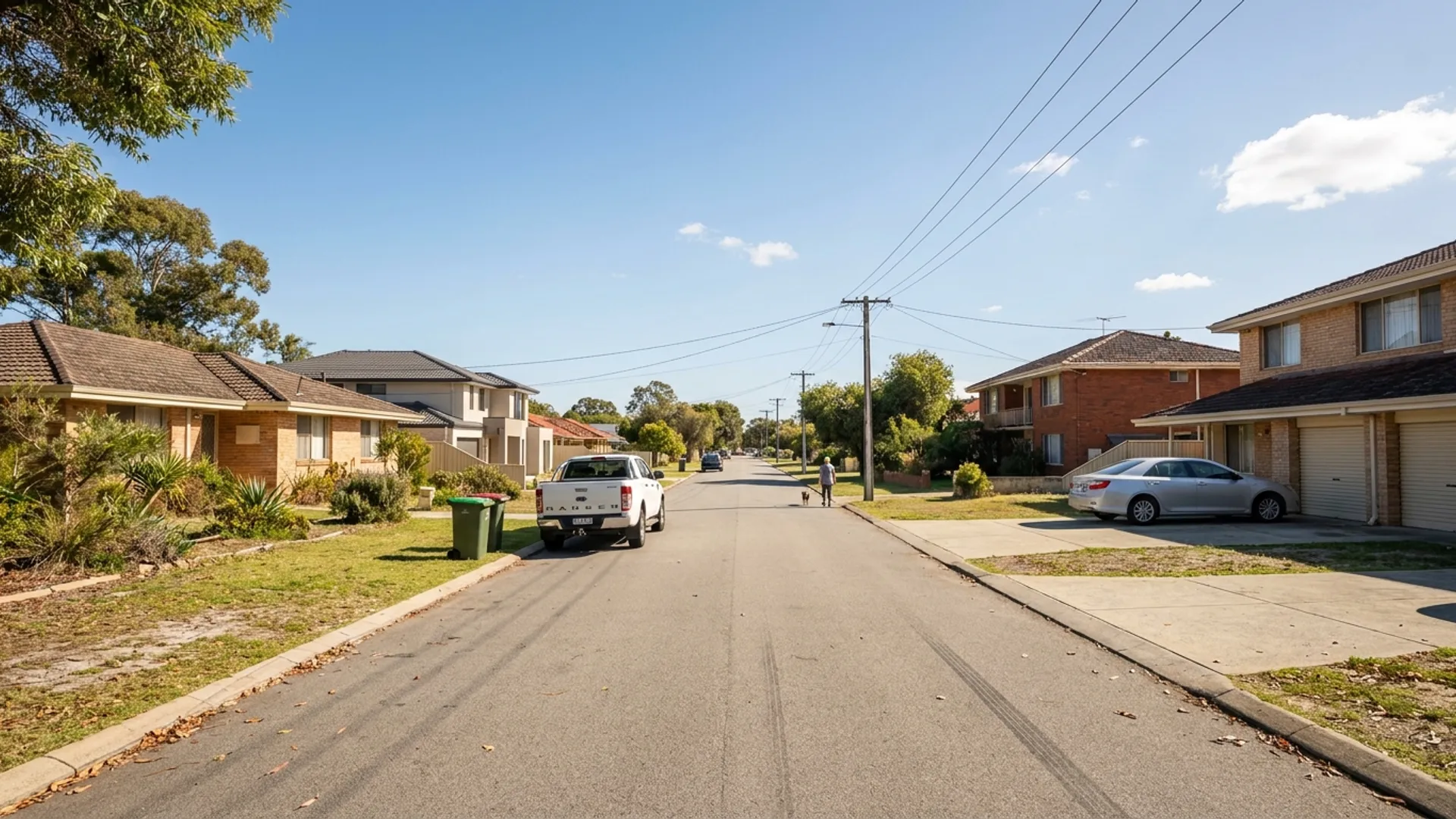
Building & Pest Inspections in Tuart Hill
Tuart Hill takes its name from the native Tuart trees (Eucalyptus gomphocephala) that once dominated this landscape — and those same trees now drive one of the suburb's primary inspection concerns. The suburb was developed during Perth's post-WWII housing boom of the 1950s-1970s, producing a dense grid of fibro homes, early double-brick cottages, and weatherboard dwellings on generous quarter-acre blocks. These homes are now 50-70 years old, and the construction materials of this era — asbestos fibro sheeting, galvanised plumbing, Jarrah roof framing, and bituminous DPCs — all have finite lifespans that are now being exceeded.
Tuart Hill's R30/R40 zoning has made it one of Perth's most active battle-axe and triplex subdivision suburbs. The original quarter-acre blocks are being split, with rear battle-axe lots accessed via long driveways beside the retained front home, or entire blocks demolished for triplex grouped dwellings. For buyers, the market presents a sharp dichotomy: original homes with extreme asbestos prevalence, aging structures, and rising damp — or new infill builds on tight lots with construction quality risks from volume-build developers. Both require thorough inspection for very different reasons. Combined building and pest inspections start from $497 for houses.
What We Look For in Tuart Hill Properties
Sagging Jarrah Roof Frames
Tuart Hill's 1950s-1960s homes were framed with Jarrah — a strong native hardwood, but one that was typically used in undersized sections by today's standards. The low-pitch hip roofs common to post-war Perth homes place sustained bending loads on each rafter, and after 60-70 years of service, the rafters develop permanent deflection (sag) between support points. This creates visible dips in the roofline when viewed from street level, and more importantly, allows rainwater to pool on metal roofing sheets at the low points. Pooled water accelerates corrosion, eventually penetrating through the sheet and causing ceiling damage. Our roof cavity inspections measure rafter deflection, check for cracked or split timbers at bearing points, and assess whether the ridge beam has settled — all indicators of how much structural capacity remains in the roof frame.
Rising Damp from Failed DPCs
The Damp Proof Course (DPC) installed in Tuart Hill's post-war homes was typically a bituminous strip or lead sheet embedded in the mortar course above foundation level. After 50-70 years, bituminous DPCs become brittle, crack, and lose their waterproofing function. The result is rising damp — groundwater wicking upward through the porous brickwork by capillary action. In Tuart Hill, the signs are textbook: tide-mark staining on interior walls at 300-500mm above floor level, bubbling and peeling paint, salt crystal efflorescence on external brickwork, and a persistent musty smell in rooms with poor ventilation. The problem is worst on south-facing walls that receive less sun and in rooms where furniture has been placed against the wall for years, trapping moisture behind it. Our moisture meter readings map the damp profile systematically to distinguish rising damp from other moisture sources (leaking plumbing, condensation, or external water penetration).
Aggressive DIY Renovations
Tuart Hill's affordable price point and owner-occupier demographic has produced decades of DIY renovation work — much of it without council permits or structural engineering input. Common findings include load-bearing walls removed to create open-plan living (with inadequate or no steel beam replacement), bathroom and laundry additions built over existing slabs without waterproofing membranes, electrical work performed by unqualified hands (double-adaptor wiring, oversized fuses, cable runs through roof spaces without adequate support), and rear extensions with inadequate footings. These modifications may look functional — even attractive — but they can introduce structural deficiencies, waterproofing failures, and safety hazards that aren't apparent until a trained inspector examines the work. Our inspections identify visible signs of unpermitted modifications and structural alterations that don't meet current standards.
Battle-Axe Lot Drainage Problems
Tuart Hill's battle-axe subdivisions create a persistent drainage issue: the rear lot sits behind the front home, accessed via a long shared driveway. The rear lot is often lower than the surrounding properties, and stormwater from the front lot's driveway, the neighbour's paving, and the battle-axe lot's own roof area all needs to be managed on a relatively small site. Undersized soakwells, inadequate paving fall directing water toward the slab edge, and the long driveway acting as a channel for overland flow are all common defects. For buyers looking at battle-axe properties in Tuart Hill, our inspections include site drainage assessment — checking paving fall direction, soakwell capacity indicators, and any signs of water ponding against the foundation.
Precincts We Service
- Central Tuart Hill (Cape Street / Royal Street precinct) — highest concentration of original 1950s-1960s fibro homes, extreme asbestos prevalence, sagging Jarrah roof frames, active battle-axe and triplex development
- North Tuart Hill (Wanneroo Road corridor) — commercial fringe transitioning to residential, mix of post-war homes and 2000s infill, traffic noise impact on properties facing arterial road
- South Tuart Hill (Oswald Street precinct) — larger 1960s-1970s brick homes, many with DIY renovations and additions, established gardens with mature Tuart and eucalypt trees creating termite pressure
- East Tuart Hill (Nollamara border) — transitional zone, smaller 1950s cottages, some of the oldest and most asbestos-affected stock in the suburb, high rental turnover
Pest Control in Tuart Hill
Tuart Hill's namesake eucalypts are the dominant driver of the suburb's termite risk. Tuart trees (Eucalyptus gomphocephala) are among the largest eucalypt species in the Perth region, and mature specimens — both in private gardens and as street trees — provide established nesting habitat for Coptotermes acinaciformis. The combination of large host trees, porous Karrakatta Sand that transmits foraging tunnels efficiently, and 50-70-year-old homes with timber framing, sub-floor timbers, and aging slab edges creates a high-risk environment across the entire suburb. Properties with retained mature trees on the lot — common in Tuart Hill where the original quarter-acre gardens haven't been fully subdivided — face the highest risk. Stumps from removed trees also harbour active colonies for years after the tree is gone if the stump isn't ground out completely. Annual termite inspections are essential for all Tuart Hill properties.
The suburb's aging housing stock also supports elevated cockroach and rodent populations. German cockroaches infest older kitchens where gaps behind cabinetry, deteriorating plumbing seals, and warm appliance motors provide ideal harbourage. Roof rats (Rattus rattus) exploit the gap between old Jarrah roof framing and roofing sheets — entering through damaged or missing eave vents and establishing nests in the insulation (if present) or directly on the ceiling joists. The autumn migration of rats from cooling gardens into warm roof spaces is a predictable seasonal pattern in Tuart Hill. Our pest control services cover general treatments from $189, including targeted cockroach treatments with 3-month warranties and rodent programs with lockable bait stations for persistent activity.