
Building & Pest Inspections in Nollamara
Nollamara is unlike any other suburb in the Scarborough hub — and inspectors who treat it like neighbouring Balcatta or Tuart Hill will miss critical issues. The suburb sits on Bassendean Sand, not the Karrakatta Sand (Spearwood Dunes) that underlies the rest of the hub. Bassendean Sand is a grey, acidic, nutrient-poor quartz sand with a higher winter water table and different drainage characteristics. This geological outlier, combined with Nollamara's unique housing history as a State Housing Commission (SHC) suburb from the 1950s-1960s, creates an inspection profile that demands specific local knowledge.
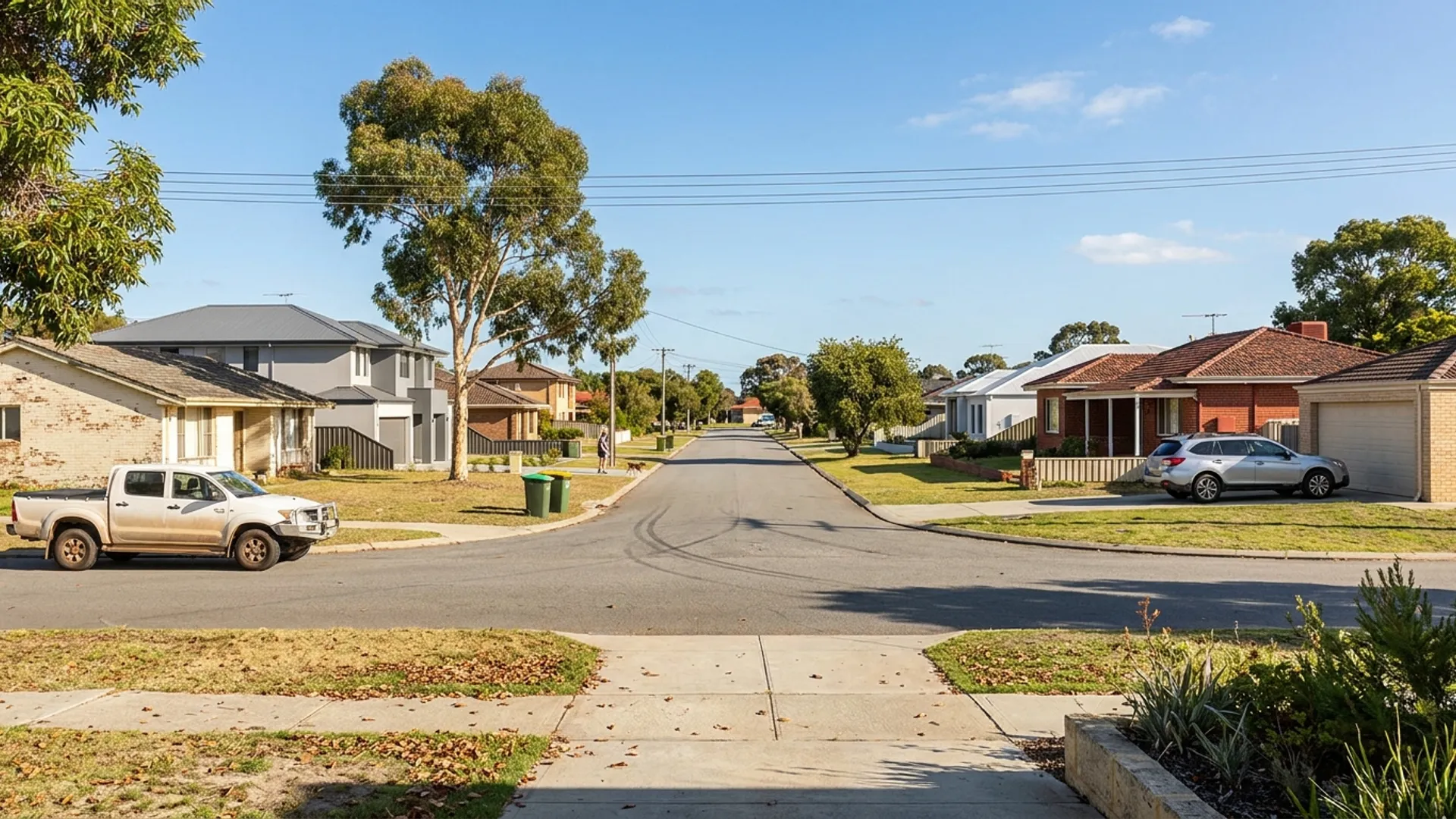
Nollamara's original housing stock was predominantly SHC fibro homes — small, utilitarian dwellings built quickly and cheaply using asbestos-cement sheeting as the primary wall and ceiling material. An estimated 75% of original homes in Nollamara contain asbestos — the highest prevalence in the Scarborough hub. The suburb has earned its reputation as Perth's "Triplex Capital" under aggressive R40 zoning, with original SHC homes being demolished at a rapid rate to make way for triplex grouped dwellings. For buyers, the market splits between deteriorating original stock (extreme asbestos, deferred maintenance from rental history) and brand-new triplexes (volume-build quality, tight lot constraints, drainage issues). Combined building and pest inspections start from $497 for houses.
What We Look For in Nollamara Properties
State Housing Commission Construction Defects
Nollamara's SHC homes were mass-produced in the 1950s and 1960s using standardised designs and cost-minimised construction. The timber framing was typically undersized softwood (not Jarrah), the stumps supporting suspended floors were often untreated pine, and the asbestos-fibro cladding was installed as a cost-effective weather skin rather than a structural element. After 60-70 years, these homes show predictable deterioration: stump rot causing floor deflection, timber frame members eaten by termites or weakened by borer activity, and roof framing that has sagged beyond the point of adequate weather protection. Many of these homes have been rental properties for decades, with maintenance limited to cosmetic patching rather than structural repair. The accumulated deferred maintenance on SHC stock in Nollamara can mean that what appears to be a simple renovation project actually requires near-complete structural remediation.
Buried Timber from Hasty Demolitions
This is a defect unique to suburbs experiencing rapid demolition and rebuild — and Nollamara is ground zero for it. When original SHC homes are demolished to make way for triplex development, demolition contractors sometimes bury timber offcuts, stumps, and framing members in the fill rather than removing them from site. This buried timber becomes a concealed food source for subterranean termites, effectively installing a termite "bait station" directly beneath or adjacent to the new construction. We have encountered active termite nests in buried demolition timber on Nollamara lots — colonies that then forage into the brand-new triplex built on the same site. Buyers of new triplexes in Nollamara should be aware that the clean, modern appearance of the home doesn't eliminate termite risk if the site preparation involved burying organic material.
Triplex Volume-Build Defects
Nollamara's R40 triplex developments are built by volume developers competing on price in one of Perth's most affordable suburbs. The margins are tight, and the defect rates reflect this. Common findings include: rendered walls with insufficient control joints (leading to cracking within 2-3 years as the building settles), inadequate stormwater management for three dwellings' roof area draining into shared soakwell systems, party walls between units with poor acoustic separation, and garages with slab levels that don't adequately prevent water entry during heavy rain. The tight lot configurations also mean that external maintenance access is severely limited — gaps between the triplex and the boundary fence can be as narrow as 300mm, making future painting, render repair, and pest treatment access extremely difficult.
High-Water-Table Issues on Bassendean Sand
Nollamara's Bassendean Sand substrate differs fundamentally from the Karrakatta Sand in surrounding suburbs. During winter, the water table in low-lying sections of Nollamara — particularly the areas near Des Penman Reserve and the southern end toward Nollamara Avenue — can rise significantly, saturating the shallow sand profile. For original homes with suspended timber floors, this means sub-floor moisture that accelerates stump rot and fungal decay. For newer triplex builds on concrete slabs, a high water table can overwhelm soakwell drainage systems (water can't soak away if the receiving soil is already saturated) and create damp conditions in garages and ground-floor rooms. Our inspections assess drainage adequacy relative to Nollamara's specific soil and water table conditions.
Precincts We Service
- Central Nollamara (Flinders Street / Nollamara Avenue) — highest density of triplex redevelopment, mix of original SHC stock and new grouped dwellings, buried timber risk on recently developed sites
- Des Penman Reserve border — elevated termite pressure from bushland reserve, original SHC homes with highest deferred maintenance, Bassendean Sand water table issues in low-lying sections
- Woodchester Reserve precinct — parkland termite harbourage, predominantly rental stock with deferred maintenance, seasonal pest migration from reserve into adjacent properties
- South Nollamara (Tuart Hill border) — transitional zone between Bassendean and Karrakatta Sand, older 1950s cottages, active demolition-and-rebuild corridor with site preparation quality concerns
Pest Control in Nollamara
Nollamara's pest environment is shaped by three compounding factors: the Bassendean Sand substrate, the suburb's parkland reserves, and the unique risk created by rapid demolition-and-rebuild activity. Des Penman Reserve and Woodchester Reserve provide permanent termite harbourage — mature trees with Coptotermes acinaciformis colonies that forage outward into surrounding residential properties through the sandy soil. The Bassendean Sand's higher winter water table provides the moisture that termites need for sustained colony activity, and the buried demolition timber from hasty site clearances creates concealed food sources that attract colonies directly onto building lots. Properties in Nollamara face termite risk regardless of age: old SHC homes with timber framing are directly vulnerable, and new triplexes on sites with buried timber or adjacent to reserves face colonisation within the first few years. Annual termite inspections are essential across the suburb.
Nollamara's high rental turnover also creates a distinctive pest management challenge. Rental tenants are less likely to report early-stage pest activity, and landlords managing portfolios from a distance may defer pest treatment until infestations become severe. German cockroaches in aging SHC kitchens can reach extreme population levels in a neglected rental, contaminating cabinetry and wall cavities to the point where a standard treatment is insufficient — repeat treatments at 2-week intervals are required to break the breeding cycle. Rodents exploit the deteriorating eaves and missing vent covers on poorly maintained rental stock, establishing roof-space colonies that produce noise complaints and ceiling contamination. Our pest control services cover general treatments from $189, with cockroach infestation treatments from $230 including repeat visit protocols for severe cases in Nollamara's rental stock.