Building & Pest Inspections in Mount Hawthorn
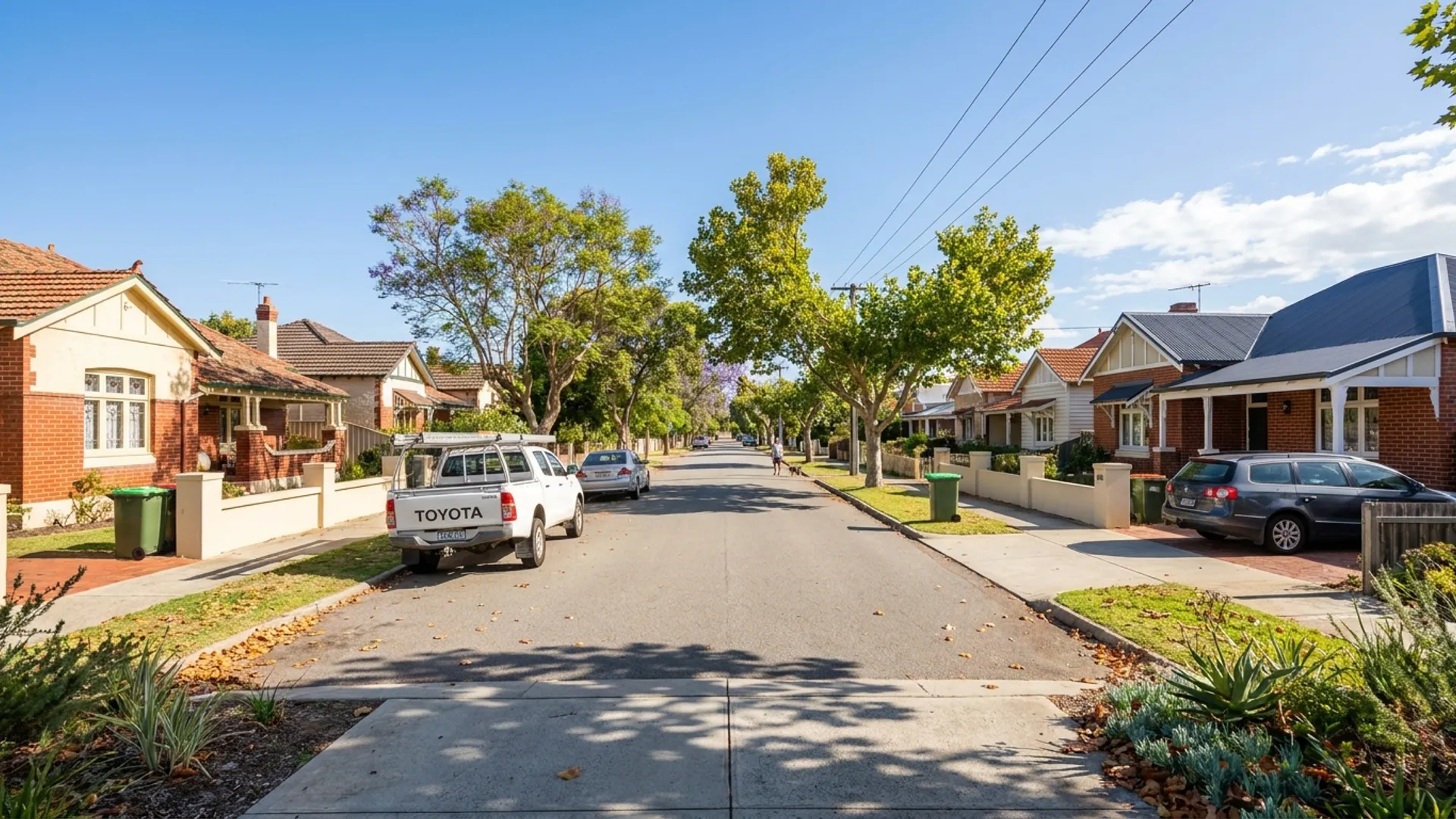
Mount Hawthorn is one of Perth's premier heritage suburbs — a tight grid of 1910s-1940s Federation homes, Edwardian cottages, and Californian Bungalows protected under the City of Vincent's strict heritage provisions. Inspecting in Mount Hawthorn requires understanding construction methods that haven't been used in over a century: lime mortar brickwork, lath-and-plaster internal walls, Jarrah timber framing with hand-cut joints, suspended timber floors on brick piers, and corrugated iron roofing fixed with wire ties rather than modern screws. These homes were built to last — and many have — but at 80-110 years old, every component is operating well beyond its designed service life.
The modern challenge in Mount Hawthorn is the "mullet house" — a heritage-protected 1920s front facade with a contemporary rear extension. The City of Vincent requires retention of the street-facing heritage character, so renovators demolish everything behind the front two rooms and build a modern open-plan kitchen, living, and bedroom extension at the rear. The junction between old and new construction is the critical stress point: differential settlement between the century-old limestone footings and the modern engineered slab, incompatible materials expanding and contracting at different rates, and waterproofing transitions between old roofing and new flat-roof extensions. Combined building and pest inspections in Mount Hawthorn start from $497 for houses.
What We Look For in Mount Hawthorn Properties
Century-Old Timber Framing Integrity
Mount Hawthorn's Federation and Edwardian homes were framed with Jarrah — a naturally durable hardwood, but one that is not immune to degradation after 100+ years of service. The hand-cut mortise-and-tenon joints used in early 1900s framing rely on tight timber-to-timber contact for strength. As the timber dries and shrinks over a century, these joints loosen, reducing the frame's structural integrity — particularly at the connection between wall studs and top plates where the roof loads transfer down to the foundations. Termite damage compounds this issue: even partial consumption of a bearing point can turn a loosened joint into a structural failure. Our inspections assess timber framing condition through roof cavity access, sub-floor crawl space inspection, and thermal imaging to detect concealed areas of termite damage or moisture-affected timber behind heritage plaster walls.
Rising Damp in Limestone Footing Homes
Mount Hawthorn's earliest homes (1910s-1920s) were built on limestone rubble footings — porous foundations that wick groundwater upward by capillary action. Many of these homes were built without any Damp Proof Course at all, or with a DPC that was primitive by modern standards (a layer of slate or bituminous felt). After a century, rising damp in these homes is chronic rather than occasional. The visible signs are unmistakable — salt crystallisation (efflorescence) destroying internal plaster, bubbling paint at low wall levels, crumbling mortar in the lowest brick courses, and a persistent damp smell in rooms with poor ventilation. Renovators sometimes apply modern cement render over the damp-affected brickwork, which seals the moisture inside the wall and accelerates the deterioration of the bricks behind the render. Our moisture readings map the full damp profile to distinguish rising damp from plumbing leaks or external water penetration.
"Mullet House" Junction Defects
The junction between a retained heritage front section and a modern rear extension is the highest-risk area in Mount Hawthorn's renovated homes. The original limestone or brick footings settle differently from the modern engineered slab behind — thermal movement coefficients are different, and the old and new roof structures apply loads at different points along the shared wall. The result is cracking along the junction — sometimes visible in the plaster, sometimes concealed behind joinery or paintwork. Waterproofing at the junction between old corrugated iron roofing and modern flat-roof extensions is another common failure point: the flashing details are complex, and any compromise allows water into the wall cavity at exactly the point where old and new construction meet. Our inspections specifically target the old-new junction for evidence of differential movement, waterproofing failure, and structural adequacy of the connection between the retained heritage structure and the modern extension.
Heritage Overlay Compliance Issues
The City of Vincent's heritage provisions in Mount Hawthorn restrict external modifications to heritage-listed and heritage-adjacent properties. Unauthorised changes to facades, roof profiles, window configurations, and fencing can create legal compliance issues for buyers. More practically, heritage provisions can restrict future renovation options — a buyer planning to modify the home needs to understand what's permitted before purchasing. Our inspections note visible alterations that may not have heritage approval, including replaced windows (aluminium in place of original timber), modified verandah structures, rendered brickwork on originally face-brick homes, and roof material changes. These observations don't constitute heritage compliance advice, but they flag areas for further investigation with the City of Vincent before committing to purchase.
Precincts We Service
- Scarborough Beach Road precinct (south Mount Hawthorn) — densest concentration of 1910s-1920s Federation cottages, highest heritage protection, rising damp in limestone footing homes, "mullet house" renovations
- Britannia Road Reserve border — elevated termite pressure from parkland with mature eucalypts, original Californian Bungalows from 1930s-1940s, established gardens with large trees
- Lake Monger precinct (east Mount Hawthorn) — proximity to Lake Monger creates sustained termite and moisture risk, premium heritage homes with complex renovation histories, rising damp on lower-lying eastern streets
- Coogee Street / Flinders Street corridor — active "mullet house" renovation zone, mix of heritage-retained fronts with modern rear extensions, junction defect assessments at old-new interfaces
Pest Control in Mount Hawthorn
Mount Hawthorn faces very high termite risk — driven by the combination of century-old timber framing and proximity to two significant termite source habitats. Lake Monger, immediately east of the suburb, provides permanent moisture and mature tree harbourage for Coptotermes acinaciformis colonies. Britannia Road Reserve, cutting through the suburb's western edge, adds additional bushland-based termite populations. The century-old Jarrah framing in Mount Hawthorn's Federation homes has naturally high resistance to termite attack, but after 100+ years of service, Jarrah develops micro-fractures and moisture absorption points that provide entry opportunities for even this hardwood's natural defences. Once termites establish concealed access through the sub-floor area or wall cavities of a heritage home, the damage can progress significantly before detection — the thick lath-and-plaster walls and high sub-floor crawl spaces of Federation construction conceal termite leads (mud tubes) from visual detection. Annual termite inspections using thermal imaging and Termatrac technology are essential for every Mount Hawthorn heritage home.
Beyond termites, Mount Hawthorn's heritage housing stock provides ideal conditions for spiders, rodents, and silverfish. Redback spiders colonise the brick pier sub-floor spaces beneath suspended timber floors — the dark, undisturbed environment with constant moisture from the sandy soil is perfect for web construction. Roof rats enter through gaps in century-old eave timbers, missing vent covers, and deteriorated roof flashings, establishing nests in the generous roof cavities that characterise Federation homes. Silverfish thrive in the damp internal walls of limestone-footing homes, feeding on the starch in old wallpaper adhesives and stored paper. Our pest control services cover general treatments from $189, with targeted treatments for the specific pest populations that heritage housing stock supports.