
Building & Pest Inspections in Stirling
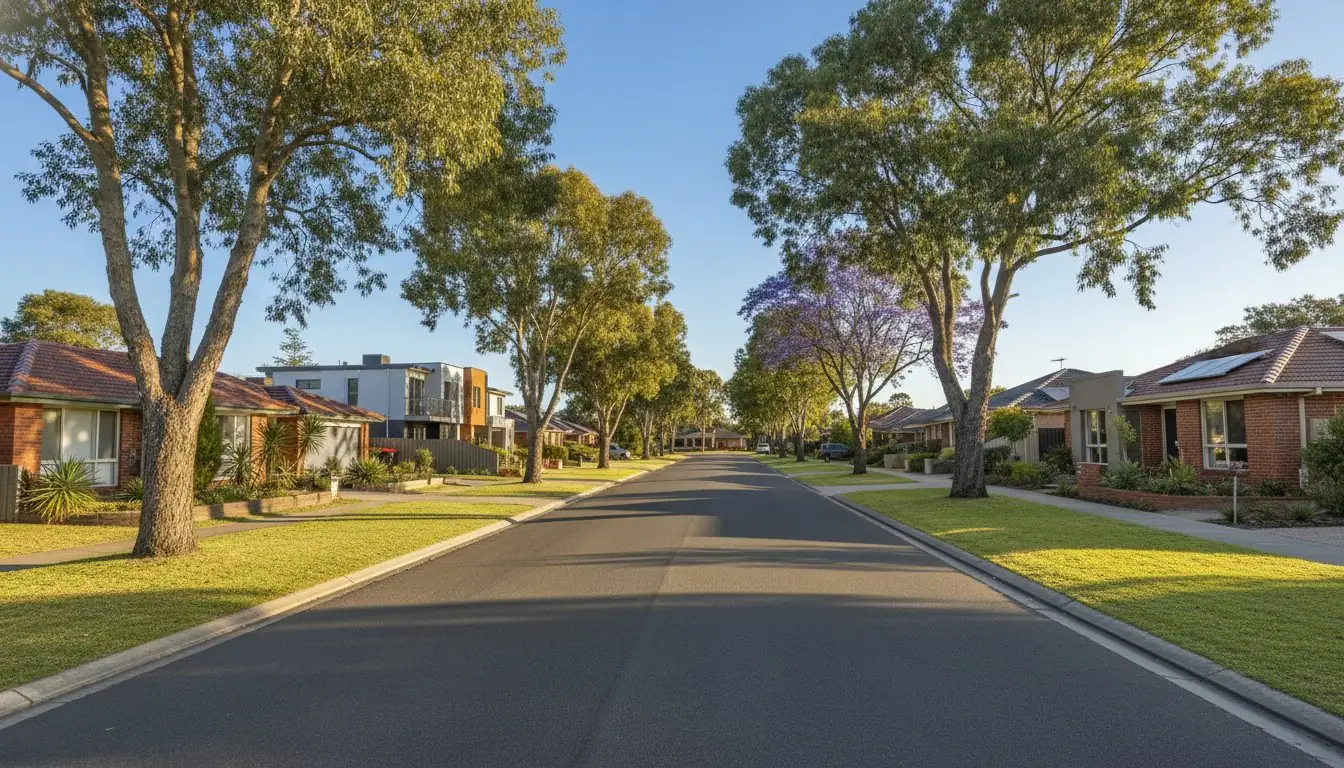
Stirling is a suburb defined by contrasts — the original late 1970s to 1990s brick-and-tile homes that established the suburb sit alongside 2000s and 2010s luxury rebuilds that have transformed entire streets. The suburb sits on Karrakatta Sand within the Spearwood Dune system, providing stable foundation conditions, but Stirling's defining feature from an inspection perspective is its proximity to large areas of parkland and wetland. Stirling Civic Gardens — one of Perth's largest suburban parks — runs through the heart of the suburb with mature eucalypts and paperbarks that harbour significant termite colonies.
The dual-era housing stock creates distinct inspection challenges. Original 1980s homes carry moderate asbestos risk, aging roof tiles, and the first signs of mortar joint degradation. The luxury rebuilds, while asbestos-free, introduce their own issues: rendered facades that can mask brickwork defects, complex roof geometries with multiple valley and box gutters, and swimming pools on sandy sites with potential for undermining adjacent structures. Combined building and pest inspections in Stirling start from $497 for houses.
What We Look For in Stirling Properties
Roof Tile Degradation on 1980s-1990s Homes
Stirling's original subdivision-era homes are now 30-45 years old, and the concrete roof tiles installed during this period are reaching the end of their serviceable life. Concrete tiles from this era develop hairline cracking, surface erosion, and loss of the protective colour coating that prevents moisture absorption. Once the tile surface becomes porous, water wicks through during heavy rain, saturating the sarking (if present) and staining the ceiling below. Broken or slipped tiles at the ridge and hip intersections are the most common entry points, but the broader tile surface degradation means individual tile replacements are only a temporary fix — full re-roofing becomes inevitable. Our inspections assess tile condition across the entire roof surface, not just the visible sections from ground level.
Rendered Facade Defects on Luxury Rebuilds
Stirling's 2000s and 2010s luxury homes frequently feature full rendered facades — acrylic render systems applied over brick or lightweight construction. When installed correctly, these systems perform well. However, render applied without adequate control joints will crack as the building moves seasonally. Cracks in render allow water behind the system, where it's trapped between the render skin and the substrate — creating the conditions for both structural deterioration and concealed moisture damage. Our inspectors check for cracking patterns, delamination (hollow-sounding areas where the render has separated from the substrate), and staining that indicates trapped moisture. Render defects are particularly common at window head flashings and at the junction between the garage and main dwelling on two-storey homes.
Swimming Pool Proximity Issues
A significant proportion of Stirling's luxury homes include swimming pools. On Karrakatta Sand, pools can create localised problems: leaking pool shells or plumbing saturate the surrounding sand, which can undermine adjacent retaining walls, paving, and in severe cases, the home's foundation. Pool equipment enclosures against boundary fences also create concealed pest harbourage zones. Our inspections assess visible signs of pool-related moisture impact on adjacent structures — cracked paving, leaning retaining walls, and elevated moisture readings in walls closest to the pool area.
Box Gutter Failures on Complex Roof Designs
Stirling's modern luxury homes feature complex roof geometries with internal box gutters — concealed gutter channels between roof planes that direct water to downpipes. Box gutters are a known failure point in Perth homes: leaf accumulation, inadequate fall, and corroded flashings cause overflows that discharge directly into the roof cavity rather than externally. Because box gutters are concealed, the overflow damage — wet insulation, stained ceilings, and timber rot on roof framing — often develops for months before the homeowner notices. Our roof cavity inspections specifically target box gutter discharge points and the surrounding timber framing for moisture damage.
Precincts We Service
- Roselea Estate — established homes surrounding the ornamental lake, elevated termite and moisture risk from lakeside environment, aging 1980s-1990s stock requiring roof and plumbing assessments
- Princeton Estate — wetland-adjacent properties with high subterranean termite pressure, mix of original and rebuilt homes, drainage management on sites near natural water features
- Stirling Civic Gardens precinct — properties backing onto the park face extreme termite risk from mature eucalypts and paperbarks, premium homes with complex roof designs and swimming pools
- Cedric Street corridor — commercial-to-residential transition zone, older 1970s-1980s stock with higher asbestos prevalence, ongoing redevelopment activity
Pest Control in Stirling
Stirling faces extreme subterranean termite pressure — driven primarily by the massive expanse of Stirling Civic Gardens running through the suburb's centre. The park's mature eucalypts, paperbarks, and fig trees provide established nesting habitat for Coptotermes acinaciformis, which forages outward through the Karrakatta Sand into surrounding residential properties. Properties that directly back onto the Civic Gardens are in the highest-risk category, but termite foraging tunnels can extend 50-100 metres through porous sand, placing the entire surrounding neighbourhood within range. Roselea Estate's ornamental lake and Princeton Estate's wetland corridors add additional moisture to the soil profile, creating year-round foraging conditions that don't diminish even during Perth's dry summers. Annual termite inspections are essential for all Stirling properties, and properties within 100 metres of park or wetland boundaries should consider monitoring stations as a permanent early-warning system.
Beyond termites, Stirling's parkland proximity drives elevated populations of spiders — particularly Redbacks in garden retaining walls, meter boxes, and pool pump enclosures — and seasonal mosquito pressure from the Roselea and Princeton wetland areas. Rodent activity increases during autumn and winter as rats migrate from cooling parkland into warm roof spaces, entering through gaps in deteriorating eaves on the suburb's older homes and through builder-grade ventilation grilles on newer ones. Our pest control services cover general treatments from $189 and targeted termite inspections from $189, with treatment programs tailored to Stirling's specific parkland-proximity risk profile.