
Building & Pest Inspections in Tapping
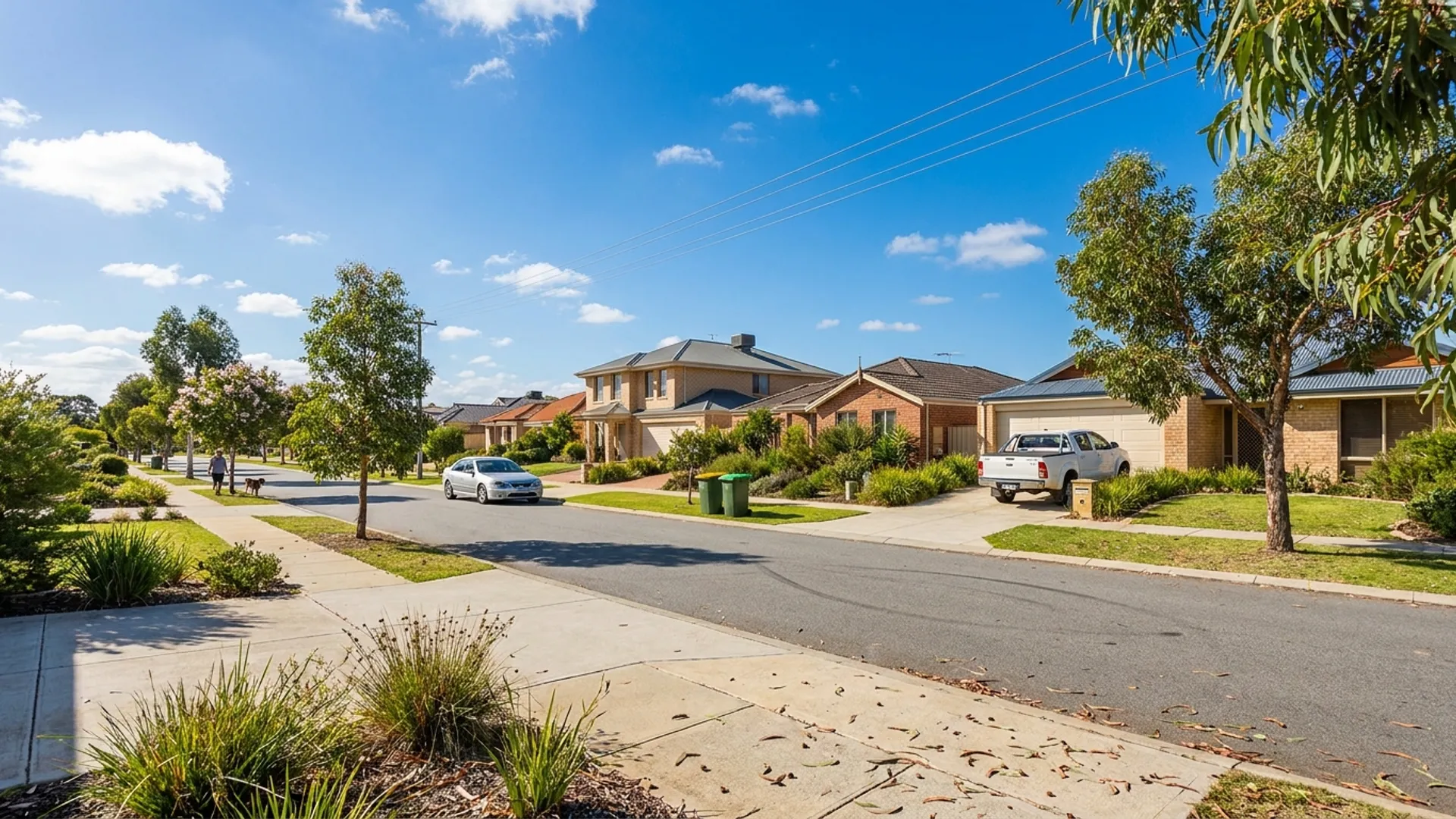
Tapping is a well-established family suburb in Perth's northern corridor, developed during the 1990s and early 2000s on the Spearwood Dune system — Karrakatta Sand over Tamala Limestone. The suburb sits west of Wanneroo Road and south of Joondalup Drive, with consistent 1990s–2000s double-brick-and-tile housing on concrete slab-on-ground. At 20–30 years old, Tapping's homes are entering their first significant maintenance cycle, making pre-purchase inspection important for buyers who want to understand the upcoming maintenance commitments.
What We Look For in Tapping Properties
Roof System at 20–30 Years
Tapping's concrete tile roofs are at the age where maintenance becomes unavoidable. Factory glazing has worn off the tiles, allowing moisture absorption that adds weight and accelerates the degradation cycle. Ridge capping mortar has cracked on most original roofs, and original galvanised valley trays are showing corrosion — particularly at the seams where water accumulates. The roof is the single most expensive building system to replace, making honest assessment of remaining life critical for buyers. Our inspectors access the roof space to assess both the exterior cladding and the structural timber, checking for truss deflection, sarking condition, and evidence of past or active roof leaks.
Bathroom and Wet Area Waterproofing
Original bathroom waterproofing in 1990s–2000s homes has a functional life of approximately 15–25 years — meaning Tapping's homes are at the critical threshold where membrane failure becomes likely. We consistently find failed shower waterproofing in homes of this age, often with no visible indicators from inside the bathroom. The damage manifests externally — swelling skirting boards on the other side of the bathroom wall, bubbling paint in adjacent rooms, or elevated moisture readings in the floor slab near wet areas. Our inspectors systematically check every wet area using moisture meters.
Original Soakwell and Drainage Condition
Tapping's original concrete soakwells are 20–30 years old and approaching or past their design life. Failed soakwells cause stormwater to pool near foundations rather than dispersing through the sandy soil. On Karrakatta Sand this creates localised erosion — undermining paving, settling driveways, and in severe cases, compromising the stability of sand supporting the slab edge. Our inspectors check for evidence of drainage failure around the full property perimeter.
Precincts We Service
- Wanneroo Road Side (East) — earlier 1990s stock, approaching 30-year maintenance milestone
- Central Tapping — consistent family homes, established gardens with mature trees, localised termite harbourage
- Joondalup Drive Corridor (North) — slightly newer 2000s stock, still within first maintenance cycle
- Tapping Primary School Precinct — family-focused area, high inspection demand for families buying into school zones
Pest Control in Tapping
Tapping's established gardens and mature street trees — now reaching 20–30 years of growth — increasingly support pest populations. The sandy Karrakatta soils are ideal for subterranean termite foraging, and as garden plantings mature, they create moisture corridors and harbourage that sustain termite activity. Internal parks and green spaces throughout the suburb provide additional termite habitat, with homes directly adjacent to parkland facing the highest localised risk.
Original chemical termite barriers from the 1990s and 2000s have expired, and many Tapping homeowners don't realise their homes are unprotected. Subsequent landscaping, paving, and garden bed construction against walls may have compromised physical barriers. Coastal brown ants are common in the sandy soils. Rodent activity increases during autumn and winter as roof rats seek shelter in heated roof spaces. Our pest control services start from $189, with annual termite inspections from $189.