Building & Pest Inspections in Edgewater
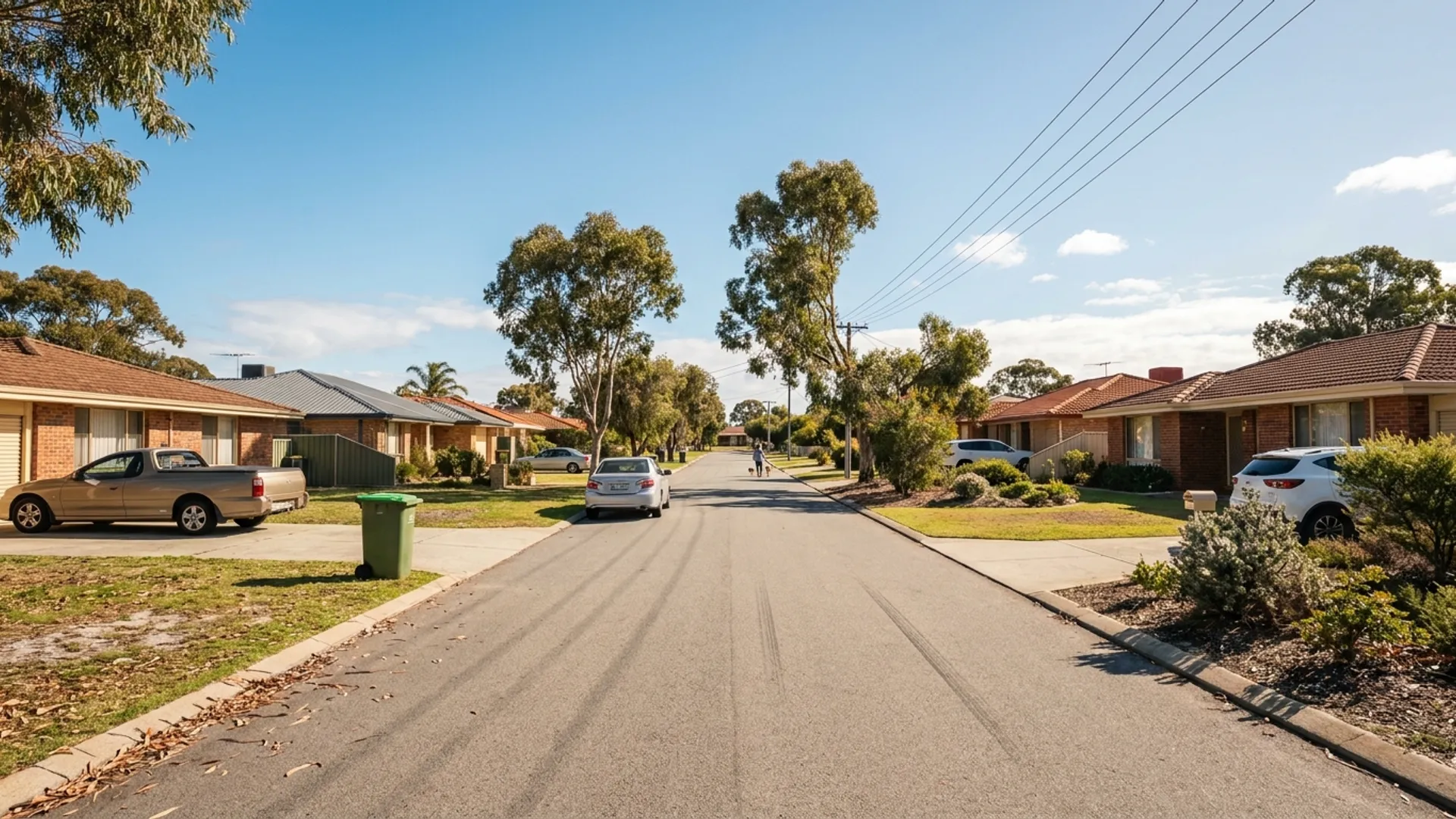
Edgewater sits on the Spearwood Dune system — Karrakatta Sand over Tamala Limestone — between the Mitchell Freeway and the ecologically significant Yellagonga Regional Park. The suburb was developed primarily during the 1970s–1990s, producing a consistent housing stock of double-brick-and-tile family homes on concrete slab-on-ground foundations. While the sandy soils provide generally stable foundation conditions, the proximity to Lake Joondalup and the surrounding wetland vegetation creates one of the northern corridor's most active termite environments.
Edgewater is now experiencing infill pressure as the City of Joondalup's Housing Opportunity Areas unlock subdivision potential on larger original lots. This creates a mixed inspection environment — pre-purchase assessments on 40–50 year old homes alongside practical completion inspections on brand-new builds constructed on subdivided blocks.
What We Look For in Edgewater Properties
1970s–1980s Brick-and-Tile Deterioration
Edgewater's dominant housing stock is now 40–50 years old, placing it at the critical age where multiple building systems reach failure simultaneously. Concrete roof tiles from this era have lost their factory glaze, absorbing winter rain and adding weight that causes pine roof trusses to sag. Original galvanised valley trays and guttering are severely corroded. Mortar on ridge capping is often cracked or missing entirely. Our inspectors assess the full roof system — structure, cladding, drainage, and ventilation — because at this age, partial repairs are common while underlying issues persist.
Wall Tie Corrosion in Cavity Walls
Homes built in Edgewater between 1970 and 1985 used mild steel wall ties connecting the inner and outer brick leaves. After 40+ years in Perth's climate, these ties corrode and lose structural capacity. The telltale sign is horizontal cracking in mortar joints at regular intervals. Advanced wall tie failure is a serious structural issue — the outer brick leaf can become unstable. Our inspectors check for the characteristic cracking pattern on all elevations, with particular attention to south-facing walls where moisture exposure accelerates corrosion.
Soakwell and Drainage Failure
Original concrete soakwells in Edgewater are now at or beyond their 30–40 year design life. Collapsed or silted-up soakwells redirect stormwater toward foundations, causing localised sand washout around footings. This is particularly problematic on subdivided blocks where the original drainage system was designed for one dwelling but now serves two. Our inspectors check for evidence of drainage failure including paving settlement, erosion channels around the property perimeter, and damp at the base of walls near downpipe discharge points.
Infill Construction Impact on Original Homes
Where Edgewater blocks are being subdivided for infill development, the original front home often undergoes modifications — removal of carports, changes to utility connections, and construction activity on the immediately adjacent new lot. These modifications can compromise the original home's structural integrity if not properly managed. Our inspections check for new cracking that coincides with adjacent construction, severed or modified utility connections, and changes to drainage patterns from the new development.
Precincts We Service
- Yellagonga Park Edge (western boundary) — extreme termite pressure from wetland vegetation, 1970s–1980s homes with sub-floor access points
- Edgewater Train Station Precinct — higher density infill, subdivision activity, modern triplex development on original lots
- Marmion Avenue Corridor — 1980s–1990s family homes, concrete tile roof failures, wall tie corrosion
- Central Edgewater — original 1970s stock on large blocks, soakwell failures, asbestos-containing materials throughout
Pest Control in Edgewater
Yellagonga Regional Park — encompassing Lake Joondalup and its surrounding wetland and bushland — is the dominant pest influence in Edgewater. The park's mature paperbarks, eucalyptus, and Banksia woodland harbour large Coptotermes acinaciformis colonies that forage deep into the suburb's residential blocks. Properties on the western boundary of Edgewater — particularly those backing directly onto the park — face year-round termite pressure. The park's irrigated vegetation and permanent water bodies maintain soil moisture that sustains termite foraging even through Perth's dry summer months.
The 1970s–1980s housing stock compounds the termite risk. Aging reticulation systems leak moisture near foundations, timber garden edging built against external walls provides bridging material, and many original homes had their chemical termite barriers installed with organochlorines that have long since broken down. Rodent pressure is also elevated near the park boundary, with roof rats migrating from the wetland vegetation into heated roof spaces during autumn and winter. Our pest control services start from $189, with annual termite inspections from $189 — critical for any Edgewater property near the Yellagonga corridor.