Building & Pest Inspections in Kinross
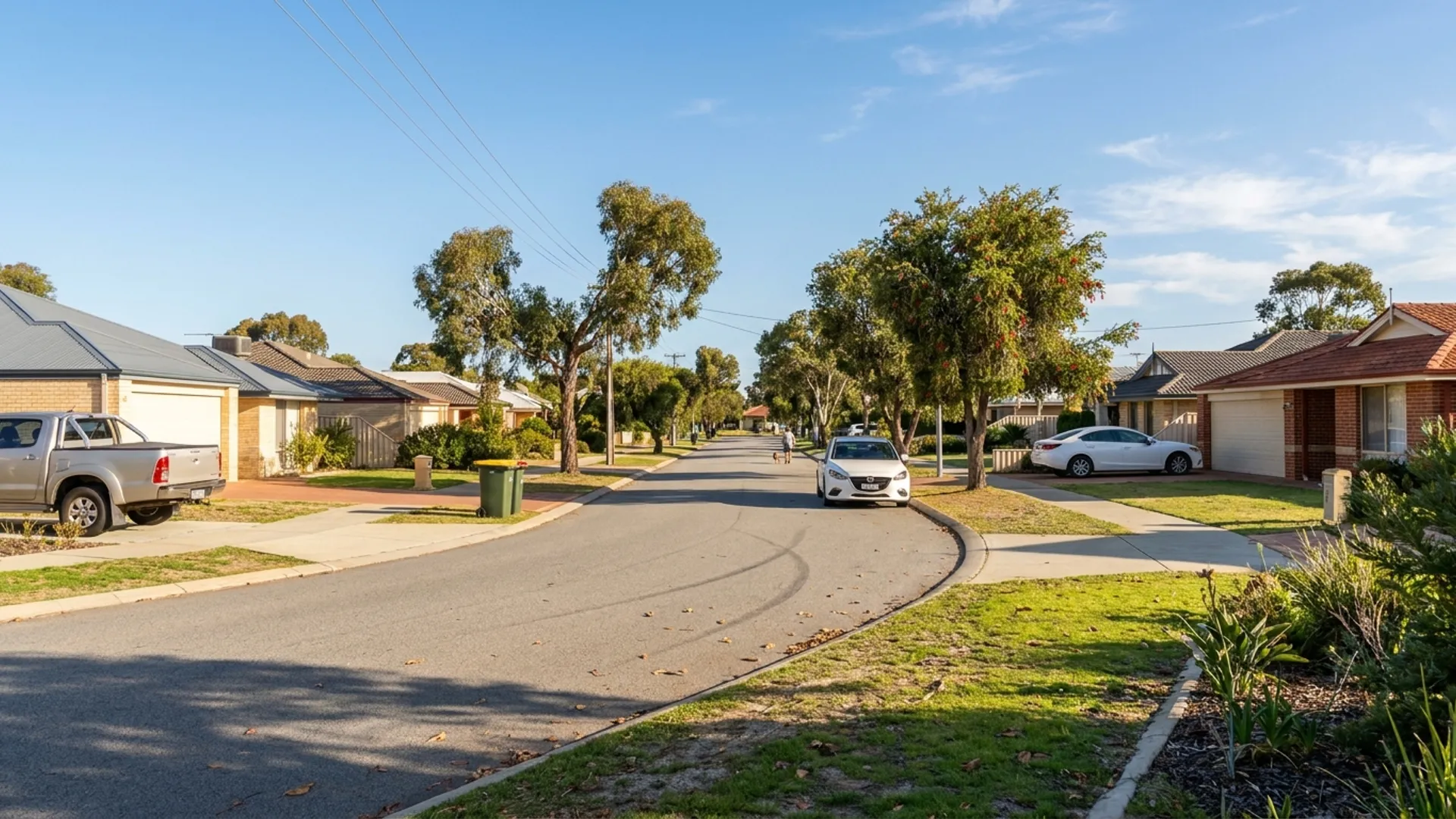
Kinross is a well-planned family suburb in Perth's northern corridor, developed during the 1990s and 2000s on the Spearwood Dune system — Karrakatta Sand over Tamala Limestone. The suburb sits between Connolly Drive and Burns Beach Road, with good access to both the coast and the Joondalup city centre. The housing stock is consistently 1990s–2000s double-brick-and-tile on concrete slab, giving Kinross a predictable inspection environment — but at 20–30 years old, these homes are entering their first significant maintenance cycle.
What We Look For in Kinross Properties
First-Cycle Maintenance Assessment
Kinross homes are at the age where original building systems begin needing replacement rather than repair. Concrete roof tiles are losing their protective glaze and absorbing moisture — the early signs appear as dark staining on tiles that no longer dry quickly after rain. Ridge capping mortar cracks as it ages, creating water entry points into the roof space. Original guttering shows corrosion at joints and seams, particularly on northern elevations where UV exposure is greatest. Our inspectors assess all major building systems and quantify the remaining service life, helping buyers understand what maintenance expenditure to expect in the first five years of ownership.
Wet Area Waterproofing at 20–30 Years
Shower recess and bathroom waterproofing from the 1990s and early 2000s is reaching the end of its functional life. Failed membranes allow water to penetrate beneath tiles, through the slab, or into adjacent wall cavities. The damage often develops gradually — swelling in skirting boards near the bathroom, bubbling paint on walls outside wet areas, or musty odours in adjacent rooms are early indicators. Our inspectors use moisture meters to check walls and floors adjacent to all wet areas, identifying active leaks before they cause significant structural damage to floor framing, wall linings, or slab integrity.
Paving and Drainage on Sandy Soils
Kinross's sandy Karrakatta soils drain quickly, which is generally positive for building foundations but creates challenges for paving stability. Original concrete soakwells may have silted up, and where stormwater isn't adequately managed, the water erodes sand beneath paving, driveways, and footpaths. Settling paving adjacent to the home can redirect water toward the slab edge rather than away from it. Our inspectors check the fall direction of all paved surfaces and assess stormwater infrastructure condition.
Precincts We Service
- Burns Beach Road Corridor — established 1990s family homes, approaching 30-year maintenance milestone
- Connolly Drive Edge — 2000s builds, slightly newer stock, wet area waterproofing focus
- Kinross Central (near schools/shopping) — consistent double-brick stock, established gardens with termite harbourage
- Northern Kinross — quieter residential pocket, larger lots with mature tree plantings
Pest Control in Kinross
Kinross's established gardens and mature street trees — now 20–30 years into their growth — create increasing pest pressure as the suburb matures. The sandy Karrakatta soils are ideal for subterranean termite foraging, and as original garden plantings reach mature size, they provide harbourage and moisture corridors that support termite colony activity. Internal parks throughout the suburb — designed as part of the original master plan — add localised termite pressure for surrounding homes.
Original chemical termite barriers installed during construction in the 1990s and 2000s have expired, leaving many Kinross homes reliant on physical barriers that may have been compromised by subsequent paving, landscaping, or garden bed construction against external walls. Coastal brown ants are active in the sandy soils, undermining paving and creating subsidence. Rodent activity increases in autumn and winter as temperatures drop and food sources decline in surrounding parkland. Our pest control services start from $189, with annual termite inspections from $189.