Building & Pest Inspections in High Wycombe
High Wycombe occupies the scarp-base corridor between Forrestfield to the south and Maida Vale to the north — a strip of established residential suburb built on Guildford Formation reactive clay at the foot of the Darling Scarp. Like its neighbours, High Wycombe inherits the dual moisture problem that defines scarp-base suburbs: reactive clay that shrinks and swells with moisture changes, combined with water runoff from the hills above that keeps that clay saturated for longer than equivalent soils further from the scarp. This combination has been working on High Wycombe's foundations for 30 to 50 years, and the cumulative effects are visible in many properties across the suburb.
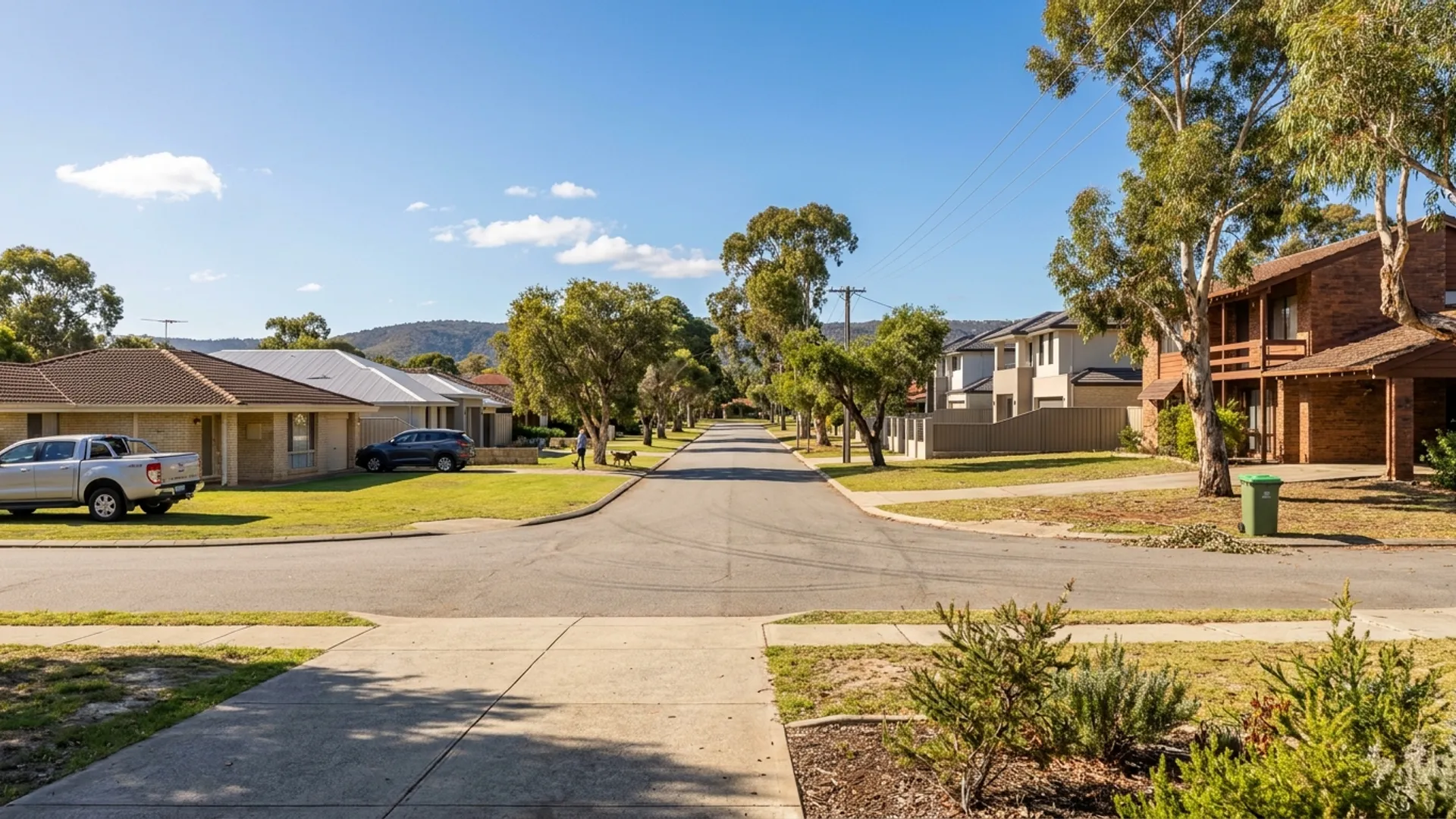
The housing stock is predominantly 1970s to 1990s brick-and-tile — Perth's ubiquitous construction type from this era. These homes were built to the standards and practices of their time, which means many lack modern termite barrier systems, contain asbestos-bearing materials, and have foundations designed for a lower reactivity classification than the soil actually exhibits. The homes are well-built for their era, but four to five decades of reactive clay cycling, termite pressure from the adjacent scarp bushland, and general aging of construction materials means a comprehensive pre-purchase building and pest inspection is essential for any buyer considering a High Wycombe property.
High Wycombe's established character is changing in some precincts. The Kalamunda Road development corridor and the broader Metronet influence have driven rezoning and subdivision activity, with older homes on larger lots being replaced by grouped dwelling developments. This creates a mixed market where buyers need to assess both established 1970s homes and newer infill construction — each with different defect profiles and risk factors.
What We Look For in High Wycombe Properties
Decades of Reactive Clay Foundation Movement
Forty to fifty years of seasonal shrink-swell cycling on Guildford Formation clay leaves a measurable record on a home's structure. In High Wycombe, the scarp-base moisture loading means this cycling has been more intense than in suburbs on the flat plain. Common evidence includes diagonal cracking radiating from window and door openings, visible step-cracking in external brickwork following mortar joints, doors and windows that bind or swing open, separation between ceiling and wall junctions, and measurable floor slope across the home. Our inspectors use laser levelling to quantify slab variation and assess whether the movement pattern is consistent with reactive clay (seasonal, broadly symmetric) or indicates a more serious localised failure. We also check external factors — drainage direction, garden bed moisture, retaining wall condition, and proximity to large trees whose root systems extract moisture from the clay — to identify correctable causes of ongoing movement.
Darling Scarp Termite Corridor
The Darling Scarp bushland corridor runs along High Wycombe's eastern boundary, and the established jarrah, marri, and wandoo forest supports large subterranean termite colonies that have been foraging into the suburb for decades. High Wycombe's position in this corridor means termite pressure is not a localised issue affecting only bush-edge properties — foraging galleries extend hundreds of metres from the colony source, meaning properties well into the suburban core are within range. The sustained moisture from scarp runoff maintains soil conditions that support year-round termite activity, including through Perth's dry summer months. Many of the original chemical barriers installed during High Wycombe's 1970s and 1980s construction have degraded, leaving homes without active barrier protection. Our timber pest inspections in High Wycombe include a thorough assessment of accessible subfloor areas, roof spaces, perimeter soil conditions, and any timber-to-ground contact.
European House Borer (EHB) Risk in Established Stock
High Wycombe's 1970s to 1990s housing stock sits squarely in the era of untreated seasoned pine roof trusses and framing — the primary target for European House Borer. EHB has been identified in suburbs across Perth's eastern corridor, and High Wycombe's proximity to the scarp (where EHB has historically been detected) elevates the risk. EHB larvae bore through pine for 3 to 11 years before emerging, meaning structural damage to roof trusses can be severe before any exterior evidence appears. We inspect accessible roof spaces for EHB exit holes, frass deposits, and structural weakening of truss members.
Asbestos in 1970s–1980s Construction
High Wycombe's 1970s and 1980s housing stock predates the phasing out of asbestos-containing materials in Australian residential construction. Fibro-cement eaves soffits, gable cladding, fence sheets, bathroom and laundry wall linings, and some floor tiles in properties from this era frequently contain asbestos. For buyers planning renovation or extension works — particularly those attracted by the Kalamunda Road corridor's rezoning and subdivision potential — understanding the location and extent of asbestos is essential cost information that affects the feasibility and budget of any development plan. Our inspections identify suspected asbestos-containing materials by location, type, and condition.
Kalamunda Road Development Corridor
The Kalamunda Road corridor through High Wycombe is undergoing progressive rezoning and redevelopment, with established homes on larger lots being subdivided for grouped dwellings. This creates specific inspection scenarios: buyers of established homes need to understand whether the property is structurally viable for renovation, whether asbestos removal costs are manageable, and whether the lot configuration supports future subdivision. Buyers of newer infill dwellings on subdivided lots face different concerns — narrow-lot drainage on reactive clay, boundary wall assessment, and construction quality of recently built grouped dwellings.
Precincts We Service
- High Wycombe East (Scarp Base) — direct bushland interface, extreme termite pressure, scarp runoff moisture, steep sites with retaining walls
- High Wycombe Central (Established) — 1970s–1990s brick-and-tile core, reactive clay foundation assessment, aging construction, high asbestos prevalence
- Kalamunda Road Corridor — rezoning and subdivision activity, mixed established and infill stock, renovation suitability assessment
- Newburn Road & Wittenoom Road Precinct — established residential, larger lots with mature tree root impact on foundations, Perth Airport flight path proximity
Pest Control in High Wycombe
High Wycombe's pest pressure mirrors the broader scarp-base corridor: permanent, year-round, and driven by the Darling Scarp bushland rather than by temporary development displacement. The established eucalyptus forest on the scarp supports populations of subterranean termites, bush cockroaches, redback spiders, huntsman spiders, scorpions, and rodents that treat the adjacent residential suburb as an extension of their habitat. The scarp-base moisture conditions — sustained by winter runoff and the heavy clay soil — ensure that pest activity continues through summer when drier coastal suburbs see reduced pressure.
Subterranean termite risk in High Wycombe is extreme and should be taken seriously by every property owner. The degradation of original 1970s and 1980s chemical barriers means many homes have no active termite protection. Mature tree root systems — both from the scarp bushland and from established gardens within the suburb — provide underground highways that termite colonies use to access residential foundations. We recommend annual termite inspections for every High Wycombe property, with particular urgency for homes that have never had their barriers renewed. General pest control for spiders, cockroaches, ants, and rodents starts from $189, and our termite inspections start from $189.