
Pre-Purchase Building & Pest Inspections in Ellenbrook & North East Perth
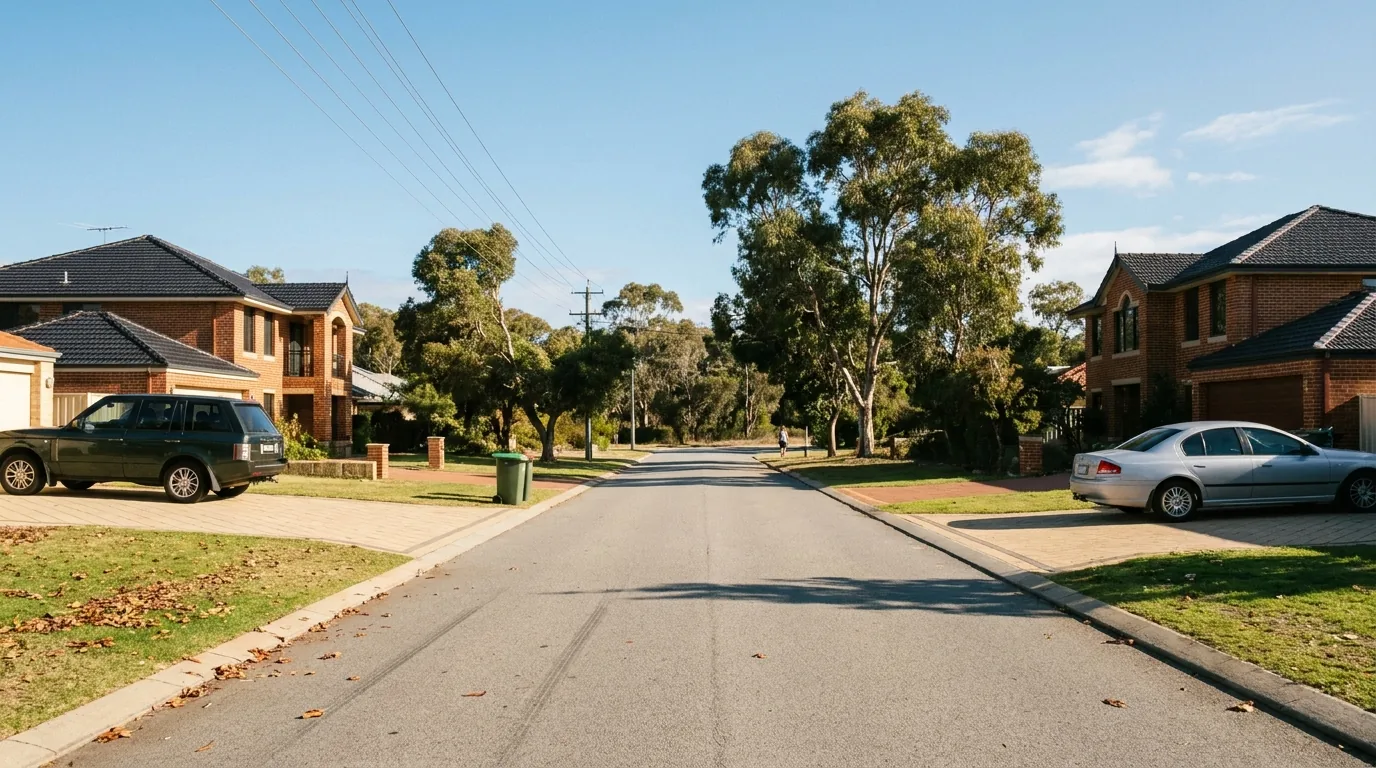
The north-east corridor is Perth's most diverse inspection zone. Within a 20-minute drive, you move from brand-new master-planned estates in Brabham and Dayton to century-old railway cottages in Midland to bushfire-rated hillside homes in Swan View and Helena Valley. Each environment demands completely different inspection expertise — and the entire zone sits within the WA Department of Primary Industries' European House Borer (EHB) restricted area.
Our inspectors service Ellenbrook, Aveley, The Vines, Henley Brook, Brabham, Dayton, Midland, Swan View, Helena Valley, High Wycombe, Bullsbrook, Mundaring, Kalamunda, Guildford, and Bassendean. We understand how the terrain, construction era, soil type, and pest risks combine to create vastly different challenges — even between adjacent suburbs.
European House Borer (EHB) — Restricted Zone
Almost the entire north-east corridor falls within the EHB restricted movement zone. European House Borer larvae bore through untreated seasoned pine timber for 3–11 years before emerging — by which point roof trusses can be severely compromised. The Vines is a confirmed EHB hotspot. Our timber pest inspections in this zone include specific assessment for EHB damage in all pine roof structures — a critical step that generic inspectors from outside the zone may not prioritise.
Extreme Termite Risk from the Swan Valley
The Swan Valley's vineyards, irrigated turf, river proximity, and mature trees create one of Perth's most aggressive termite environments. The Vines — built around a golf course with irrigated fairways and lakes — combines EHB risk with extreme subterranean termite pressure from Coptotermes, making it the highest timber-pest-risk suburb in the cluster. Ellenbrook's northern villages interfacing with pine plantations also carry heightened termite and BAL risk.
New-Build Defects (Brabham, Dayton & Newer Ellenbrook)
Brabham and Dayton are 2010s–2020s boomtown estates built on former Swan Valley agricultural land. Swampy winter conditions mean site drainage is often overwhelmed — slab edges become exposed, creating pest ingress points. COVID-era builds (2020–2023) in Brabham and Dayton have the highest defect rates in this cluster — missing wall ties, unsupported roof purlins, and drummy wall render are frequent findings.
Historic Construction in Midland
Midland is a historic 1890s–1920s railway town with a completely different inspection profile from the surrounding new estates. Character homes have limestone footings causing severe rising damp, weatherboard cottages have high rates of structural termite damage, and 1960s renovations frequently contain Tilux panels and fibro sheeting. Inspecting these homes requires knowledge of heritage construction methods — timber sub-floor assessment, early masonry evaluation, and an understanding of how 100-year-old buildings move differently than modern builds.
Cut-and-Fill Slabs in the Hills (Swan View & Helena Valley)
Swan View and Helena Valley sit on rocky, sloping terrain at the base of the Darling Scarp. Builders cut into rock to pour footings — the rear of the house effectively acts as a retaining wall. When waterproofing behind this wall fails, water floods through the brick cavity and into the home. These suburbs also carry extreme BAL (Bushfire Attack Level) ratings — unauthorised renovations may have breached fire compliance with non-compliant decking, standard glass windows, and unrated additions. This is the most complex inspection environment in the entire Perth metro.
Ellenbrook Estate Quality Variation
Ellenbrook was one of Perth's first massive master-planned communities, with construction spanning from the late 1990s to the present day. The older villages (Woodlake, Malvern Springs) used different builders and construction standards compared to the newer stages. Inspectors frequently find unsupported roof purlins, missing insulation, and drummy wall render in the volume-built investor stock from the 2000s. The mix of sand and clay soils across the estate means foundation performance varies significantly between villages.
Our combined building and pest inspections start from $422.
Termite Management in Ellenbrook & Perth's North East
The north-east corridor carries the most complex timber pest risk in the Perth metro. Three factors converge here that don't exist together anywhere else: the EHB restricted zone covering untreated pine framing, extreme subterranean termite pressure from the Swan Valley's irrigated landscape, and bushland-interface suburbs where Coptotermes acinaciformis colonies nest in mature eucalypts within metres of homes. In The Vines, Helena Valley, and Swan View, these threats overlap — creating the highest timber pest risk profile in Perth.
Coptotermes acinaciformis is the dominant species across the north-east, but Coptotermes michaelseni is also active in the Swan Valley and hills suburbs. Both species forage aggressively through the alluvial clay and loam soils on the eastern edge of the zone, which retain moisture year-round. In bushland suburbs like Mundaring, Kalamunda, and Bullsbrook, properties backing onto national park or state forest face relentless termite pressure that requires active management — not just annual inspections. Our termite treatment and management services are designed for the north-east's unique combination of EHB risk, subterranean termite species, and bushland proximity. Timber pest inspections are available from $250.
Residential Pest Control in Ellenbrook & North East Perth
The north-east zone's mix of bushland, Swan Valley agriculture, and dense new-build estates creates distinct pest pressures depending on location. In the bushland suburbs — Swan View, Helena Valley, Mundaring, and Kalamunda — spiders are a persistent issue, with Redback and Black House spiders colonising retaining walls, sub-floor spaces, and the meter boxes that are common entry points on hillside properties. Rodents are a major concern during autumn and winter as they migrate from surrounding bushland into roof spaces through gaps in aging sarking and broken ridge capping.
In the newer estates of Ellenbrook, Brabham, and Dayton, the pest profile is different but equally persistent. German cockroaches establish rapidly in the cavity walls of volume-built homes, exploiting poor sealing around plumbing penetrations. The former agricultural soils also harbour large populations of ants — particularly Coastal Brown Ants — which nest under driveways, paths, and slab edges. In Midland and Guildford, the older housing stock sees consistent cockroach and silverfish pressure in aging sub-floor spaces and wall cavities. Our pest control services cover the full range of residential pests across the north-east zone, with treatments starting from $189.
Book Your Ellenbrook & North East Inspection
From new Brabham estates to century-old Midland cottages to bushfire-rated hillside homes in Swan View — the north-east zone demands local knowledge. Our inspectors understand the EHB zone, the termite risks, and the construction challenges specific to each suburb.