
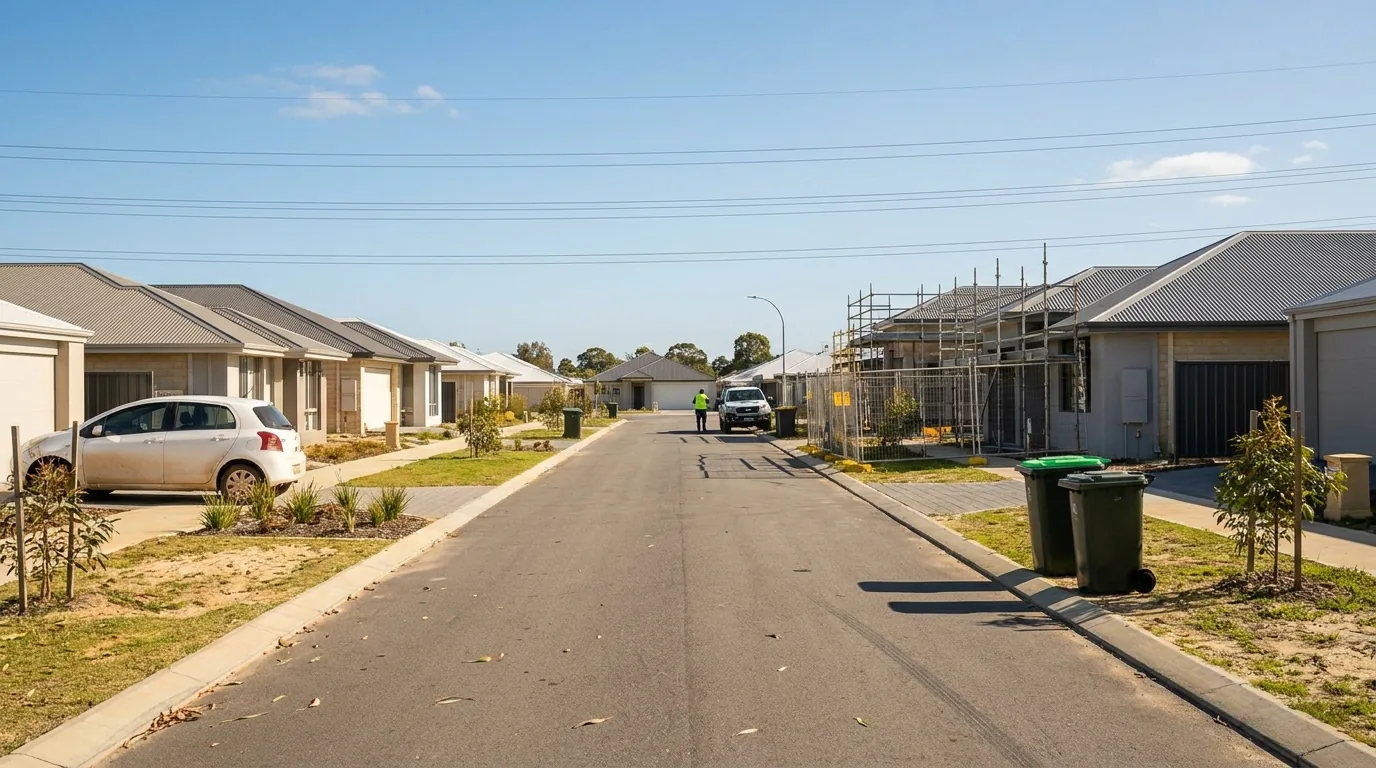
Building & Pest Inspections in Dayton
Dayton is a relatively new suburb in Perth's north-east corridor, adjacent to Brabham and within the broader Ellenbrook development zone. What makes Dayton geologically interesting — and challenging for building inspectors — is its transitional soil profile. The western half of the suburb sits on Guildford Formation reactive clay, consistent with the rest of the Ellenbrook corridor. But as you move east toward Tonkin Highway, the soil transitions to Bassendean Sand — a completely different foundation material with different behaviour, different drainage characteristics, and different defect patterns. An inspector who applies one approach across the entire suburb will miss defects specific to each soil type.
The majority of Dayton's housing stock was built from the early 2010s through to the present day. The suburb is still receiving new lot releases and delivering new homes, with a significant portion of the existing stock built during the 2020–2023 HomeBuilder grants period. Like all suburbs in the corridor that saw peak construction during this period, Dayton carries elevated risk of build defects from trade shortages, compressed timelines, and reduced quality oversight by volume builders running too many projects simultaneously.
Dayton's southern edge approaches the Swan River floodplain — the low-lying alluvial land that follows the river system through the Swan Valley. This floodplain influence creates a seasonally high water table that affects foundation performance, soil moisture, and pest pressure in the southern precincts. Properties in lower-lying positions near the Henley Brook Avenue corridor experience different conditions to those on higher ground in the northern parts of the suburb.
What We Look For in Dayton Properties
Transitional Soil Foundation Behaviour
Dayton's split soil profile creates two distinct sets of foundation risks. On the western clay-dominant side, reactive clay drives the shrink-swell cycle that lifts and drops concrete slabs seasonally — manifesting as diagonal cracking at window and door corners, doors that stick or fail to latch, and measurable variation across floor levels. On the eastern sandy side, the risk shifts to differential settlement where poorly compacted sand beneath the slab consolidates unevenly over time. Our inspectors use laser levelling across the full floor plan and assess external conditions — drainage direction, soil type, garden moisture — to determine which mechanism is affecting a specific property. Homes in the transitional zone between clay and sand can experience both behaviours simultaneously, making diagnosis more complex.
COVID-Era Volume Builder Defects
Dayton's 2020–2023 construction stock carries the same defect profile as the broader Ellenbrook corridor: missing or incorrectly spaced wall ties, poorly installed damp proof courses, drummy render from inadequate brick preparation, blocked weepholes, and unsupported roof purlins. These defects are structural rather than cosmetic. In Dayton specifically, we also see a high incidence of incorrect paving fall — where the builder has failed to achieve adequate drainage slope away from the slab edge on all four sides of the home. On clay soils, this is a critical defect: water pooling against the slab feeds reactive clay movement beneath the foundation. A combined building and pest inspection catches these issues before they become expensive structural problems.
Swan River Floodplain Influence
Dayton's southern precincts sit at the edge of the Swan River floodplain — the broad alluvial plain that stretches through the Swan Valley. While the residential development has been engineered above flood levels, the underlying water table in these areas is seasonally high, particularly through Perth's winter rainfall months from May to September. This elevated moisture affects foundation performance, creates conditions conducive to rising damp in slab-on-ground construction, and supports subterranean termite colonies in the saturated soil. We assess site elevation, proximity to drainage corridors, and evidence of seasonal moisture patterns at every Dayton property in the southern precincts.
Narrow-Lot Boundary Wall Issues
Dayton's modern estates feature narrow lots with minimal side setbacks, and many properties share boundary walls with neighbours. Boundary walls create inspection challenges: the neighbour's side is inaccessible, drainage between properties is often compromised, and moisture from one property's landscaping can affect the adjacent home's foundation. We inspect the accessible portions of boundary walls for cracking, moisture evidence, and drainage adequacy, and flag any concerns that require further investigation from the neighbour's side.
Precincts We Service
- Dayton West (Clay-Dominant) — Guildford Formation clay, reactive foundation risk, laser levelling for slab heave, COVID-era build quality focus
- Dayton East (Sand-Dominant) — Bassendean Sand, differential settlement risk, drainage assessment on sandy soils
- Southern Precincts (Floodplain Edge) — elevated water table, Swan River floodplain influence, moisture management and rising damp assessment
- Tonkin Highway Corridor — noise and vibration exposure from major arterial road, retaining wall assessments on graded sites
Practical Completion Inspections (PCI) in Dayton
Dayton continues to deliver new homes as estate stages release, making practical completion inspections a critical service for buyers in this suburb. A PCI is your one chance to document every construction defect before you take legal ownership. After settlement, builders prioritise pre-settlement defect lists over post-settlement warranty claims — your leverage to demand rectification drops significantly once you have signed off.
Common PCI findings in Dayton new builds include drummy exterior render, poorly seated roof tiles, inadequate wet-area waterproofing membranes, missing or blocked weepholes, and incorrect paving fall directing stormwater toward the slab edge. Dayton's transitional soil profile makes drainage verification at handover particularly important — whether the property sits on clay or sand, water must be directed away from the slab on all sides. On clay, retained moisture causes reactive slab heave; on sand, concentrated water flow causes localised erosion and differential settlement. We verify drainage fall, soakwell installation, and termite barrier integrity at every PCI. PCI inspections in Dayton start from $465.
Pest Control in Dayton
Dayton's pest pressure comes from two sources: ongoing development displacing established pest populations into completed homes, and the Swan River floodplain corridor sustaining year-round moisture that supports termite colonies, mosquito breeding, and rodent habitat in the southern precincts. As each new stage clears vegetation and begins earthworks, spiders, cockroaches, ants, and rodents migrate into the nearest finished homes — the only shelter available in a suburb with minimal established vegetation.
Subterranean termite risk is high across all of Dayton, but properties in the clay-dominant western areas and the floodplain-influenced southern precincts face the highest pressure. Guildford Formation clay retains moisture year-round, and the elevated water table near the floodplain creates ideal soil conditions for termite colony establishment. Modern landscaping practices compound the risk: garden beds against external walls, timber edging, and mulch banked above the weephole line all create bridging opportunities that bypass installed termite barriers. Our residential pest control covers general pest treatments from $189, and we recommend annual termite inspections for all Dayton properties — particularly those within 300 metres of the floodplain corridor or adjacent to retained vegetation.