Building & Pest Inspections in Caversham
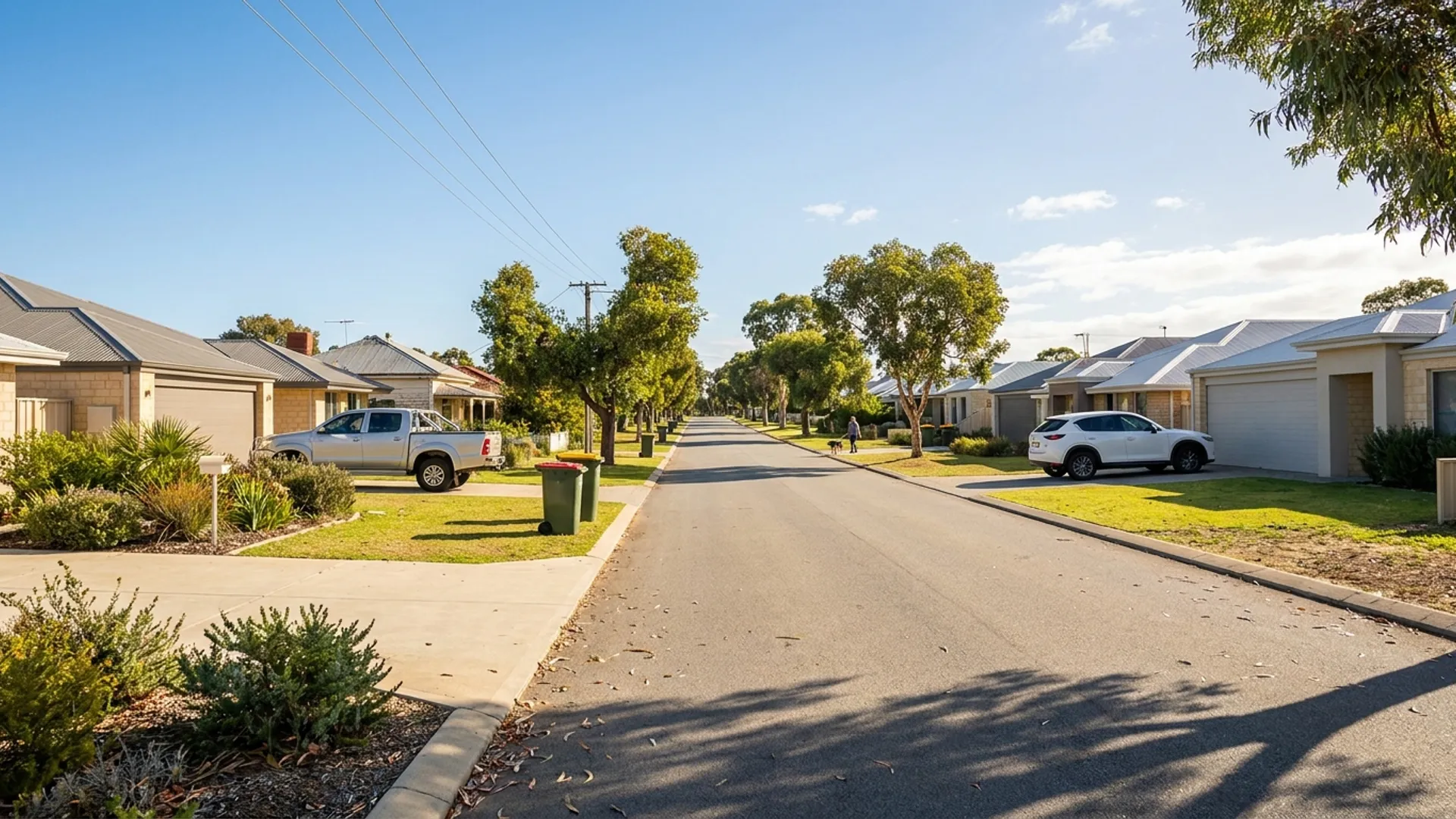
Caversham occupies some of the most historically interesting land in Perth's north-east corridor — former vineyard, market garden, and poultry farm land that was progressively rezoned for residential development through the 1990s and 2000s. The suburb sits at the gateway to the Swan Valley wine region, with West Swan Road forming the spine that connects residential Caversham to the tourist and agricultural precinct to the north. This agricultural history creates a unique set of inspection challenges that no other suburb in the Ellenbrook corridor shares.
The defining characteristic of Caversham from an inspection perspective is what lies beneath the homes. Decades of vineyard and market garden use left behind buried vine roots, trellis posts, irrigation infrastructure, and organic-rich soil that was never fully cleared before residential development commenced. When homes were built over this former agricultural land, the buried organic material was simply covered with sand pads and slabs. Those vine roots and timber remnants are now decomposing beneath the suburb — creating an underground food source that actively attracts subterranean termite colonies toward residential foundations.
The soil itself is Guildford Formation reactive clay, but with significantly higher organic content than the clay found under purpose-cleared residential estates like Brabham or Dayton. Decades of agricultural irrigation, composting, and soil amendment altered the clay's characteristics — it retains moisture more effectively and has a higher nutrient load that supports microbial activity and, consequently, termite colonies. The clay under Caversham is not the same as the clay under a greenfield estate, even though both are classified as Guildford Formation.
What We Look For in Caversham Properties
The Vineyard Factor — Buried Organic Material
This is Caversham's unique risk, and the reason we flag every Caversham inspection for enhanced timber pest assessment. Former vineyard and market garden land throughout Caversham contains buried vine roots, trellis timber, fence posts, and decomposing organic material that was never removed during subdivision. This buried timber provides a food source that draws subterranean termite colonies toward residential foundations — the colonies establish in the decomposing material and then extend their foraging galleries into the home above. We use Termatrac termite detection technology where appropriate to identify activity in concealed areas, and assess every Caversham property for evidence of termite pathways originating from beneath the slab rather than from external landscaping sources.
Reactive Clay on Agricultural Soil
Caversham's Guildford Formation clay has been modified by decades of agricultural use — irrigated, composted, and organically enriched in ways that change its moisture retention and reactivity characteristics. Foundation movement in Caversham often follows patterns different to standard reactive clay suburbs. Instead of the uniform seasonal shrink-swell cycle, the uneven distribution of buried organic material creates localised moisture variation beneath slabs, leading to differential movement rather than uniform heave. Our inspectors use laser levelling to map the floor plan and identify asymmetric patterns that indicate localised soil issues rather than broad reactive clay behaviour.
Older Rural Stock (Pre-1980s)
Caversham retains pockets of older rural housing — 1960s and 1970s homes on larger lots that predate the suburban expansion. These properties carry different risks to the surrounding 1990s–2000s stock: asbestos-containing materials in eaves, fencing, and wet areas; aging plumbing and electrical systems; timber-framed construction susceptible to termite damage and borer activity; and ad-hoc extensions built without approval over the decades. The older Caversham homes on large lots also tend to have extensive landscaping — mature trees, garden beds, and outbuildings — that create moisture and termite harbourage around the home. We adapt our inspection approach based on the era and construction type of each property.
Swan Valley Interface — Moisture & Wildlife
Properties in Caversham's northern and eastern precincts interface with the Swan Valley's active vineyard and agricultural land. This creates sustained pest pressure from the agricultural corridor — rodents moving into homes from adjacent farmland, fruit flies and mosquitoes breeding in vineyard irrigation, and the general wildlife corridor that follows the Swan River and its tributaries through the valley. The agricultural water use on adjacent properties also affects the water table and soil moisture conditions under nearby residential homes.
Precincts We Service
- West Swan Road Corridor — Swan Valley gateway, mixed housing stock from 1990s to 2000s, former vineyard land with buried organic termite risk
- Caversham Central (Former Market Gardens) — 2000s estates built on cleared agricultural land, reactive clay with high organic content, enhanced termite assessment
- Old Caversham (Rural Stock) — 1960s–1970s homes on larger lots, asbestos risk, aging construction, extensive landscaping creating moisture harbourage
- Caversham East (Swan Valley Edge) — agricultural interface, elevated moisture from vineyard irrigation, rodent and wildlife pressure from farmland corridor
Pest Control in Caversham
Caversham's agricultural history and Swan Valley interface create pest pressure that is qualitatively different from the standard new-estate displacement cycle seen in suburbs like Brabham and Dayton. In Caversham, the pest pressure is not temporary — it comes from permanent features of the landscape: decomposing organic material beneath homes attracting termites, active agricultural land supporting rodent and insect populations, and the Swan River corridor providing a wildlife highway that runs through the suburb's eastern edge.
Subterranean termite risk in Caversham is among the highest in the Ellenbrook corridor, specifically because of the buried vine roots and agricultural timber beneath homes. Standard termite barriers — whether physical or chemical — protect against termites approaching from outside the slab perimeter. But in Caversham, termites can establish in decomposing material directly beneath the slab and access the home through service penetrations and slab joints without ever crossing the barrier line. This makes annual termite inspections critical for every Caversham property, regardless of age or apparent risk level. Our general pest control services address the full spectrum of Caversham's pest challenges — spiders, cockroaches, ants, rodents, mosquitoes, and targeted termite management. Treatments start from $189.