Building & Pest Inspections in Greenmount
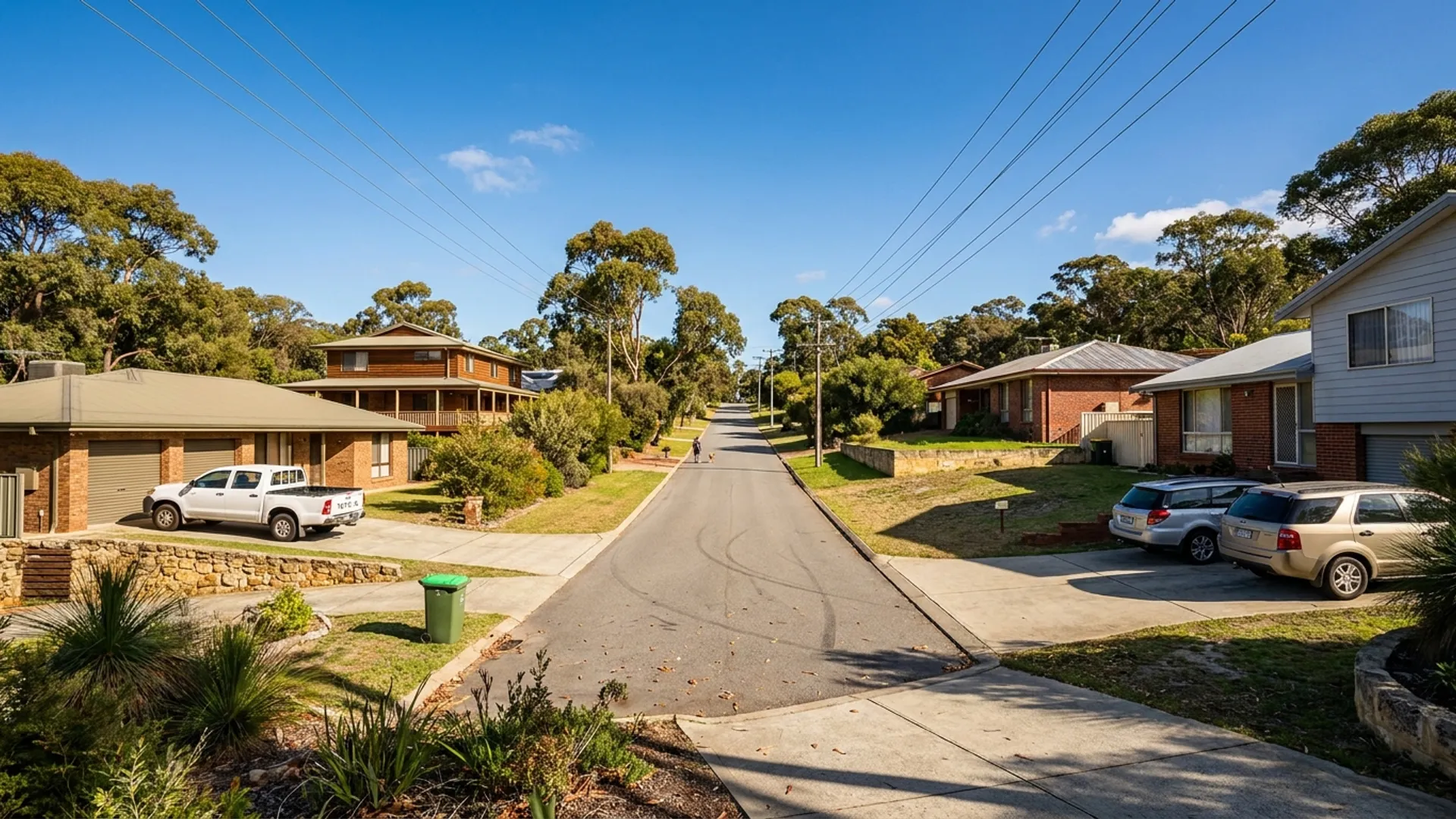
Greenmount sits at the top of Greenmount Hill — the point where the Great Eastern Highway climbs the Darling Scarp and Perth's coastal plain gives way to the hills district. The suburb has two distinct characters: the heritage Greenmount townsite along Great Eastern Highway with homes dating from the 1940s through the 1960s, and the surrounding bush-residential blocks with 1980s to 2000s homes built among mature scarp bushland. Each character carries completely different inspection requirements, and treating Greenmount as a single uniform suburb is a mistake that leads to missed defects.
The heritage townsite is one of Perth's original hills settlements — a stopping point on the road east that developed its own character with weatherboard and fibro-clad homes, corner shops, and the heritage hotel. These homes were built with construction methods and materials that predate modern building standards: timber framing, fibro-cement cladding containing asbestos, minimal or no termite barriers, shallow footings on laterite, and roofing materials that have reached or exceeded their design life. They are charming properties with genuine character, but they carry significant risks that a pre-purchase building and pest inspection must identify.
The surrounding bush-residential properties are different again — 1980s to 2000s homes built on large blocks within or adjacent to John Forrest National Park, Perth's oldest national park. These properties sit in dense jarrah and marri forest, carry Bushfire Attack Level ratings, and face extreme termite and pest pressure from the surrounding bushland. The scarp geology — laterite and ironstone over granite bedrock — creates terrain challenges including steep sites, retaining wall requirements, and surface water management that are not found on the coastal plain.
What We Look For in Greenmount Properties
Heritage Townsite — Asbestos & Aging Construction
Greenmount's 1940s to 1960s heritage homes were built during an era when asbestos-containing materials were used extensively in residential construction. Fibro-cement wall cladding, eaves linings, bathroom and laundry wall panels, fencing, and roofing materials in these properties frequently contain asbestos. While undisturbed asbestos in good condition poses limited risk, any renovation, demolition, or deterioration creates exposure hazards. Our inspections identify the location and condition of suspected asbestos-containing materials and note areas where professional testing and removal may be required before any works are undertaken. Beyond asbestos, the heritage stock carries risks from aging timber framing (susceptible to termite and borer damage over decades), shallow footings that move on the laterite soil, original plumbing and electrical systems that may not meet current safety standards, and ad-hoc extensions built without council approval over 60 or more years of ownership.
John Forrest National Park — Extreme Termite Pressure
John Forrest National Park shares a direct boundary with residential Greenmount. The mature jarrah, marri, and wandoo forest in the park supports some of the largest subterranean termite colonies in the Perth hills. Termite foraging galleries extend from the park well into the residential zone, following mature root systems that run beneath garden beds, driveways, and foundations. Properties with any form of timber construction — framing, subfloor bearers, cladding, decking, retaining walls, or garden structures — face sustained attack from colonies that have been established for decades. The humid, shaded conditions under the scarp canopy compound the risk by maintaining soil moisture levels that support termite activity year-round, including through Perth's dry summer months when coastal suburbs see reduced termite pressure. We conduct thorough timber pest inspections at every Greenmount property and use Termatrac detection technology where appropriate to identify concealed activity.
European House Borer (EHB) in Hills Stock
Greenmount and the surrounding hills suburbs fall within the WA Department of Primary Industries' European House Borer awareness zone. The 1980s and 1990s bush homes built with untreated seasoned pine roof trusses and framing are vulnerable to EHB infestation. EHB larvae feed inside the timber for 3 to 11 years before emerging, meaning damage can be extensive before any visible signs appear. In Greenmount's older heritage homes, native timber borers are also a concern — particularly in original timber flooring and framing that has been exposed to moisture from the scarp environment. We inspect accessible roof spaces and subfloor areas for borer exit holes, frass, and structural weakening.
BAL Ratings & Bush-Edge Construction
Properties in Greenmount's bush-residential areas carry Bushfire Attack Level ratings under AS 3959. These ratings dictate construction requirements for the home and any additions, modifications, or outbuildings. Non-compliant structures — timber decking in high-BAL zones, pergolas with combustible materials, or additions built before BAL requirements were tightened — create compliance, insurance, and safety issues. Our inspections identify structures that may not meet current BAL requirements and note them for further assessment.
Retaining Walls on Scarp Terrain
Greenmount's steep terrain produces heavy reliance on retaining walls to create building platforms, access roads, and outdoor areas. Timber sleeper walls, limestone block walls, and concrete retaining structures all appear throughout the suburb. On the laterite and granite geology of the scarp, retaining walls carry significant loads — saturated laterite is heavy, and winter water runoff from the scarp above creates hydrostatic pressure that can exceed the wall's design capacity over time. We assess every retaining wall for structural adequacy, drainage function, lean, cracking, and signs of progressive failure.
Precincts We Service
- Greenmount Townsite (Heritage) — 1940s–1960s character homes along Great Eastern Highway, high asbestos risk, aging timber framing, heritage construction methods
- Greenmount Bush-Residential (North) — 1980s–2000s homes on large bush blocks, John Forrest National Park interface, extreme termite and BAL risk
- Greenmount Bush-Residential (South) — scarp face properties with steep terrain, retaining wall assessment, split-level and pole home construction
- Great Eastern Highway Corridor — mixed commercial and residential, heritage buildings with renovation and compliance challenges, road noise and vibration exposure
Pest Control in Greenmount
Greenmount's dual character creates dual pest challenges. The heritage townsite homes — with their timber framing, wall cavities, aging roof spaces, and decades of accumulated harbourage — provide established shelter for spiders, cockroaches, silverfish, rodents, and borers. These are not pest problems caused by displacement from new development; they are long-established populations that have been living in and around these homes for decades. The bush-residential properties face the additional pressure of John Forrest National Park's wildlife corridor: bush cockroaches, redback and huntsman spiders, scorpions, centipedes, and native fauna migrating into homes from the surrounding forest.
Subterranean termite risk across Greenmount is extreme — among the highest of any suburb we service. The mature jarrah and marri forest in John Forrest National Park sustains large, established colonies whose foraging galleries extend well into the residential zone. The shaded, humid scarp environment maintains soil moisture through summer, meaning termite activity is year-round rather than seasonal. Heritage homes with timber framing and no modern termite barriers are particularly vulnerable, and we frequently identify active termite damage in subfloor bearers, wall framing, and roof timbers during inspections of Greenmount's older stock. Annual termite inspections are essential for every Greenmount property. General pest control treatments start from $189.