
Building & Pest Inspections in Singleton
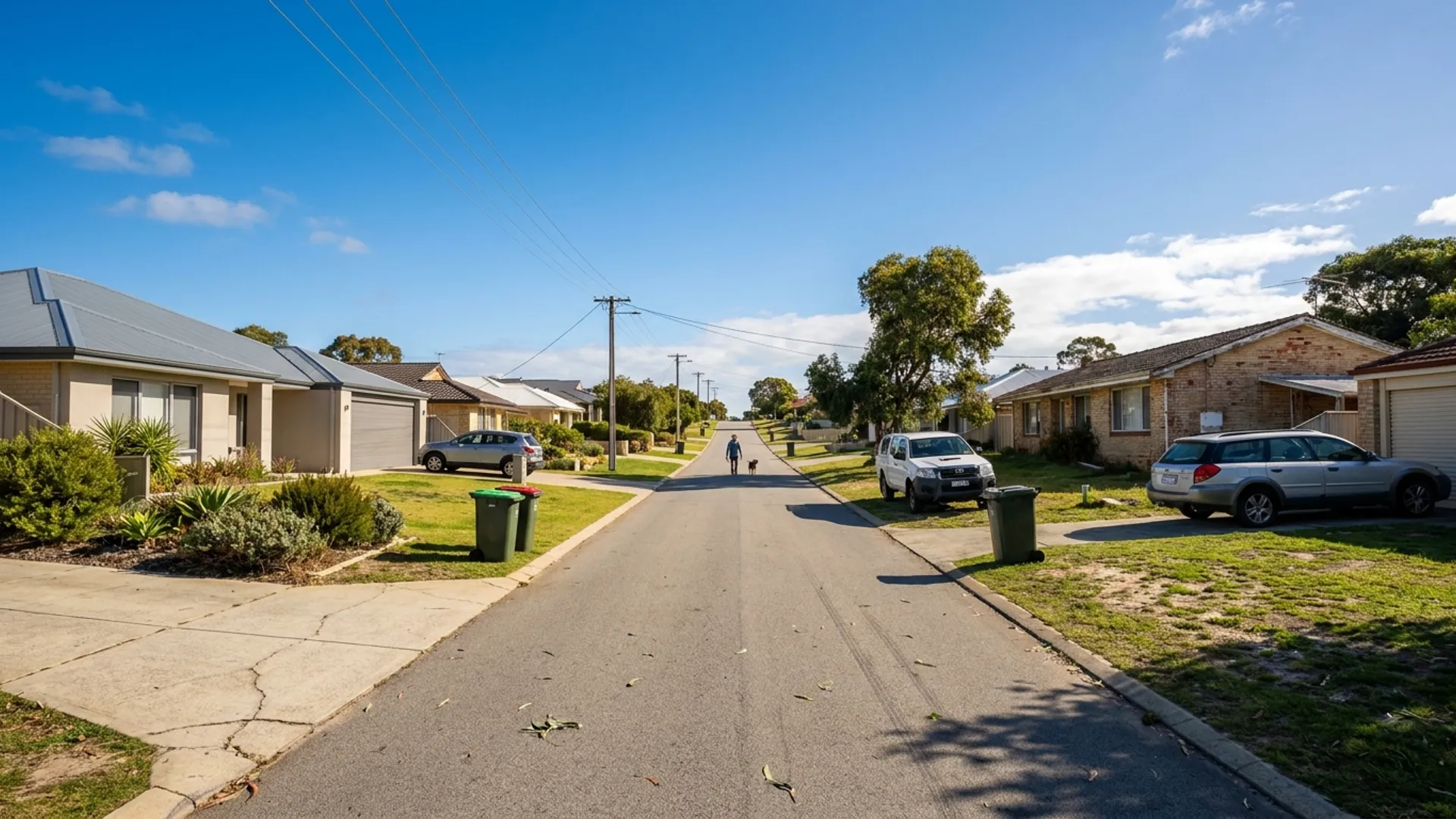
Singleton sits on Quindalup Dunes — Safety Bay Sand consisting of calcareous, unconsolidated white sands prone to washout and erosion. The suburb has three distinct housing eras creating a varied inspection environment: original 1970s–1980s coastal settlement homes (some fibro, some brick), 1990s–2000s standard Perth suburban expansion, and modern 2010s+ estate development. Each era carries different defect patterns, asbestos risk profiles, and construction quality considerations.
Singleton's eastern boundary borders the Paganoni Swamp and massive Bush Forever sites — extensive wetland ecosystems and native bushland that create significant termite, snake, and mosquito pressure for residential properties. The coastal dune system to the west provides additional undisturbed breeding habitat for rodents and native pests.
What We Look For in Singleton Properties
Salt Aerosol Corrosion — All Eras Affected
Singleton's coastal position means all housing stock — regardless of age — faces accelerated corrosion from salt-laden air. In properties within 1km of the beach, rusted lintels causing brickwork cracking, corroded roof tie-downs and gang-nail plates, and cavity wall tie failure are common findings. Even in the newer Vista estate homes (less than 10 years old), premature corrosion of fixings can occur if marine-grade hardware wasn't specified during construction. Our inspectors assess metal component condition across all elevations, with particular attention to western and south-western faces that receive the most salt exposure.
Rising Damp and Salt Damp in 1980s–1990s Stock
Original damp-proof courses in Singleton's 1980s–1990s homes have failed or been bypassed by raised garden beds and paving. On the Safety Bay Sand, failed stormwater drainage easily causes localised sand subsidence and footing cracking, which in turn allows moisture pathways to develop through the slab edge. Our inspectors check DPC height around the full perimeter and assess for evidence of rising damp, salt damp, and sand erosion around foundations.
Original Coastal Settlement — Comprehensive Assessment
Singleton's original 1970s–1980s homes — particularly in the western streets near the coast — include fibro-clad, timber-framed cottages alongside early double-brick construction. The fibro properties have high asbestos prevalence. The double-brick homes face severe coastal corrosion after 40+ years of ocean exposure. Coastal winds have stripped pointing from tile roofs, and wind-driven rain entry is common through degraded roofing and failed window seals. Our inspections of this older stock provide a comprehensive structural assessment, identifying whether remediation is economically viable.
Modern Estate — New Build Quality
The Vista Private Estate on Singleton's eastern edge features modern narrow-lot development. While avoiding the age-related defects of older stock, these homes carry new-build considerations: poor roof plumbing on flat-profile roofs, thermal bridging in rendered construction, and inadequate articulation joints between narrow adjacent dwellings. On the Safety Bay Sand, site drainage is critical — failed stormwater management creates rapid erosion and settlement on the sandy substrate.
Precincts We Service
- Original Singleton (West of Singleton Beach Rd) — larger blocks, mature trees, 1970s–1980s stock, high asbestos, extreme coastal exposure
- Central Singleton — 1990s–2000s suburban expansion, standard maintenance-age defects
- Vista Private Estate (East) — modern narrow-lot development, new-build defect focus, render and drainage issues
- Paganoni Swamp / Bush Forever Border — extreme pest pressure, mosquito and snake risk, elevated termite activity
Pest Control in Singleton
Singleton's pest environment is shaped by its coastal dune system to the west and the massive Paganoni Swamp and Bush Forever wetland sites to the east. The coastal foreshore provides continuous undisturbed habitat for rodents, while the eastern swamplands and bushland sustain large Coptotermes acinaciformis and Heterotermes populations that forage into residential properties through the sandy soils. The Safety Bay Sand is exceptionally easy for termites to tunnel through — homes on the eastern side of Singleton face the highest foraging pressure.
Coastal brown ants are extremely prevalent in the sandy substrate, excavating under paving and causing subsidence across driveways and footpaths. Redback spiders are common in weep holes, fencing, and roof voids. Heavy seasonal roof rat pressure from adjacent coastal scrub affects homes throughout the suburb. Mosquito activity from the eastern wetlands is intense during warmer months. Our pest control services start from $189, with annual termite inspections from $189.