Building & Pest Inspections in Cooloongup
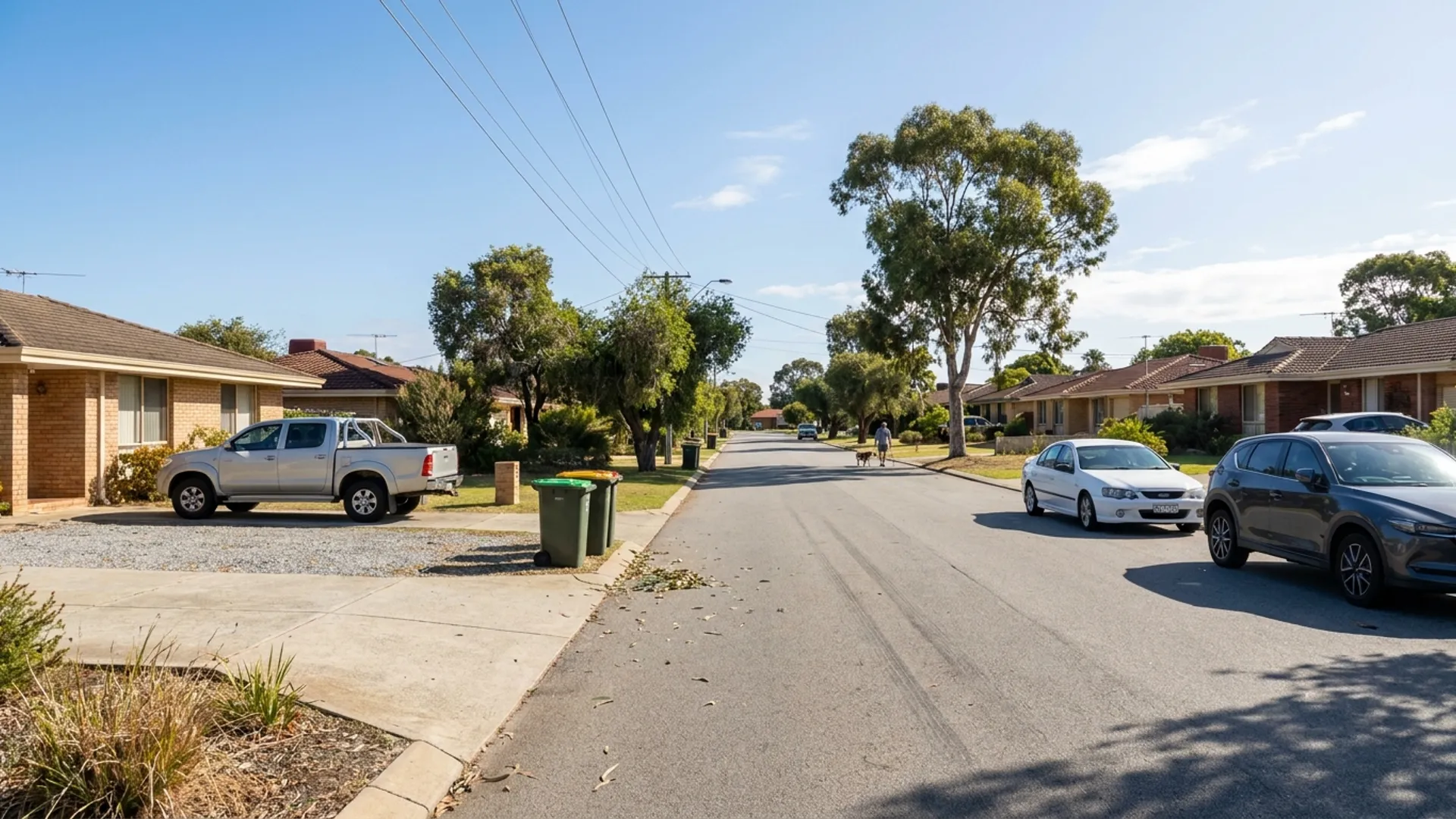
Cooloongup is the inland suburb in the Rockingham corridor — built on Spearwood Dunes over shallow Tamala Limestone rather than the coastal Safety Bay Sand that characterises its western neighbours. The yellow-brown siliceous sands are well-draining and generally stable, but shallow limestone pinnacles can impede soakwells and cause localised flooding, and footings bearing partly on sand and partly on shallow limestone can experience differential settlement. The suburb has two distinct construction eras: original 1970s stock and the mid-1980s to mid-1990s Woodbridge Estate development.
Cooloongup's eastern border is dominated by Lake Cooloongup and the Rockingham Lakes Regional Park — a massive protected bushland and seasonal salt lake that creates one of Perth's most intense pest environments. Rockingham Golf Course borders the suburb's southern edge, adding further environmental pressure from irrigated turf and mature trees.
What We Look For in Cooloongup Properties
1970s Stock — Advanced Deterioration
Cooloongup's original 1970s homes are now 50+ years old and exhibit advanced deterioration across multiple building systems. Concrete roof tiles — heavy and moisture-laden after decades without factory glaze — cause significant roof frame deflection. Original Jarrah or early pine trusses show purlin deflection and strut failure from carrying waterlogged tiles for half a century. Fretting mortar and brick deterioration compromise weather sealing and structural integrity. Original damp-proof courses have failed, with rising damp common — efflorescence and bubbling paint at the base of internal walls. Our inspectors provide realistic assessments of these older properties, distinguishing between homes worth remediating and those where the buyer is effectively purchasing land value.
Wall Tie Corrosion
Despite being an inland suburb, Cooloongup's proximity to the coast (within 5km) still produces salt-laden atmospheric conditions that accelerate metal corrosion. Wall ties in 1970s–1980s double-brick homes have corroded over 40+ years, losing the structural connection between inner and outer brick leaves. The diagnostic sign — horizontal cracking at regular intervals in mortar joints — is widespread across Cooloongup's older stock. Our inspectors assess the extent of wall tie degradation and advise on remediation priority.
DIY Additions and Unapproved Structures
Cooloongup has a higher-than-average incidence of DIY additions — unapproved patios, lean-to structures, carports, and shed extensions built without proper structural tie-downs or council approval. These structures can be hazardous (particularly in high wind events), may not meet fire separation requirements near boundaries, and create concealed pest entry points where they attach to the main building. Our inspections document unapproved structures and assess their impact on the property's structural integrity and compliance.
Differential Settlement on Limestone
Where shallow Tamala Limestone sits at variable depths beneath Cooloongup's sand, footings can bear partly on rock and partly on sand — creating the potential for differential settlement. This manifests as stepped cracking in brickwork, doors binding in frames, and cornice separation. It's more common in the older 1970s stock where foundation engineering was less precise. Our inspectors assess cracking patterns to determine whether settlement is historical (stable) or ongoing (requiring engineering investigation).
Precincts We Service
- Woodbridge Estate (North/Central) — 1980s–1990s stock, generally better condition than older pocket, standard maintenance-age defects
- Original Cooloongup (South/West) — 1970s homes, advanced deterioration, high asbestos prevalence, land value considerations
- Hospital Precinct (Elanora Drive) — near Rockingham General Hospital, sought after by hospital staff and investors
- Rockingham Lakes Border (East) — extreme termite and pest pressure from bushland and seasonal lake
Pest Control in Cooloongup
Cooloongup's pest environment is dominated by Lake Cooloongup and the Rockingham Lakes Regional Park — a massive protected bushland and seasonal salt lake forming the suburb's entire eastern border. This creates a "perfect storm" for subterranean termites: Spearwood sand allows easy tunnelling, the regional park provides unlimited nesting sites in mature eucalyptus and Banksia, and the 1970s–1980s slabs pre-date modern physical termite barriers. Original chemical barriers (organochlorines) have completely degraded.
Rockingham Golf Course on the suburb's southern border adds further pressure — irrigated greens and mature trees create favourable termite and rodent conditions. General pest pressure is also elevated: rodent activity peaks in winter as rats and mice from the bushland and golf course move into residential roof voids, cockroaches establish in aging terracotta drainage, and Black House spiders are prevalent throughout the suburb. Our pest control services start from $189, with annual termite inspections from $189 — critical for any Cooloongup property given the extreme environmental pressure from the Rockingham Lakes corridor.