Building & Pest Inspections in Safety Bay
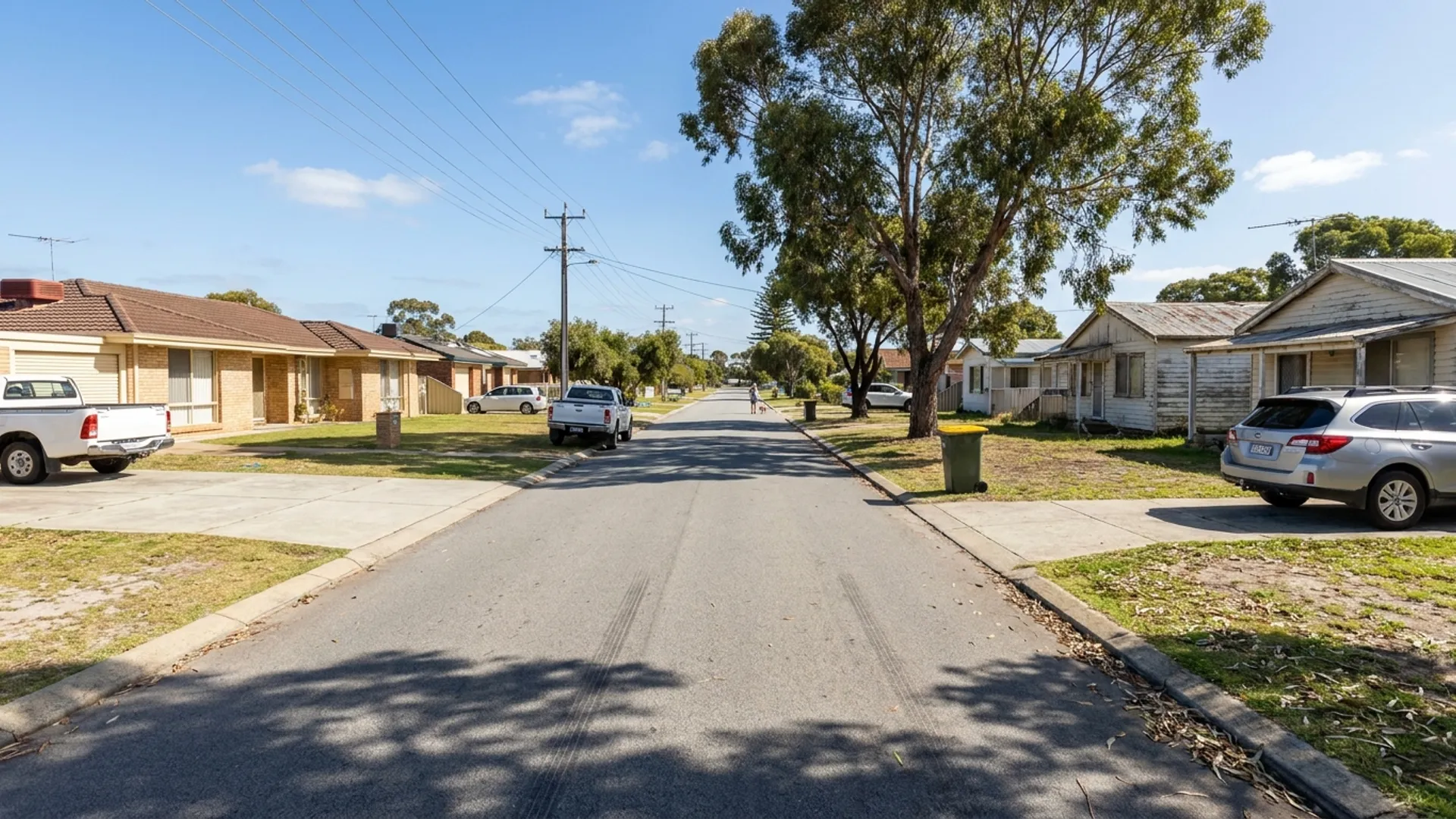
Safety Bay is built on the soil type that literally bears its name — Safety Bay Sand, part of the Quindalup Dune system. These unconsolidated, calcareous coastal sands over Tamala Limestone are highly permeable and prone to wind erosion and settlement cracking around poorly drained downpipes. The suburb evolved from a holiday shack community into a permanent residential area during the 1960s–1980s development boom, creating a housing stock that carries Perth's highest concentration of era-specific building defects and asbestos-containing materials.
Safety Bay is bounded by the Safety Bay foreshore and Shoalwater Islands Marine Park to the west and Lake Richmond — a major freshwater wetland — to the east. This dual water influence shapes both the building deterioration patterns (coastal corrosion from one side, moisture from the other) and the pest environment.
What We Look For in Safety Bay Properties
Coastal Corrosion — The Dominant Defect
Coastal corrosion is Safety Bay's number one building issue. After 40–60 years of direct coastal exposure, metal building components are severely degraded. Steel lintels above windows and doors exhibit "rust jacking" — the expanding rust cracks brickwork above the opening, compromising both structural integrity and weather sealing. Cavity wall ties in 1970s homes are corroded to the point of structural concern — particularly on western and south-western elevations that face prevailing ocean winds. Roof tie-downs in 1970s properties are frequently rusted and non-compliant with modern coastal wind-load requirements. Our inspectors systematically assess all metal components, quantifying corrosion severity and identifying elements approaching structural failure.
Extreme Asbestos Prevalence
Safety Bay's development boom coincided exactly with peak asbestos use in Western Australian construction. The suburb has one of the highest asbestos prevalence rates in the Perth metro area. Super Six corrugated boundary fencing is ubiquitous — nearly every unrenovated property boundary features it. Other common locations include eaves and soffit linings, flat-sheet internal wall linings in holiday-shack conversions, wet area sheeting behind bathroom tiles, vinyl floor tiles and adhesive, switchboard backings, and fibro garden sheds. Our inspections identify likely asbestos-containing materials and document them clearly — essential information for any buyer planning renovation or demolition in Safety Bay.
Wind Load and Roof Tie-Down Compliance
Safety Bay's 1970s properties were built before modern coastal wind-load requirements. Roof tie-downs — the metal straps connecting the roof frame to the walls — are often undersized for the coastal wind forces these homes experience, and after 50 years of salt exposure, many are severely corroded. During Perth's winter storms, inadequate roof tie-downs can lead to partial roof lift. Our inspectors assess tie-down condition and spacing, identifying properties where the roof connection may not meet current wind-loading expectations.
Rising Damp and DPC Failure
Original damp-proof courses in Safety Bay's 1960s–1980s homes have degraded, and decades of raised garden beds, paving, and landscaping have bypassed the DPC line on many properties. Moisture wicks up through the brickwork, causing efflorescence, bubbling plaster, and fretting mortar at the base of internal and external walls. Lake Richmond's influence on the eastern side of the suburb raises the water table in nearby properties, compounding rising damp issues. Our inspectors check DPC height relative to external ground levels around the full perimeter.
Precincts We Service
- Safety Bay Foreshore (Coastal Strip) — premium modern homes and renovated stock, maximum salt exposure, marine-grade hardware assessment
- Old Safety Bay (Central) — 1960s–1970s stock, highest asbestos prevalence, aging infrastructure, subdivision activity
- Lake Richmond Edge (East) — elevated moisture, mosquito pressure, rising damp in properties near the wetland
- Safety Bay Road Corridor — retain-and-build infill subdivision, drainage issues between old and new dwellings
Pest Control in Safety Bay
Safety Bay's pest environment is defined by its dual water influence — the ocean to the west and Lake Richmond to the east. Lake Richmond generates extreme mosquito and midge pressure that affects the entire eastern side of the suburb during warmer months. The lake's freshwater ecosystem also supports a significant population of tiger snakes that occasionally enter residential properties bordering the reserve.
Subterranean termites are a genuine concern in Safety Bay's older housing stock. Established gardens with mature trees, aging Jarrah roof timbers in 1970s homes, and buried timber from demolished holiday shacks all create conditions that attract and sustain termite activity. The Safety Bay Sand is easy for termites to tunnel through, and original chemical barriers have long since broken down. Coastal brown ants are highly prevalent, excavating sand beneath paving and creating subsidence. Rodent activity peaks in autumn and winter as rats seek shelter in aging roof voids. Our pest control services start from $189, with annual termite inspections from $189.