Building & Pest Inspections in Willetton
Willetton commands a significant price premium driven by one thing: the Willetton Senior High School zone. This school-zone demand has created a rapid cosmetic flip market — investors buying 1980s homes, applying fresh render, paint, and modern kitchens, then reselling at premium prices. The risk for buyers is that fresh cosmetic finishes can hide severe structural issues from four decades of reactive clay movement underneath.
What We Look For in Willetton Properties
Cosmetic Flips Hiding Clay-Movement Cracks
Willetton's school-zone premium attracts renovators who buy, flip, and resell 1980s homes. Fresh render applied over cracked brickwork masks decades of reactive clay structural movement. New paint covers ceiling cracks from roof truss deflection. Modern flooring hides uneven slabs. Our inspectors use moisture meters, visual assessment of unrendered surfaces, and level checks to identify what's been concealed behind cosmetic upgrades. In Willetton, what you can't see matters more than what you can.
Failed 1980s Wet-Area Waterproofing
Original 1980s bathrooms in Willetton almost universally have failed waterproofing membranes. After 35–40 years, shower recesses leak through degraded or non-existent waterproofing, causing adjacent wall swelling, timber damage, and mould growth behind tiles. This is one of the most common findings in unrenovated Willetton homes — and in "flipped" homes, new tiles and vanities are sometimes installed over the original failed waterproofing rather than replacing it properly.
Concrete Roof Tile Failure
Willetton's 1980s homes have concrete roof tiles that are now at failure point — 35+ years old with degraded factory glaze. The same pattern as across the south-east corridor: tiles absorb moisture, become heavy, cause truss deflection, and ridge cap pointing fails. This is happening now across the suburb and represents a significant upcoming maintenance cost for any buyer.
Asbestos Prevalence
1980s Willetton homes have high asbestos prevalence — approximately 60% of unrenovated homes contain some form of asbestos material. Eaves, wet-area linings, and boundary fencing are the most common locations. Some flipped homes have had asbestos eaves replaced with modern materials, but others have simply painted over them.
Precincts We Service
- Southlands precinct — school zone core, highest flip activity, premium pricing = higher-stakes inspection
- Willetton central — established 1980s, standard Guildford Formation clay issues, concrete tile failure
Timber Pest Inspections in Willetton
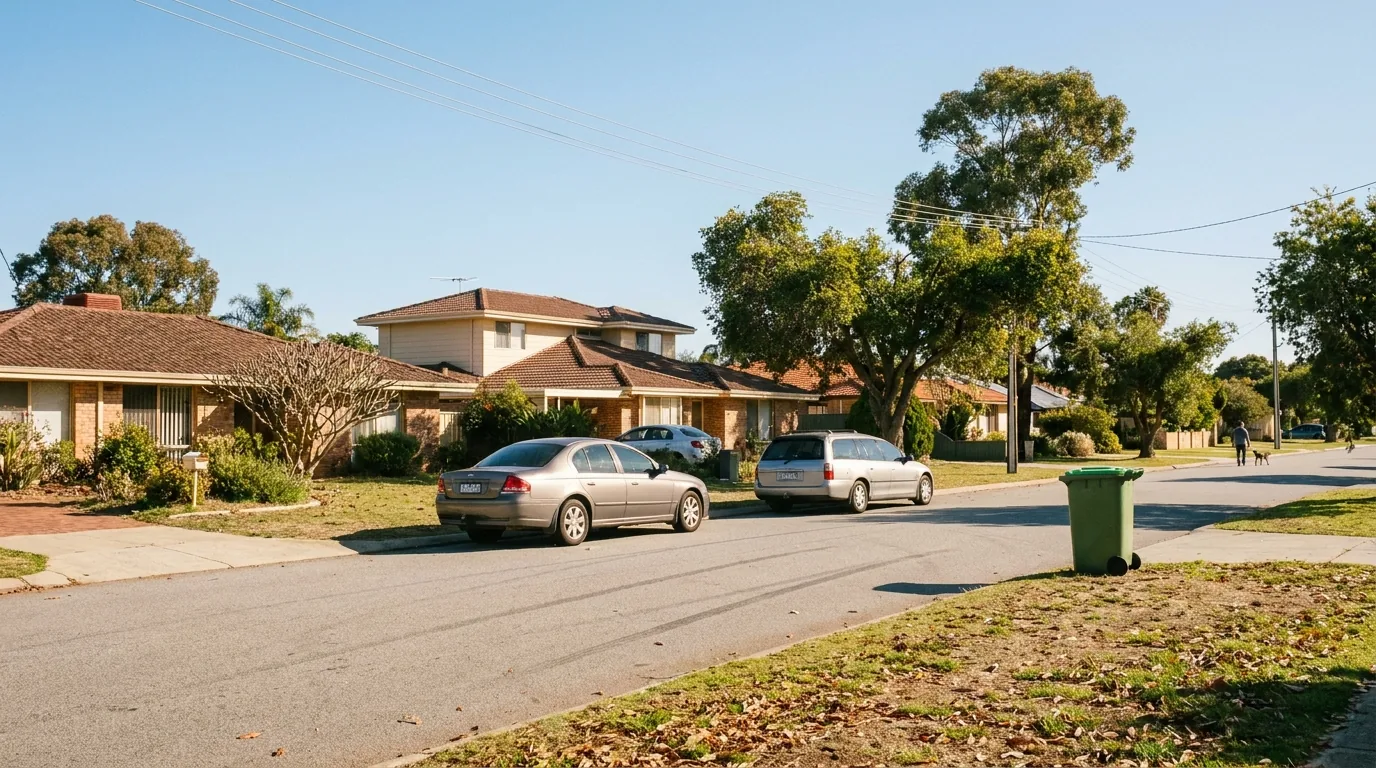
Willetton's mature gardens and established street trees are part of the suburb's appeal — they're what give it that leafy, premium feel. But those same mature trees are also the primary harbourage for Coptotermes acinaciformis colonies that forage into adjacent homes. The 1980s housing stock compounds the risk: pine roof trusses from this era are now 35–40 years old, dried out, and significantly more vulnerable to termite attack than when they were installed.
In a suburb where properties change hands at premium prices — often $800,000+ for a standard 4x2 — the cost of a timber pest inspection is negligible relative to the risk. Concealed termite damage in roof trusses, wall framing, or sub-floor bearers can represent tens of thousands of dollars in remediation, and it's rarely visible during a standard walkthrough — especially in flipped properties where fresh linings and paint cover the evidence. A standalone timber pest inspection is $250, or $178 when combined with a building inspection.
Annual Termite Inspections in Willetton
For Willetton homeowners — not just buyers — annual termite inspections are the most cost-effective way to protect a high-value asset. The mature tree canopy across the suburb provides permanent harbourage for termite colonies that forage continuously. A termite colony doesn't stop foraging because you treated it last year — if conditions remain favourable, new colonies will establish or existing ones will return from adjacent trees and neighbouring properties.
Our annual termite inspections cover the full property: roof void, sub-floor (where accessible), all internal rooms, external perimeter, garden structures, and any trees within the property boundary. We check for both active termite indicators and conditions conducive to future infestation — things like garden beds against slab edges, stored timber, leaking taps creating soil moisture, and failing drainage that keeps the perimeter damp. An annual termite inspection is $189, or $230 with a comprehensive written report suitable for insurance and warranty records.