Building & Pest Inspections in Beckenham
Beckenham has one of the most challenging building and pest risk profiles in Perth's south-east corridor. The suburb sits on Guildford Formation alluvial clay — heavy clay deposits laid down by the Canning River over thousands of years — with a high water table that keeps the subsoil permanently moist. This combination creates extreme conditions for both building structures and pest activity: the saturated clay exerts constant pressure on foundations, rising damp wicks moisture up through slab edges and brickwork, and the permanently wet soil provides ideal habitat for the most destructive subterranean termite species in Western Australia.
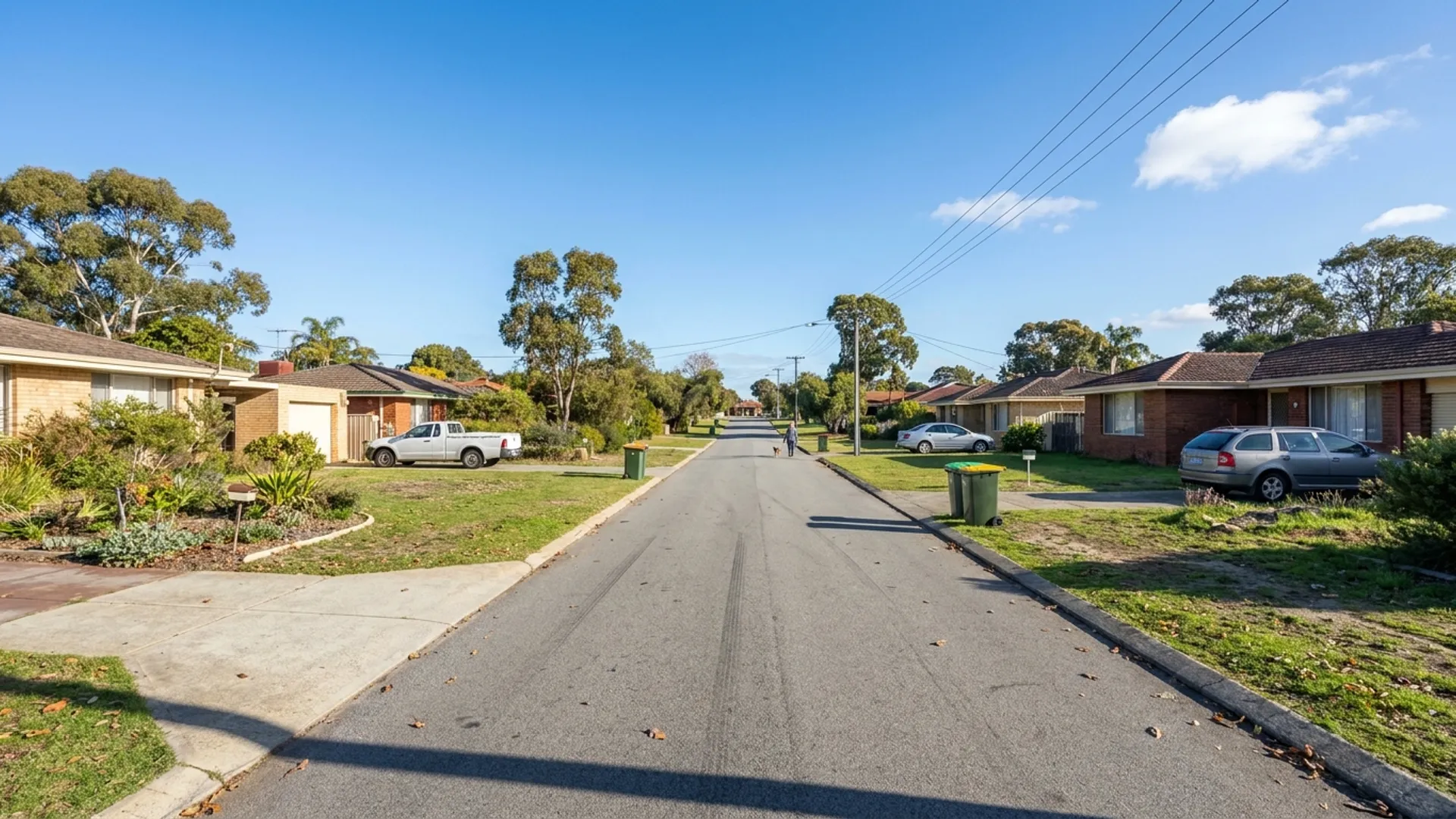
The housing stock spans from 1950s timber-framed construction near the Beckenham train station through to 1970s brick-and-tile across the broader suburb. This is older stock that has endured 50-70 years of the most aggressive soil conditions in the region. The 1950s homes near the station form a heritage pocket with construction methods that predate modern Australian Standards — timber frames, stumped floors, and asbestos-cement cladding that require specialist inspection techniques. The later 1970s brick-and-tile homes have been through decades of reactive clay movement, and many show severe structural cracking that has been through multiple repair cycles.
The Metronet rail upgrades affecting the Beckenham area add a further consideration for buyers. Construction activity associated with rail infrastructure creates ground vibration that can accelerate cracking in homes already stressed by reactive clay movement, and changes to local drainage patterns during construction can alter moisture conditions around foundations. These impacts may be temporary, but they are relevant for anyone purchasing in the affected zone during the construction period.
What We Look For in Beckenham Properties
Rising Damp from High Water Table
Beckenham's high water table — driven by the Canning River alluvial deposits — creates rising damp conditions that are more severe and persistent than in almost any other suburb in the south-east corridor. Moisture wicks up through the concrete slab and into the lower courses of brickwork, causing salt efflorescence on exterior walls, paint bubbling and peeling on internal walls at skirting level, and deterioration of mortar in the lower wall courses. In homes where the damp proof course (DPC) has failed — which is common after 50+ years — the moisture rises further up the wall, causing plaster breakdown, mould growth behind furniture and stored items, and an ongoing damp smell that no amount of ventilation resolves. Our inspectors use moisture meters to map the extent of rising damp and assess DPC condition — in Beckenham, this is one of the most critical aspects of the inspection.
Severe Reactive Clay Structural Damage
The Guildford Formation alluvial clay in Beckenham is among the most reactive in Perth. After 50-70 years of seasonal swell-shrink cycling, many homes show severe structural cracking — large diagonal step-cracks in brickwork, separation at wall-to-wall junctions, and doors and windows that no longer fit their frames. The high water table compounds this by keeping the clay permanently moist on one side while the exposed side dries in summer, creating differential movement that is particularly damaging to foundations. Many Beckenham homes have had multiple rounds of crack repair, and some have had underpinning or restumping to address progressive structural failure. Our inspectors assess the severity and pattern of cracking to determine whether the structure is stable or actively deteriorating — a distinction that fundamentally changes the cost of ownership.
Extreme Termite & Moisture Risk from Canning River
Beckenham has direct Canning River frontage along its northern boundary, and the permanently moist alluvial soil throughout the suburb creates one of the highest termite risk environments in Perth. Coptotermes acinaciformis colonies thrive in this environment — the constant soil moisture sustains large, active colonies that forage aggressively into residential structures. The combination of high water table, mature riparian vegetation along the riverbank, and established street trees throughout the suburb means every property in Beckenham is within foraging range of active termite colonies. For older homes with failed DPCs, the rising moisture in the brickwork creates exactly the conditions that attract termites into the wall cavity — wet timber in a warm, dark, concealed space is the ideal termite target.
Heritage Pocket & Older Construction Methods
The area near Beckenham train station retains a pocket of older 1950s construction that differs fundamentally from the brick-and-tile homes in the rest of the suburb. These homes were typically timber-framed with asbestos-cement cladding, stumped timber floors rather than concrete slabs, and older electrical and plumbing systems that predate modern standards. The inspection approach for these homes prioritises subfloor access — timber stumps, bearers, and joists in a high-water-table environment are extremely vulnerable to both moisture deterioration and termite attack. Asbestos exposure in these homes is typically extensive, covering wall cladding, eaves, and sometimes internal wall and ceiling linings. The remediation cost to bring a 1950s Beckenham home to modern habitable standard can be substantial and must be understood before purchase.
Precincts We Service
- Canning River frontage (northern Beckenham) — direct river boundary, extreme termite pressure, highest moisture and rising damp risk, alluvial clay at its most reactive
- Beckenham train station heritage pocket — 1950s timber-framed and fibro construction, stumped floors, extensive asbestos, specialist inspection approach
- Central Beckenham — 1960s-1970s brick-and-tile, severe reactive clay cracking, high water table, rising damp conditions
- Metronet impact zone — properties affected by rail construction vibration and drainage changes, monitoring for accelerated cracking
Timber Pest Inspections in Beckenham
Beckenham has arguably the highest timber pest risk of any suburb in the Canning Vale hub region. The Canning River frontage, permanently moist alluvial clay, and high water table create an environment where Coptotermes acinaciformis colonies can sustain themselves year-round without the seasonal moisture limitations that affect termites in drier, sandier suburbs. These colonies are large, aggressive, and forage continuously — making active infestations in residential structures more common here than in almost any other suburb in the south-east corridor.
The age and construction type of Beckenham's housing stock makes infestations particularly damaging when they occur. Homes from the 1950s with timber subfloor structures are vulnerable from below — termites entering through stumps and bearers can attack the entire floor system before visible signs appear above. The 1960s-1970s brick-and-tile homes have pine framing and trusses that have dried out over decades, and the rising damp conditions common in Beckenham create moisture in wall cavities that actively attracts termites upward from the ground. A thorough timber pest inspection is essential for any pre-purchase in Beckenham. Standalone timber pest inspections are $250, or $178 when combined with a building inspection — the combined approach is strongly recommended given the extreme convergence of structural and pest risks in this suburb.
Pest Control in Beckenham
The Canning River riparian environment, high water table, and aging housing stock create persistent pest pressure across Beckenham that is more intense than in most south-east corridor suburbs. The permanently moist conditions support higher populations of cockroaches — particularly German cockroaches in kitchens and bathrooms where moisture from rising damp creates humid conditions. Spiders are prolific in the subfloor spaces of older homes, and the dense garden plantings common in established Beckenham properties provide habitat for redbacks and black house spiders around external walls and sheds.
Mosquitoes are a significant concern for properties near the Canning River frontage, with standing water in the riparian zone providing breeding habitat during Perth's warmer months. Rodents exploit gaps in aging roof tiles and deteriorated eaves to access roof voids, and the older plumbing penetrations in 1960s-1970s homes provide easy cockroach entry through corroded seals. Our residential pest control covers general pest treatments for ants, spiders, cockroaches, and rodents, as well as targeted termite inspections and treatment programs for properties facing the river corridor or showing moisture conditions conducive to infestation. Pest control starts from $189.