Building & Pest Inspections in Canning Vale
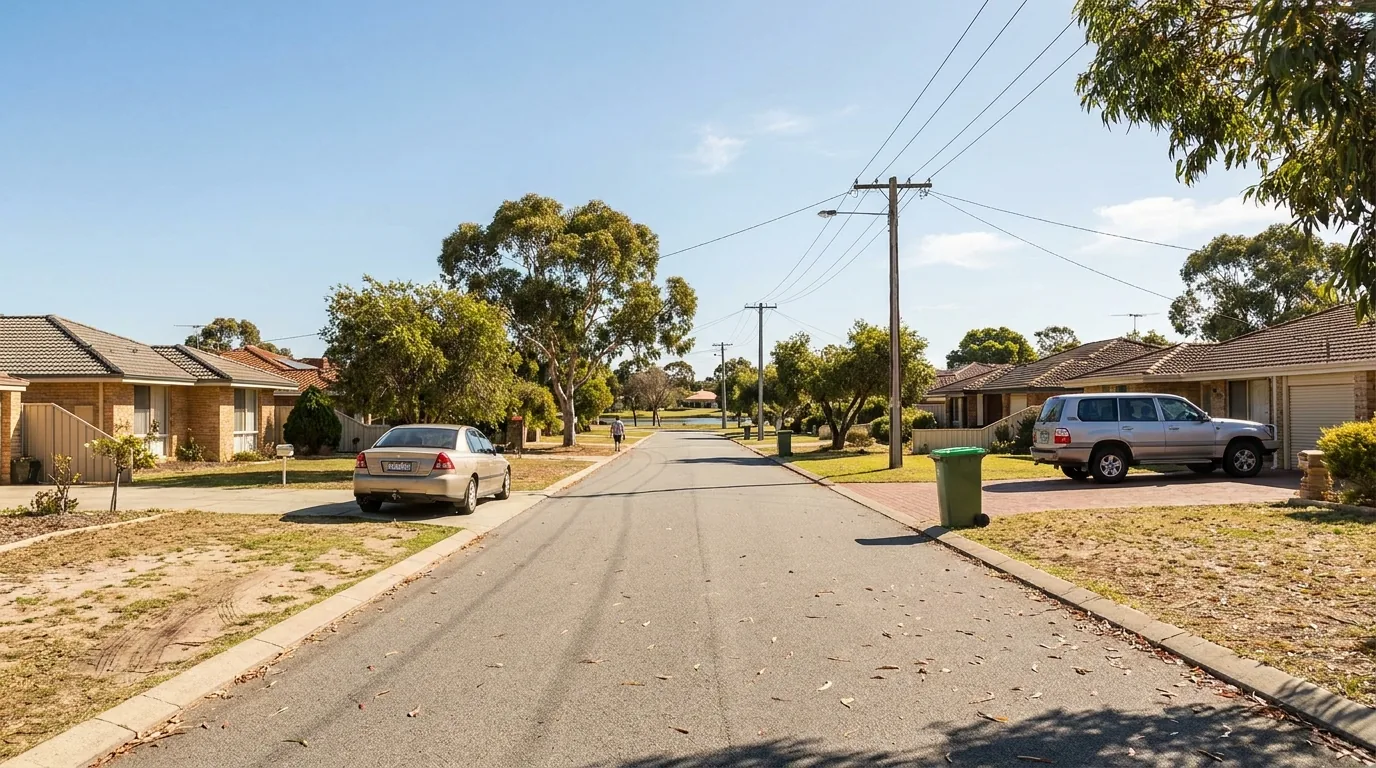
Canning Vale sits on Guildford Formation reactive clay — Perth's most problematic soil type for buildings. This clay swells massively when saturated in wet winters and shrinks during hot dry summers, creating cyclical stress on concrete slabs and masonry walls. Widespread thermal and settlement cracking is not the exception here — it's the norm. Combine that with extreme termite pressure from the high water table and surrounding wetlands, and Canning Vale becomes one of the highest-risk inspection environments in the Perth metro.
What We Look For in Canning Vale Properties
Reactive Clay Structural Movement
The Guildford Formation clay underneath Canning Vale expands when wet and contracts when dry. This creates cyclical stress on concrete slabs — the slab flexes with the seasons, and over 25+ years, this movement causes diagonal step-cracking in brickwork, door and window frames that bind or won't close properly, and uneven floors. Many Canning Vale homes have visible cracking that has been repaired and re-cracked multiple times. Our inspectors assess the severity and pattern of cracking to determine whether it represents ongoing active movement or historical settlement.
Concrete Roof Tile End-of-Life
Canning Vale's 1990s and early 2000s homes used concrete roof tiles that are now 25+ years old and hitting their failure point. Ridge capping is failing across the suburb — letting water into roof spaces, causing ceiling staining, mould, and timber damage. The combination of heavy water-saturated tiles and sagging pine trusses means some homes need full roof replacement rather than just re-pointing.
Extreme Termite Pressure
Canning Vale's high water table creates ideal conditions for multiple termite species. Coptotermes is the primary threat, but Schedorhinotermes — a species that requires constant moisture — is also present due to the water table and adjacent wetlands. Properties near Sanctuary Waters or the wetland corridors through the suburb carry the highest risk.
Estates We Service
- Sanctuary Waters — wetland-adjacent, highest termite risk, reactive clay with high water table
- Livingston Estate — established 2000s, concrete tile failure, standard Guildford Formation cracking patterns
Timber Pest Inspections in Canning Vale
Canning Vale's 1990s and 2000s housing stock sits squarely in the danger zone for timber pest damage. The Guildford Formation reactive clay retains significant moisture year-round, and when you combine that with a high water table and retained bushland corridors along the suburb's southern border, you get ideal habitat for both Coptotermes acinaciformis and Schedorhinotermes — two of the most destructive subterranean termite species in Western Australia.
Homes in the 25–30 year age range are particularly vulnerable. Pine roof trusses from this era are softer and more palatable to termites than the older hardwood framing found in earlier Perth suburbs. Concealed termite damage in roof voids, wall cavities, and sub-floor framing can go undetected for years without a dedicated timber pest inspection. We use thermal imaging and moisture meters to identify active colonies and damage behind wall linings. A standalone timber pest inspection is $250, or $178 when combined with a building inspection — which is what we recommend for any pre-purchase in Canning Vale.
Termite Treatment & Barriers in Canning Vale
When active termites are found in a Canning Vale property — and given the soil conditions and species pressure here, it happens regularly — treatment needs to address both the immediate colony and the long-term protection of the structure. The reactive clay and high water table mean chemical soil barriers perform differently here than in sandy Perth suburbs. The clay holds moisture and can affect the distribution and longevity of termiticide in the treated zone.
Our termite treatment approach in Canning Vale typically involves a combination of direct colony elimination using targeted baiting systems, followed by a chemical barrier application suited to the clay soil profile. For properties near Sanctuary Waters and the southern wetland corridors, we often recommend an ongoing monitoring and baiting program rather than relying solely on a chemical barrier — the termite pressure from surrounding habitat is too persistent for a one-off treatment to provide lasting protection. Termite treatments start from $189.