
Building & Pest Inspections in Huntingdale
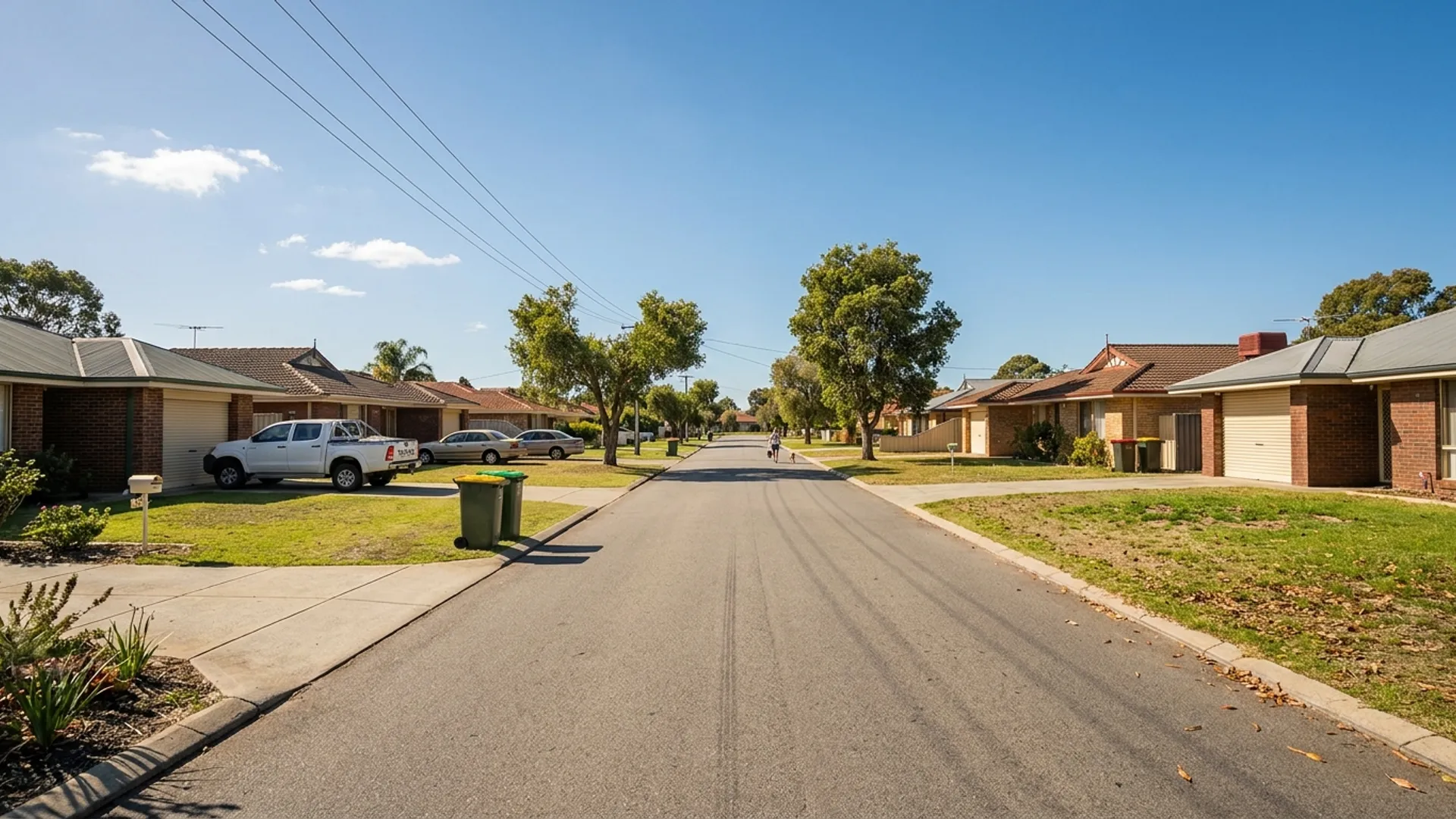
Huntingdale occupies a transitional position in Perth's south-east corridor — both in terms of soil type and housing age. The western areas of the suburb sit on Guildford Formation reactive clay that shares the same problematic swell-shrink behaviour as Canning Vale and Thornlie. The eastern areas transition to Bassendean Sand with generally more stable foundation conditions. The housing stock is predominantly 1980s and 1990s brick-and-tile — younger than the 1960s-1970s suburbs to the north and west, but now reaching the 30-40 year age where maintenance-period defects begin appearing in earnest.
Huntingdale homes are hitting the age threshold where building systems that have functioned reliably for decades begin showing wear. Concrete roof tiles lose their factory glaze protection and start absorbing moisture. Mortar joints fret and lose bonding capacity. Wall ties in early 1980s homes approach the corrosion point. Original hot water systems, evaporative air conditioning units, and plumbing fixtures reach end of life. These defects are not as severe as what we find in 50-60 year old suburbs like Bull Creek or Gosnells, but they represent real maintenance costs that buyers need to factor into their purchase decision.
Asbestos prevalence in Huntingdale is moderate at 25-35%, concentrated in the earlier 1980s homes rather than the later 1990s construction. Super Six fencing on original boundary lines and eaves sheeting are the most common locations. Homes built after 1990 are generally free of asbestos-containing materials, but verification is still warranted during inspection — particularly in garden sheds, boundary fences, and outbuildings that may pre-date the home.
What We Look For in Huntingdale Properties
Reactive Clay Slab Movement (Western Huntingdale)
Properties in western Huntingdale sit on Guildford Formation reactive clay — the same soil type that causes severe structural issues across Perth's south-east corridor. In 1980s and 1990s homes, this clay has been cycling through seasonal swell and shrink for 30-40 years, creating progressive cracking in brickwork and movement in concrete slabs. The cracking in Huntingdale is typically less severe than in older suburbs where the clay has had 50+ years to work on the structure, but early-stage to moderate diagonal step-cracking is common, and some properties show evidence of previous crack repairs already. Our inspectors use laser levelling to measure current slab variation and assess the trajectory of movement — identifying whether a property is in the early stages of clay-related damage or has already progressed to a point requiring structural intervention.
Concrete Roof Tile Early Failure
Huntingdale's 1980s concrete roof tiles are now 35-40 years old — approaching the age where systematic failure begins. The factory glaze that sealed the tiles from moisture has degraded, allowing progressive water absorption. Ridge cap pointing is cracking open, and individual tiles are becoming brittle and prone to breakage. This is the early stage of the roof tile failure cycle that is already well advanced in older suburbs like Willetton and Riverton. For Huntingdale buyers, the question is not whether the concrete tile roof will need replacing, but when — and whether the purchase price reflects this upcoming major expense. Our inspectors assess tile condition, ridge capping integrity, and truss deflection to give buyers a realistic timeline for roof replacement.
Southern River Bushland Termite Pressure
The southern edge of Huntingdale borders the Southern River bushland — one of the most significant subterranean termite habitats in Perth's south-east corridor. Coptotermes acinaciformis colonies established in this bushland forage outward into adjacent residential properties, crossing property boundaries underground. Properties on Huntingdale's southern boundary streets face the highest direct pressure, but mature eucalyptus throughout the suburb's street plantings extend the foraging corridor northward into the residential area. The Guildford Formation clay in the western areas retains soil moisture that supports termite activity year-round, while the Bassendean Sand in eastern areas provides easy underground passage for foraging tunnels.
Maintenance-Age Service Deterioration
Huntingdale homes are reaching the age where original building services require attention or replacement. Galvanised plumbing installed in the 1980s is corroding internally — restricting water flow in the early stages and eventually developing pinhole leaks that can cause significant water damage before detection. Original hot water storage systems are approaching or exceeding their 15-20 year design life. Evaporative air conditioning units from the 1980s and early 1990s have deteriorated roof-mounted pads and corroded drain pans that can leak into the roof space. Electrical switchboards in pre-1990 homes often lack modern residual current devices (RCDs). These service replacement costs are predictable and should be budgeted for as part of any Huntingdale purchase.
Precincts We Service
- Western Huntingdale — Guildford Formation clay, reactive slab movement, early-to-moderate structural cracking in 1980s homes
- Southern boundary (bushland edge) — Southern River bushland termite pressure, highest pest risk zone, thermal imaging priority
- Central Huntingdale — 1980s-1990s brick-and-tile, maintenance-age defects, concrete roof tile early failure cycle
- Eastern Huntingdale — Bassendean Sand transition, more stable foundations, standard age-related maintenance items
Timber Pest Inspections in Huntingdale
Huntingdale's termite risk is anchored by the Southern River bushland on the suburb's southern edge. This large area of undisturbed native vegetation provides permanent harbourage for established Coptotermes colonies that forage continuously into the surrounding residential area. The dual soil profile creates a nuanced risk pattern: the reactive clay in western Huntingdale retains moisture year-round, supporting higher termite activity in those areas, while the Bassendean Sand in the east provides easier underground passage for foraging tunnels but dries out more seasonally.
The 1980s and 1990s housing stock uses pine roof trusses and wall framing that — while younger than the timber in 1960s-1970s suburbs — has now been drying out for 30-40 years and becoming increasingly attractive to termites. Properties where regular termite inspections have been maintained are at lower risk, but many homes in Huntingdale have gaps in their inspection history. A timber pest inspection is essential for any pre-purchase in Huntingdale, particularly for properties on the southern bushland boundary. Standalone timber pest inspections are $250, or $178 when combined with a building inspection — the combined approach captures both the structural issues emerging at this housing age and the termite risk from the adjacent bushland.
Pest Control in Huntingdale
Huntingdale's position between established residential areas and the Southern River bushland creates a pest profile driven by habitat displacement. As remaining bushland edges are disturbed by development and seasonal clearing, spiders, ants, and cockroaches migrate into adjacent homes. Properties on the southern boundary experience this pressure most acutely, but mature gardens and street trees throughout the suburb provide habitat for common pest species across the residential area.
Ants are particularly active in Huntingdale's sandy eastern areas, where the free-draining Bassendean Sand allows nest establishment close to foundations. Coastal brown ants and Argentine ants are common species that create nuisance infestations around paving, garden beds, and entry points into homes. Our residential pest control covers general pest treatments for ants, spiders, cockroaches, and rodents, as well as targeted termite inspections and barrier treatments for properties near the bushland boundary. Pest control starts from $189.