Building & Pest Inspections in Bull Creek
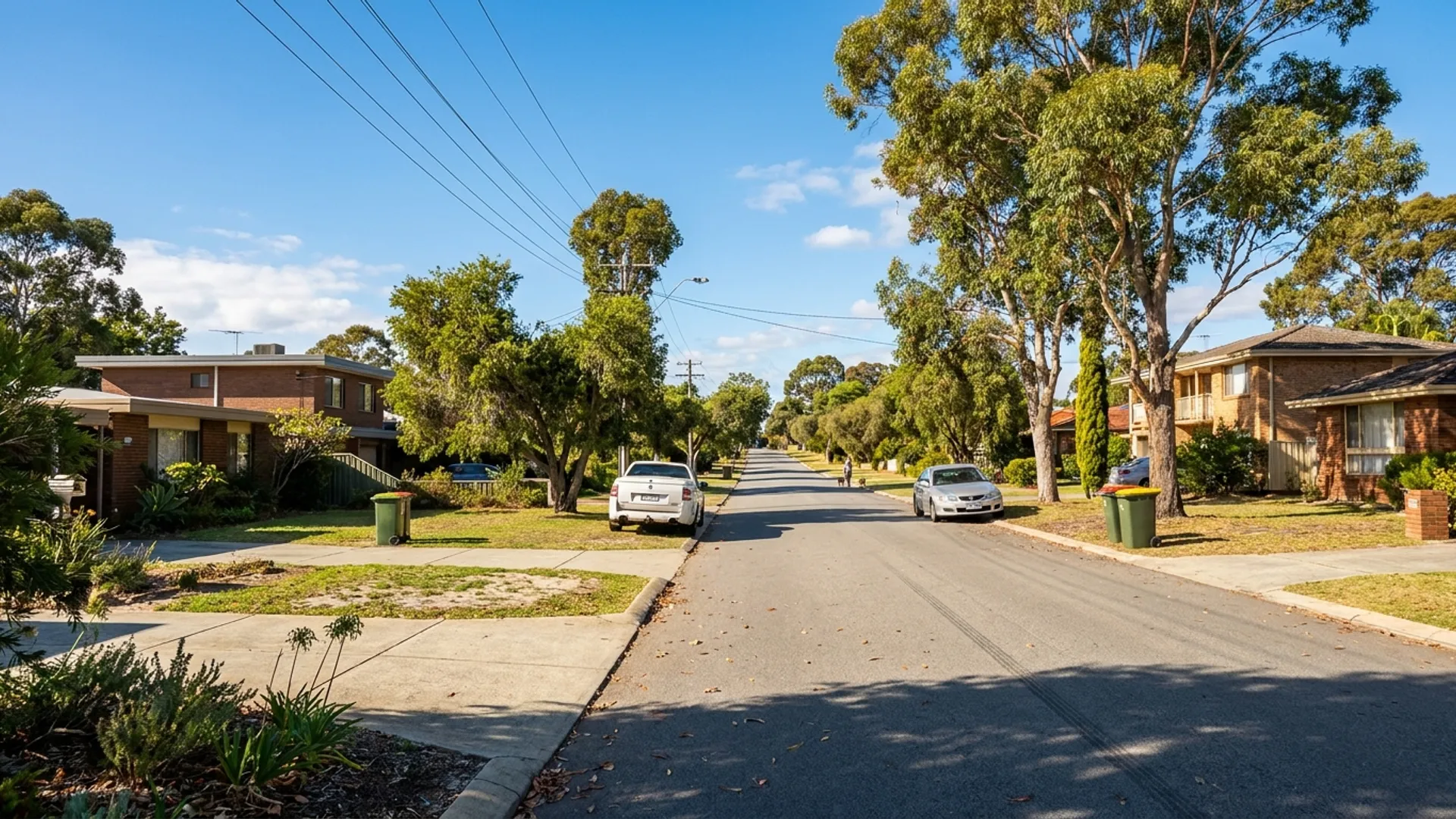
Bull Creek occupies a unique position in Perth's south-east corridor — an established 1960s-1970s suburb surrounded by some of the most significant termite habitat in the metro area. Bull Creek Reserve runs through the heart of the suburb, the Canning River foreshore defines the northern boundary, and mature eucalyptus trees line almost every street. This combination of permanent, undisturbed vegetation creates year-round harbourage for Coptotermes acinaciformis colonies that forage aggressively into the surrounding residential properties. For any buyer in Bull Creek, a combined building and pest inspection is not optional — it's fundamental.
The housing stock is predominantly 1960s and 1970s brick-and-tile construction now 50-60 years old. At this age, nearly every major building system is at or beyond its design lifespan: concrete roof tiles are failing, wall ties have corroded, mortar has fretted, original plumbing and electrical services need replacement, and wet-area waterproofing has long since failed. The proximity to Murdoch University and Fiona Stanley Hospital has made Bull Creek attractive to developers, and R40 subdivision is progressively converting larger original lots into duplex and triplex developments — creating a mix of aging original homes and newer infill that introduces its own inspection challenges.
Asbestos prevalence in Bull Creek is very high at 40-55% of unrenovated homes. The suburb was built during the peak of asbestos use in Australian residential construction, and Super Six fencing, asbestos eaves, wet-area linings, and vinyl floor tiles with asbestos-containing black mastic adhesive are all common findings. Buyers need to understand the remediation cost for asbestos materials — particularly if they intend to renovate, since any disturbance of asbestos-containing materials requires licensed removal.
What We Look For in Bull Creek Properties
Concrete Roof Tile Failure at 50+ Years
Bull Creek's 1960s and 1970s concrete roof tiles are among the oldest in Perth's south-east corridor, and many are well past the point of failure. At 50+ years, the tiles have lost all factory glaze protection, absorb moisture freely, and become heavy and brittle. Ridge cap pointing has cracked and fallen away, allowing water directly into the roof space. The weight of water-saturated tiles causes truss deflection — visible inside as sagging ceilings and cracking along ceiling-wall junctions. In Bull Creek, a failing concrete tile roof is rarely a patch-and-repair situation. Full replacement is typically required, and the cost — often $15,000-$25,000 for a standard home — needs to be factored into the purchase price. Our inspectors access the roof void to assess both tile condition from inside and truss integrity under load.
Fretting Mortar & Wall Tie Corrosion
Sixty-year-old mortar joints in Bull Creek homes are showing advanced fretting — the lime-rich mortar used in the 1960s breaks down over decades, crumbling when pressed and losing its capacity to bond bricks together. This is compounded by wall tie corrosion in cavity brick walls. The original mild steel ties expand as they corrode, splitting the mortar bed and creating horizontal cracking along bed joints. In severe cases, the outer brick leaf begins to separate from the inner wall structure. Our inspectors assess mortar condition by probing representative joints across all elevations and look for the characteristic horizontal cracking pattern that distinguishes wall tie failure from the diagonal cracking caused by settlement.
Extreme Termite Pressure from Reserves & River
Bull Creek Reserve cuts through the suburb, and the Canning River foreshore runs along the northern boundary — together creating one of the largest continuous termite habitats adjacent to any residential area in Perth's south-east corridor. Coptotermes acinaciformis colonies established in the reserve and along the river forage outward through the Bassendean Sand, which provides easy passage underground. The mature eucalyptus lining virtually every street in Bull Creek adds additional colony harbourage within the residential area itself. Properties that back directly onto the reserve or foreshore carry the highest risk, but the density of mature trees means no property in Bull Creek is outside foraging range.
R40 Subdivision & Redevelopment Impacts
The Murdoch University and Fiona Stanley Hospital precinct on Bull Creek's western boundary is driving significant redevelopment activity. Larger original lots are being subdivided under R40 zoning to produce duplex or triplex developments, and this activity creates inspection implications for both the new builds and adjacent original homes. Demolition of existing structures disturbs established termite colonies, which then relocate into neighbouring properties. Construction vibration can accelerate cracking in adjacent older homes already stressed by decades of settlement. New shared boundary walls and altered drainage patterns can redirect stormwater toward original homes. Buyers of original homes near active development sites need these adjacency impacts assessed during their inspection.
Precincts We Service
- Bull Creek Reserve surrounds — extreme termite pressure from reserve habitat, mature eucalyptus harbourage, 1960s-1970s homes at highest risk
- Canning River foreshore (northern Bull Creek) — river corridor termite risk, potential moisture and rising damp issues near the floodplain
- Murdoch / Fiona Stanley precinct — R40 subdivision and redevelopment activity, adjacency impacts on original homes, newer infill builds
- Central Bull Creek — established 1960s-1970s brick-and-tile, full suite of age-related defects, mature street tree termite harbourage
Timber Pest Inspections in Bull Creek
Bull Creek has some of the most intense subterranean termite pressure in Perth's south-east corridor. The combination of Bull Creek Reserve, Canning River foreshore, and a dense canopy of mature eucalyptus throughout the suburb creates an environment where active Coptotermes colonies are virtually guaranteed within foraging distance of every residential property. The Bassendean Sand that underlies the suburb allows easy underground movement — termites can travel 50-100 metres through this sandy soil without encountering any barrier, meaning that even properties not directly adjacent to the reserve or river are within range.
The age of the housing stock intensifies the risk. Homes from the 1960s and 1970s used pine framing and trusses that have now dried out over 50-60 years, becoming significantly softer and more attractive to termites. Concealed damage in roof voids, wall cavities, and behind skirtings can progress for years without visible external signs. A timber pest inspection using thermal imaging and moisture detection is essential for any pre-purchase in Bull Creek. Standalone timber pest inspections are $250, or $178 when combined with a building inspection — the combined approach is what we recommend for every Bull Creek property given the severity of both structural and pest risks.
Pest Control in Bull Creek
The same environmental features that make Bull Creek attractive as a residential suburb — mature trees, leafy streets, creek reserves, river foreshore — also create persistent pest pressure across every property. Spiders are prolific in the older brick homes, establishing webs in undisturbed subfloor spaces, meter boxes, and garden sheds. Redbacks and black house spiders are the most common species. Rodents exploit gaps in aging concrete roof tiles to access roof voids, where they nest in deteriorated ceiling insulation. Cockroaches enter through original 1960s plumbing penetrations where seals have long since failed.
The proximity to the Canning River and Bull Creek Reserve also supports higher mosquito populations during Perth's warmer months, particularly for properties on the northern foreshore boundary. Our residential pest control covers general pest treatments for ants, spiders, cockroaches, and rodents, as well as targeted termite inspections and barrier treatments for properties facing the reserve or river corridor. Given the extreme termite pressure in this suburb, we recommend annual termite inspections as a minimum for every Bull Creek homeowner — not just buyers. Pest control starts from $189.