Building & Pest Inspections in Mosman Park
Mosman Park is a tightly held western suburb perched between the Swan River and the Indian Ocean — a narrow strip of land with terrain that drops steeply from the Stirling Highway ridge to the river foreshore. The suburb sits on Tamala Limestone with Karrakatta Sand overlay, creating a geological profile where shallow limestone influences every aspect of construction, from foundation design to drainage and retaining wall engineering. This is one of Perth's most geologically challenging suburbs to build on, and the inspection considerations reflect that complexity.
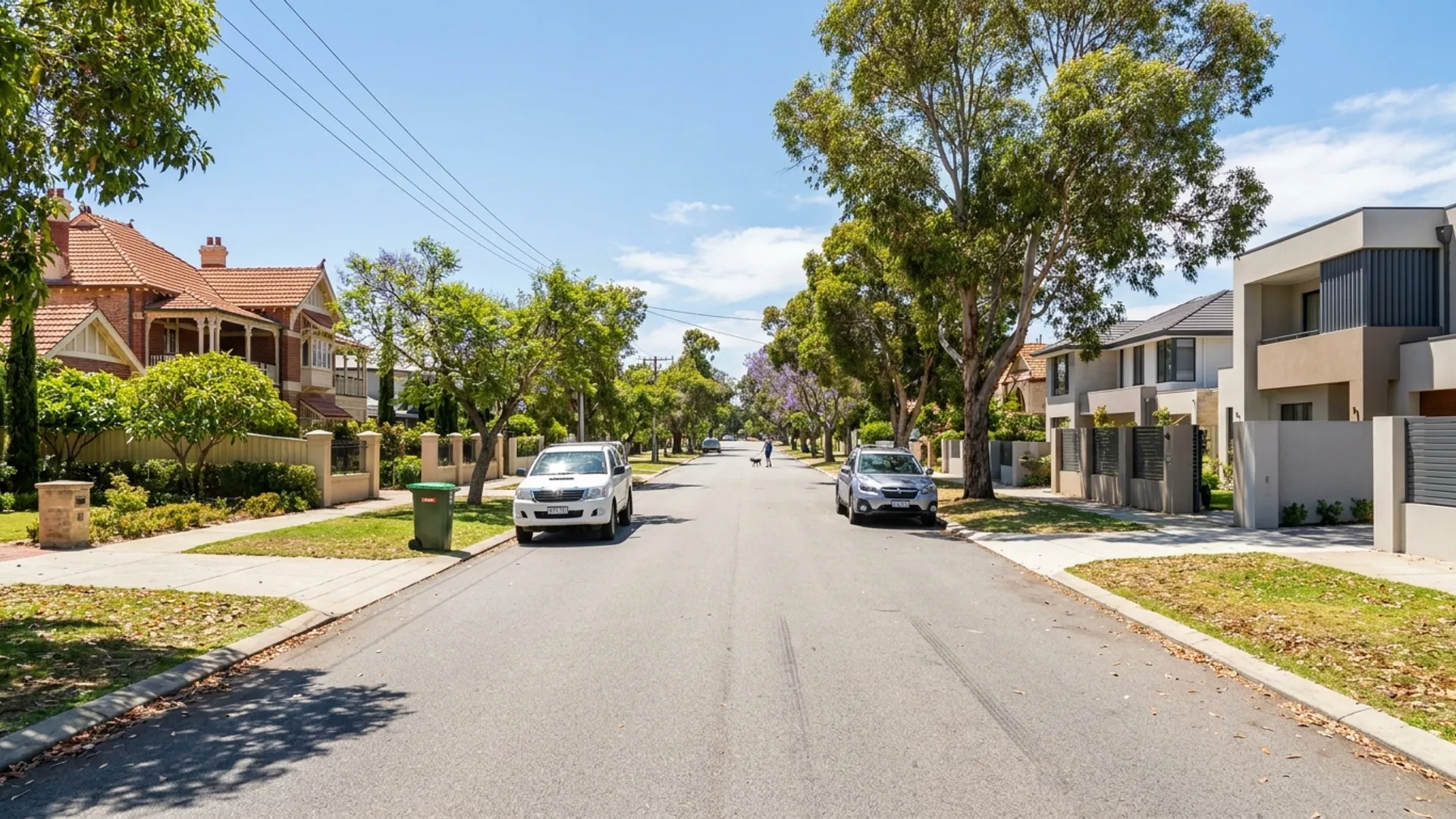
The housing stock spans a century of construction — from 1920s limestone and weatherboard cottages on the original subdivisions to contemporary architect-designed homes replacing aging stock on premium river-view blocks. Heritage protection overlays affect significant portions of the suburb, meaning original homes can't simply be demolished — they're renovated, extended, and adapted, creating complex building fabrics that require experienced assessment.
What We Look For in Mosman Park Properties
Limestone Construction and Salt Damp
Mosman Park's original housing stock includes homes built with local Tamala Limestone — quarried from the same ridge the suburb sits on. Limestone walls were standard construction in Perth's western suburbs through the 1930s, and Mosman Park retains significant examples. These walls are porous and suffer from salt damp — moisture rising through the stone carries dissolved salts that crystallise on surfaces, gradually destroying plaster, paint, and eventually the limestone itself. Salt damp remediation in Mosman Park can be complex because the limestone walls are structural — you can't simply replace them. Our inspectors assess salt damp severity, identify the moisture source (rising groundwater vs lateral penetration vs inadequate damp-proofing), and document the extent of stone deterioration.
Steep Site Retaining and Foundation Issues
The terrain between Stirling Highway and the Swan River drops sharply through Mosman Park, with many properties requiring substantial retaining walls and stepped foundation designs. Older limestone retaining walls — some predating the homes they support — are at various stages of failure throughout the suburb. Properties on the downhill side of the slope receive concentrated stormwater from uphill, and inadequate site drainage is a persistent issue in this terrain. Our inspectors assess retaining wall stability, check drainage adequacy, and look for evidence of ground movement affecting building foundations on steep sites.
Coastal and River Exposure
Mosman Park's position between the ocean and the river means properties experience salt-laden atmospheric conditions from both directions. Metal fixings, roof hardware, and external fittings corrode faster in this environment. Homes on the ocean-facing western slopes experience direct salt spray during winter storms, while river-facing properties on the eastern slopes face moisture-laden air from the Swan River estuary. Our inspections check for premature corrosion of structural fixings, deterioration of metal window frames, and salt damage to external render and paint systems.
Heritage Overlay Renovation Complexity
Mosman Park's heritage protections mean many older properties have undergone multiple renovation campaigns rather than demolition. A typical Mosman Park heritage property might have an original 1920s limestone front, a 1960s brick-and-tile extension, a 1990s rear addition with a flat roof, and a 2010s kitchen renovation. Each renovation era brings different construction quality, different materials, and different connection details where new meets old. Junction points between renovation stages are where most defects occur — differential movement, waterproofing failures, and structural inadequacy at connection points. Our inspectors trace the construction history of the property and focus their assessment on these high-risk junction zones.
Precincts We Service
- Stirling Highway Ridge — heritage limestone homes, salt damp, established gardens with termite pressure
- River Foreshore (Minim Cove / Chidley Point) — premium waterfront, steep sites, retaining wall assessments, extreme termite risk from riverine vegetation
- Victoria Street / Glyde Street Village — character precinct, heritage overlays, multi-era renovation complexity
- Ocean Side (Buckland Hill) — newer homes and apartments, coastal exposure, marine-grade hardware requirements
Pest Control in Mosman Park
Mosman Park's position between the Swan River and the Indian Ocean, combined with its mature tree canopy and established gardens, creates one of Perth's most persistent pest environments. The river foreshore along Minim Cove and Chidley Point is prime Coptotermes acinaciformis habitat — large eucalyptus and paperbarks harbour active colonies that forage deep into the suburb's residential blocks. Heritage properties with sub-floor voids and original hardwood timbers are particularly vulnerable, as termites can establish feeding sites that go undetected for years in rarely accessed sub-floor spaces.
The dual coastal-river exposure also supports elevated mosquito populations from October through March, particularly around the Minim Cove wetland areas. Redback spiders are consistently found in limestone retaining wall cavities, sub-floor spaces, and the sheds and outbuildings common on Mosman Park's larger blocks. Rats exploit the continuous canopy of overhanging trees to access roof spaces — particularly in heritage properties where roof tiles have shifted or eaves have deteriorated. Our pest control services start from $189, with annual termite inspections from $189 — essential for any Mosman Park property given the extreme termite pressure from the river foreshore corridor.