
Building & Pest Inspections in Highgate
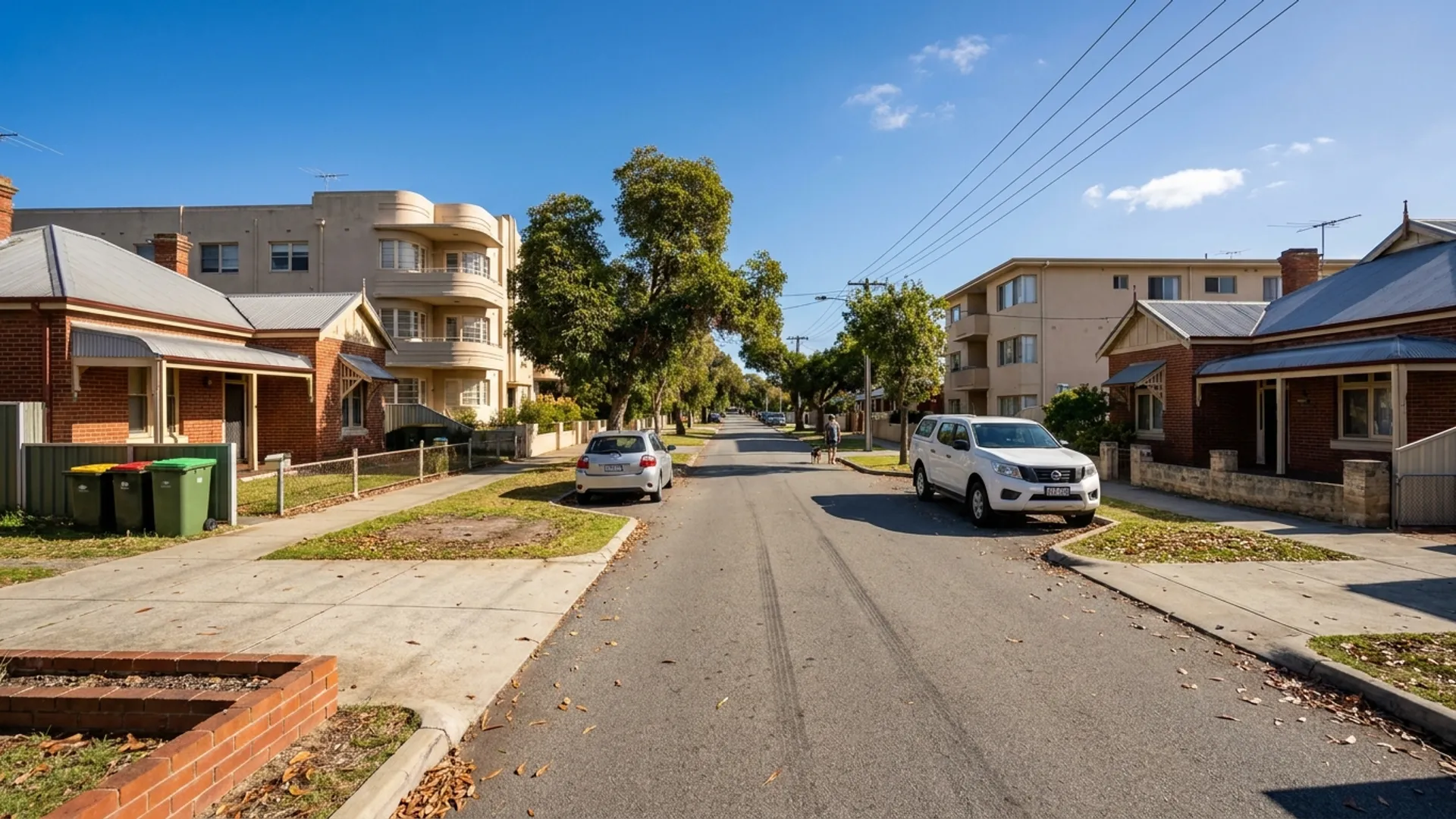
Highgate is one of Perth's most densely built heritage suburbs — a compact grid of streets between Beaufort Street and Lord Street where Federation workers cottages, inter-war bungalows, and modern infill sit shoulder to shoulder on narrow lots. The suburb sits on Bassendean Sand — the deep, well-drained sandy soil that underlies much of Perth's inner-northern corridor. While this soil type is generally stable, the age of Highgate's housing stock means buildings have had over a century to settle, shift, and deteriorate on foundations that predate modern engineering standards.
Highgate's proximity to Hyde Park — one of Perth's most significant inner-city parklands — creates a distinctive pest environment, and the suburb's high rental percentage means pest problems often accumulate unreported through successive tenancies. For buyers entering Highgate's tightly held property market, pre-purchase inspection is essential to understand what lies beneath the fresh paint and polished floors that characterise the suburb's frequently renovated heritage stock.
What We Look For in Highgate Properties
Federation and Inter-War Cottage Assessment
Highgate's dominant housing type is the Federation workers cottage — typically a two-to-three bedroom timber-framed home with brick or weatherboard cladding, a corrugated iron roof, and a sub-floor crawl space on brick or limestone piers. After 90–130 years, these homes present a distinctive set of structural considerations. Sub-floor timbers may show decay from moisture wicking through the sandy soil, particularly where verandahs have been enclosed or extensions have blocked original ventilation. Brick piers settle unevenly, causing floor slope. Original mortar in exterior brickwork deteriorates, allowing water penetration that accelerates wall tie corrosion. Our inspectors are experienced with pre-war construction and know where to look for the specific deterioration patterns these buildings develop over time.
Concealed Defects Behind Heritage Renovations
Highgate properties change hands frequently relative to other heritage suburbs, and each sale often triggers a cosmetic renovation to maximise return. The result is that many Highgate cottages carry multiple layers of renovation — fresh plaster over cracked walls, new flooring over uneven sub-floors, modern kitchens installed in structurally modified rear sections. The cosmetic presentation can be excellent while the underlying structure retains serious issues. Our inspectors look beyond the finishes: checking wall alignment with spirit levels, assessing floor slope across rooms, and using moisture meters to detect water behind freshly painted walls.
Rear Extension and Second-Storey Addition Quality
Highgate's heritage status and narrow lots create pressure for vertical extension rather than horizontal. Second-storey additions on original single-storey cottages are common — and the structural connection between old and new is the critical assessment point. The original foundations and walls may not have been designed to carry the additional load. Common issues include cracking at the junction between old and new brickwork, inadequate roof drainage at the connection point, and timber floor deflection in the original building from the added weight above. Our inspections specifically assess these connection zones and check for evidence that the addition is affecting the original structure.
Walk-Up Flat Condition (1960s–1970s)
Scattered throughout Highgate between the heritage cottages are 1960s–1970s walk-up apartment blocks — typically two-to-three storey rendered brick buildings built during Perth's first apartment boom. These buildings are now 50–60 years old, and common issues include concrete cancer in stairwells and car park structures, waterproofing failures on flat roof sections, and deteriorating balcony balustrades. For buyers considering Highgate apartments, our inspections assess common area condition as well as the individual unit — because structural issues in shared elements affect every owner in the strata.
Precincts We Service
- Hyde Park Edge (William / Vincent Streets) — premium heritage cottages, extreme termite pressure from park, mature street trees
- Beaufort Street Corridor — mixed heritage and infill, commercial-to-residential conversions, party wall assessments
- Lord Street Side — affordable heritage stock, higher rental percentage, deferred maintenance common
- Lincoln Street / Broome Street — quiet residential pocket, Federation cottages, 1960s walk-up apartments
Pest Control in Highgate
Hyde Park is the dominant pest influence in Highgate. The park's mature Moreton Bay Figs, paperbarks, and eucalyptus trees harbour Coptotermes acinaciformis colonies that forage into surrounding residential properties. Heritage cottages with accessible sub-floor spaces — particularly those on the William Street and Vincent Street boundaries of the park — are directly within termite foraging range. The combination of aging sub-floor timbers, established garden beds against exterior walls, and the moisture corridor provided by Hyde Park's irrigation creates ideal conditions for termite entry and feeding.
Highgate's high rental percentage compounds general pest issues. German cockroaches establish in kitchen and bathroom cavities during tenancies and are often left untreated when tenants move on. The dense construction — narrow lots with homes sharing boundary walls — means cockroach populations easily migrate between properties through shared service penetrations. Redback spiders inhabit the sub-floor spaces, garden sheds, and retaining walls found throughout the suburb's compact blocks. Our pest control services start from $189. For any Highgate property within 100 metres of Hyde Park, we recommend annual termite inspections from $189 to monitor for subterranean activity from the park corridor.